







Science has made it clear that a healthy lifestyle includes eating a well-rounded diet that’s centered around plants. While there are foods to support yourheart health and to support your skin health, it also makes sense to want to tap into the best foods for colon health, too.
After all, colorectal cancer is the third-most common cancer in the U.S. and rates have been jumping up in younger people, per the American Cancer Society (ACS). Not only that, a growing body of research links good gut health to better overall health, suggesting that it’s important to take good care of your GI tract as a whole.
Meet the experts: Carissa Mondelli, R.D., a dietitian at Northwell’s Phelps Hospital; Rudolph Bedford, M.D., gastroenterologist at Providence Saint John’s Health Center in Santa Monica, CA; Sonya Angelone, Ph.D., R.D.N., a nutritionist and registered dietitian based in San Francisco.
The best foods for colon health have a few things in common. They tend to be higher in fiber and probiotics, for starters. Many have anti-inflammatory properties, too.
While some aspects of your colon health are related to genetics, experts stress that diet can go a long way, too. With that in mind, we tapped two dietitians and a gastroenterologist for the best foods to load up on for colon health. Here’s what they shared.
The best foods for colon health
Broccoli
Broccoli offers a lot to support colon health. “It’s high in fiber and sulfur-containing compounds which can protect colon cells from oxidative damage,” says Sonya Angelone, Ph.D., R.D.N., a nutritionist and registered dietitian based in San Francisco.
Broccoli also promotes the growth of healthy bacteria in the gut, Angelone says.
Carrots
Carrots are a solid source of dietary fiber to help keep things moving along in your gut, says Carissa Mondelli, R.D., a dietitian at Northwell’s Phelps Hospital. These vegetables have soluble and insoluble fiber, she points out. (Soluble fiber slows digestion and regulates blood sugar, while insoluble fiber adds bulk to stool and speeds up waste transit through your gut.)
Carrots also contain the antioxidant and anti-inflammatory agent beta-carotene to regulate the gut microbiome and tamp down on inflammation, Angelone says.
Leafy greens
Spinach, kale, arugula, and more are packed with colon-supporting nutrients. “These are a good source off fiber, plus pectin, which is a great prebiotic fiber—food for probiotic bacteria,” Angelone says. A good mix of these can help to support your colon health, according to Rudolph Bedford, M.D., gastroenterologist at Providence Saint John’s Health Center in Santa Monica, CA.
Apples
Apples are high in soluble fiber and can support a diverse gut microbiome, Angelone says. “They’re anti-inflammatory as well,” Mondelli says. Chronic inflammation is a risk factor for gut diseases like Crohn’s disease, ulcerative colitis, and colorectal cancer, making it crucial to tamp down on inflammation when you can, Mondelli says.
Pears
“Pears are an excellent source of soluble fiber, which supports microbial diversity,” Angelone says. Pears can also help to keep you regular, Dr. Bedford says—they’re often used to help ease constipation due to their high fiber content and natural laxatives like sorbitol and fructose.
Whole grains
Whole grains like oatmeal contain a type of soluble dietary fiber called beta-glucan, which is also a fermentable fiber, Dr. Bedford says. “It supports gut microbiome diversity and short-chain fatty acid production,” he says. (Short-chain fatty acids, which include acetate, propionate, and butyrate, are metabolites created by gut bacteria that can boost gut barrier integrity, regulate metabolism, and lower inflammation.)
“It improves stool bulk, which makes it easier to pass,” Angelone says. “It also encourages growth of beneficial bacteria.”
Legumes
Legumes, which include lentils, peas, and beans, are a good source of resistant starch, per Angelone. “This feeds good gut bacteria and promotes colon health,” she says.
They’re also a good source of fiber and starch, helping you to feel fuller, longer, Dr. Bedford says. Like whole grains, legumes can help to increase short-chain fatty acid production, Dr. Bedford says.
Yogurt
Yogurt is good for colon health thanks to its probiotic cultures, Angelone says. “It can help replenish healthy gut bacteria and support gut barrier function,” she adds.
Mondelli points out that the probiotics in yogurt can help to support production of short-chain fatty acids, too. “It helps to keep the gut barrier healthy,” she adds.
Kimchi
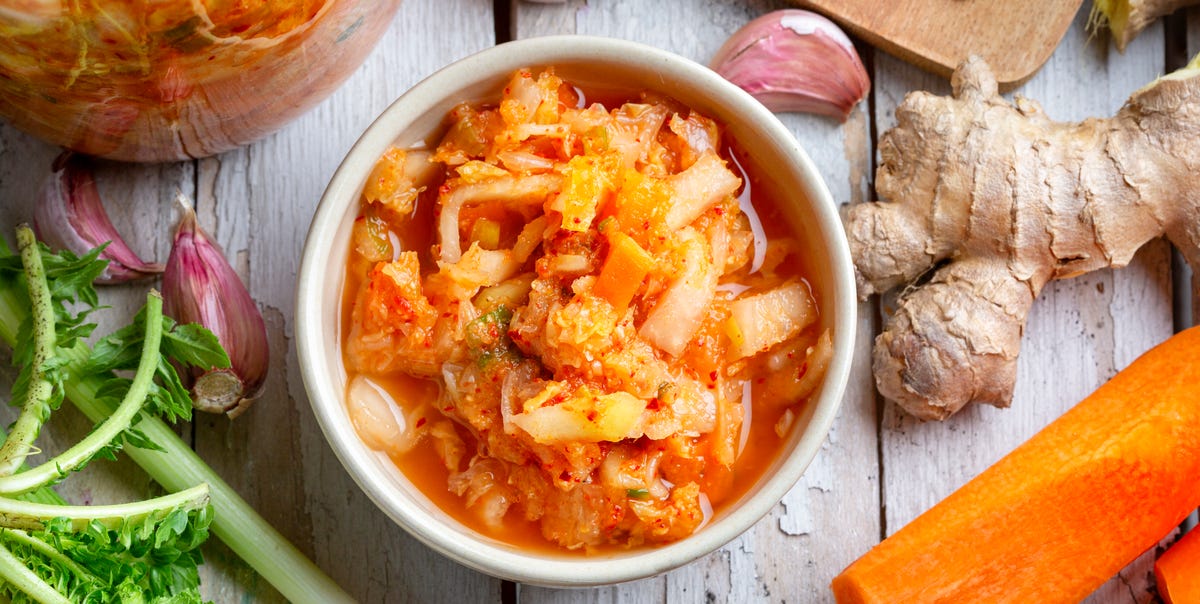
This fermented vegetable is rich in probiotics, Angelone points out. “It can help reduce gut inflammation and improve microbial diversity,” she adds.
The probiotics in kimchi help to stimulate the growth and activity of good bacteria in the colon, Mondelli says. “It also has anti-inflammatory properties and helps fight off harmful pathogens,” she adds.
Flaxseed
Flaxseed is high in soluble fiber, Dr. Bedford says. “That helps to add bulk to the stool, increasing motility and regularity,” he says. When flaxseed is broken down in the gut, it produces the short-chain fatty acid butyrate, he adds. It also provides omega-3 fatty acids to combat inflammation in the gut, per Dr. Bedford.
How can food impact your colon health?
The foods you eat impact the composition of your gut microbiome, Dr. Bedford says. “Foods will also regulate the inflammatory nature of the gut in terms of reducing or increasing inflammation,” he says. They can also impact how often you poop and the quality of stool you produce, he adds.
Overall, Dr. Bedford recommends eating a variety of plant foods to support your colon health. “There’s no single superfood—it’s really a dietary pattern,” he says. That includes doing your best to increase your intake of dietary fiber to at least 25 grams of the nutrient a day. (Mondelli just stresses the importance of drinking plenty of water when you do that to lower the risk of constipation and bloating.)
“The best diet for colon health is less about restriction and more about feeding the right gut bacteria consistently,” Dr. Bedford says.
Read the full article here


