







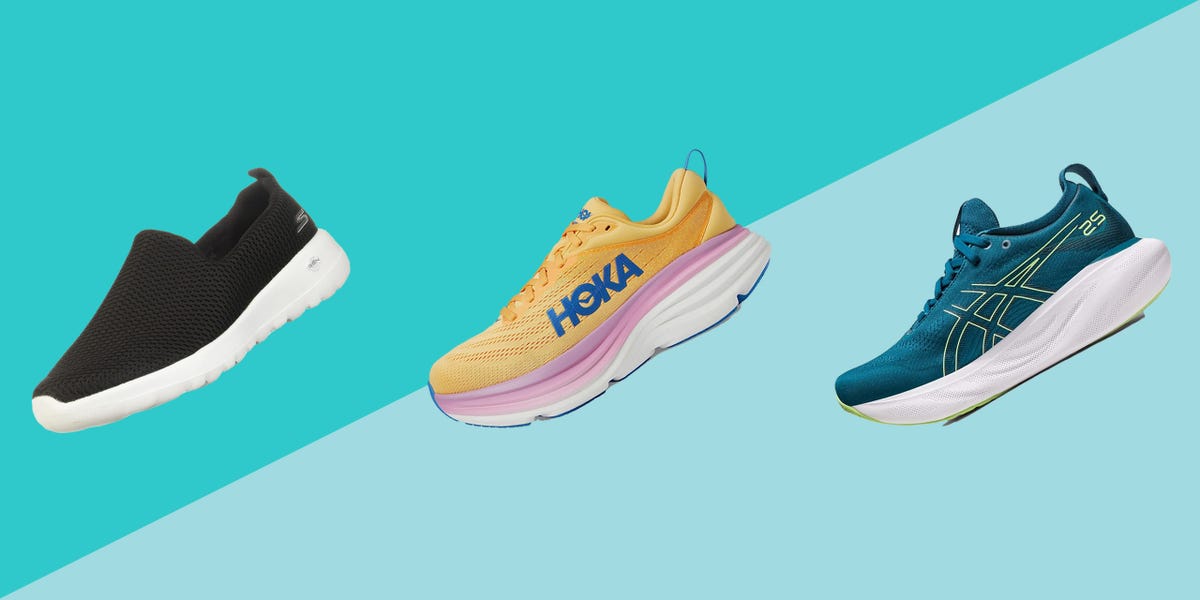
✔️ Look for cushioning and shock absorption. According to our experts, the best shoes for walking on concrete will have maximum cushioning as well as a good level of shock absorption. “You’ll want at least 25-30mm stack height for cushioning, often utilizing EVA foam, gel or air pockets,” says Brett I. Shore, M.D., fellowship-trained orthopedic surgeon. “It’s also essential to have adequate shock absorption on the bottom of the heel and across the ball of the foot,” Oldani adds.
✔️ Check for a supportive sole. Oldani recommends looking for a shoe that has a “supportive, fairly stiff sole” to keep your feet comfy during long hours of standing or walking. “As for the outsole, you’ll want one that’s durable (concrete wears shoes out quickly) and provides good traction,” Dr. Shore explains.
✔️ Make sure your shoe actually fits. This might seem obvious, but Dr. Shore reminds us that well-fitted shoes will help prevent blisters and reduce the risk of bunions, and it is important to ensure sufficient toe room in the shoe as well. “To be fair, everyone’s feet can vary, so it’s best for you to understand your feet and body first,” Allen says. He reminds readers to consider your foot width, if you have low or high arches, or need custom orthotics.
✔️ Take note on flexibility. Look for a shoe that is flexible enough to allow for normal foot biomechanics, Dr. Shore says.
✔️ Consider the type of shoe. Sneakers are generally a great choice for walking shoes, but you may also want breathable, open-toed options—like sandals—for walking during the warmer seasons, or even slip-on clogs for work. “For athletic shoes, you want to look for a shoe with cushioning in the midsole. This is typically done with foam or EVA materials,” says Sharkey. “For casual shoes, look for those with a cushioned or padded insole.” Recovery shoes are also a great option for hard surfaces, notes Sharkey, due to their construction with foam materials that’s specifically manufactured to absorb shock.
Read the full article here


