







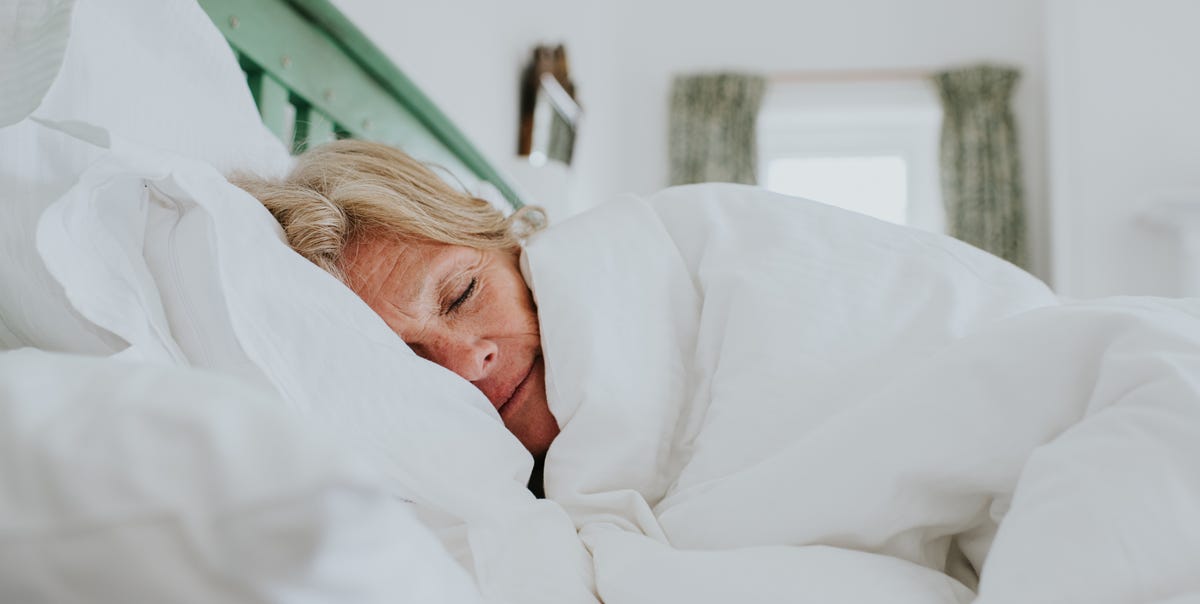
There is a nonzero chance that one of the people you share your home with will poke a napper who is peacefully snoozing on the couch, claiming they should power through the rest of their day. Why? Because naps are a destroyer of nighttime sleep, leading to health problems connected with not getting enough shut-eye (including heart disease, stroke, type 2 diabetes, depression, and many other issues). Further, some studies suggest that daytime napping could be associated with problems like high blood pressure, though the science isn’t conclusive.
Napping has proven benefits, as research points to a connection between taking naps and having better overall brain health…whether or not one gets adequate sleep at night. This even holds true for those who nap regularly and those who do so more sporadically. “The same types of cognitive benefits you see with a full night of sleep, you see with a nap,” says Sara Mednick, Ph.D., a professor of cognitive science at the University of California, Irvine, and the author of The Power of the Downstate: Recharge Your Life Using Your Body’s Own Restorative Systems. “People show better verbal, spatial, and working memory; better creativity; better perception; and better attentional processing after a nap.”
So what’s a tired person to do? Here’s the 411 on napping, as well as how to make it work for you.
The science of day dozing
Napping is like putting your laptop to sleep instead of restarting it. When you nap the right way (more on that to come), you stay in lighter sleep stages rather than the deeper stages you go into during a proper nighttime slumber. A full night’s rest provides physical and cognitive repair and restoration, says Raj Dasgupta, M.D., a sleep expert and an associate professor of clinical medicine at Huntington Health, an affiliate of Cedars-Sinai in California. But a nap can help with immediate needs if you’re wiped out: “Staying in these light sleep stages can clear out some mental clutter to help sharpen focus and short-term memory and improve mood,” adds Dr. Dasgupta. “The right kind of nap is like a tune-up for your brain.”
Snoozing for short periods also helps lower levels of adenosine, a chemical that builds up in your brain when you’re awake and contributes to feelings of fatigue, Dr. Dasgupta notes. “A short, well-timed nap can really allow your body and mind to relax and recharge so you can conquer the rest of your day.”
But taking a nap that is too long or at the wrong time of day may, aside from messing up your regular sleep schedule, cause you to wake up feeling fatigued and out of it, worsen insomnia if you are prone to it, or mask underlying sleep disorders (such as obstructive sleep apnea) that could be causing fatigue.
Your ideal nap
To recharge without then being up all night, follow these best practices:
Set your alarm
Keep your nap short—no more than 30 minutes, with 10 to 20 minutes being the sweet spot for letting you wake up refreshed.
Choose your window wisely
The ideal time is early afternoon, ideally between 1 p.m. and 3 p.m., when most people’s energy naturally starts to dip.
Avoid your bed
Getting into bed can blur the line between a nap and nighttime sleep, particularly if you struggle with insomnia. Look for a quiet, cool place such as a couch.
Whether or not you’re in the nap club, the most important thing is getting enough quality sleep to keep your body and mind working optimally—that’s about eight to nine hours daily.
When naps go viral
Recently, specific sleeping styles—from the “NASA nap” to the “Navy SEAL nap” to something super science-y–sounding called “biphasic sleeping”—have been making the rounds on social media and online. Could one of these be your secret to feeling alert? Here’s the scoop.
NASA nap
A 26-minute power nap like the ones astronauts rely on during missions.
Should you try it?
The NASA nap should work because it’s short, as sleep experts suggest an optimal nap should be. Plus, you’ll get to say you sleep the way they do in space!
The Navy SEAL nap
A former Navy SEAL got major publicity after posting on social media about the type of nap he swore by, an eight-minute snooze with his feet elevated above his heart (picture lying on the ground with your legs on a couch).
Should you try it?
Eight minutes keeps you below the 30-minute limit, and positioning your legs this way will increase blood flow throughout your body, including to your heart and brain, which may make you feel more alert when you awaken.
Biphasic sleeping
It sounds technical, but this is your basic siesta. In countries such as Spain and Italy, it’s common for people to take a 30- to 90-minute nap in the afternoon and then sleep for fewer than eight hours at night. In this scenario, individuals still get eight or nine hours of total sleep daily, but instead of clocking it all in one stretch, they break it into two chunks. This is believed to be how most people slept until we were able to control our work and leisure time by using electric lights and started opting for one long snooze. There are other ways to divide your sleeping time, too, such as splitting it into two even sessions.
Should you try it?
Maybe. Waking from a long nap, which is what each chunk of biphasic sleep essentially is, can be disorienting. “One challenge with this strategy is that you can wake up groggy if you awaken from a nap in the middle of a deep sleep pattern,” says Bruce Bassi, M.D., a psychiatrist and the founder of Telepsych Health. But if it works for you and you’re getting enough overall zzz’s, keep on siesta-ing.
No rest for the busy
On days when you need an energy boost but can’t squeeze in a snooze—or if you’re simply one of those folks who can’t fall asleep during the day—try these tricks to shake off the midday slump.
- Drink water in case you’re dehydrated—when your tissues have less of the fluid they need to function, it can make you feel tired.
- Try sipping a glass of green tea for a caffeine hit without the jitters; it also delivers L-theanine for alertness.
- Step outside for a dose of daylight and rejuvenating fresh air. The exposure to light will also help regulate your circadian rhythm to encourage a consistent sleep schedule.
- Take a break. Sometimes all your brain needs is a little respite from what it has been doing, and then it can come back sharper.
- Move your body. Take a walk, do a few stretches, or listen to upbeat music—all three prompt the release of mood-lifting endorphins, which can help you feel more energized.
What if you can’t nap?
There are two types of people in the world: those who love to doze and those who simply can’t nap. “The ability to nap is a little bit of biology mixed with human habit. Some people’s body clocks give them a strong afternoon dip in alertness, but others just don’t ever feel sleepy during the day, and research suggests that genetics play a role in how quickly your ‘sleep pressure’ builds,” says Dr. Dasgupta. “Plenty of people have active or anxious minds that make a midday nap nearly impossible no matter how tired they are.”
If you’re not a napper, make sure you protect your nighttime sleep (wind down an hour before bedtime) so you get enough hours.
Read the full article here


