







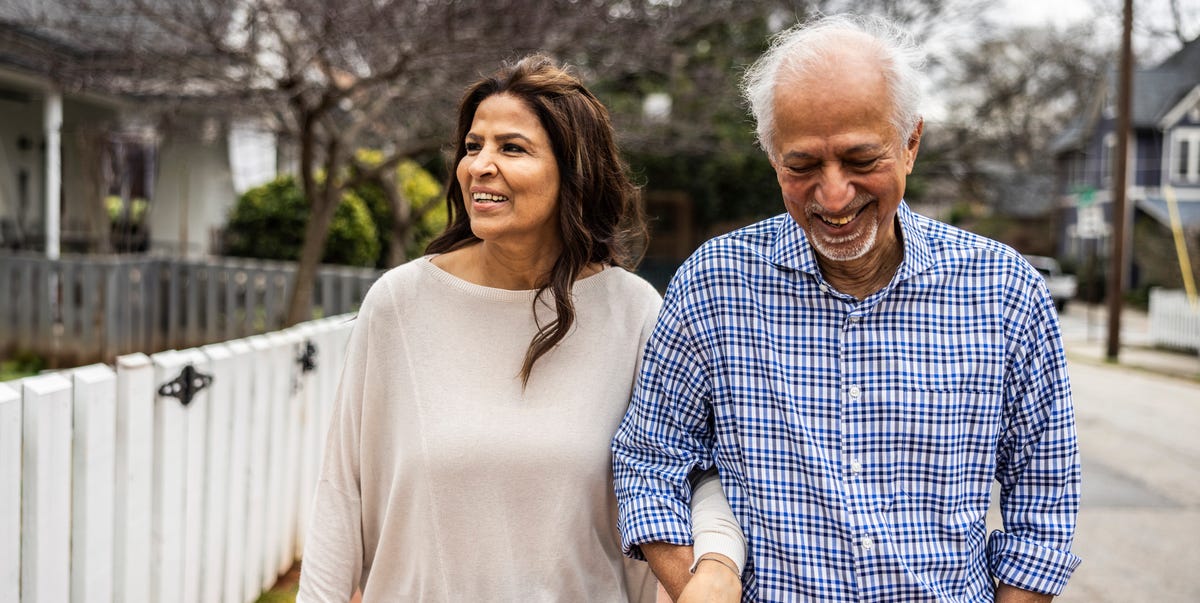
Heart disease is the leading cause of death in America, making it a health concern worth paying attention to. But while heart disease is scary, research suggests that the majority of cardiovascular issues are preventable. That means you may be able to turn your heart health around, even if you have a family history of heart disease.
While heart disease is often thought of as a “man’s disease,” it’s the No.1 killer of women, too. That’s why this February an Easy Spirit campaign is seeking to raise women’s heart health awareness, while encouraging women to move more for healthy hearts.
Regular movement is crucial to heart health, but there’s so much more to it than that. Cardiologists stress the importance of taking a 360-degree approach to heart health, looking at everything from what you eat and drink to how often you interact with friends.
Meet the experts: Aeshita Dwivedi, M.D., a cardiologist at Northwell’s Lenox Hill Hospital; Corey Bradley, M.D., a preventive cardiologist and lipid specialist at NewYork-Presbyterian/Columbia University Irving Medical Center; Howard Levitt, M.D.,cardiologist at RWJ Barnabas Health; Tracy Patel, M.D., cardiologist at Hartford HealthCare.
With that in mind, these are the biggest heart health tips cardiologists share with patients—and that they want you to keep in mind, too.
A heart-healthy diet exists.
Healthy eating is important for heart health because it impacts everything from your blood pressure and risk for type 2 diabetes to your risk of heart attacks and stroke, says Aeshita Dwivedi, M.D., a cardiologist at Northwell’s Lenox Hill Hospital.
There’s one diet that keeps coming up with cardiologists: the Mediterranean diet. That includes having a “sizable” amount of fruits and vegetables, and limiting red meat, Dr. Dwivedi says. “Fish and lean parts of chicken are considered healthier,” she adds.
“We should try to limit saturated fat, excess sodium, added sugars, and tropical oils—palm and coconut,” says Corey Bradley, M.D., a preventive cardiologist and lipid specialist at NewYork-Presbyterian/Columbia University Irving Medical Center. Dr. Bradley stresses that you don’t need to be a perfect eater—just do your best. “If you are eating like this the majority of the time, your heart will benefit from it,” Dr. Bradley says.
Being social is more important than you’d think.
The medical community is increasingly viewing social connection as an important part of health, including heart health. “Strong social connections are linked to lower stress levels, healthier habits, and better long-term heart outcomes,” says Howard Levitt, M.D., a cardiologist at RWJ Barnabas Health.
On the opposite end, loneliness has been linked with higher rates of heart disease, including heart failure, especially in older adults and women, he says “Spending time with family and friends supports both emotional well-being and heart health,” Dr. Levitt says.
Regular movement is key.
The American Heart Association (AHA) recommends aiming for 150 minutes a week of moderate-intensity exercise. “Everyone is different in their preferences, time, and ability,” says Tracy Patel, M.D., a cardiologist at Hartford HealthCare. “It is about embedding regular activity into our daily lives that will lead to sustained health.”
Mixing cardio sessions with weight training is a great choice, Dr. Dwivedi says, but if that is too much of a commitment, even walking daily can help. Looking to take an easy step toward heart health? Easy Spirit’s limited edition #MoveforHeart collection features two cushioned walking shoes that will donates part of its proceeds to Mount Sinai’s Heart Hospital.
Dr. Levitt stresses this: “The best exercises are the ones you enjoy and can integrate into your daily routine.”
Stress can do a number on your heart.
Being chronically frazzled can raise your blood pressure and also spark unhealthy coping habits that damage your heart, Dr. Levitt says. “I encourage patients to build simple stress-relief practices into their day, whether that’s walking, deep breathing, mindfulness, or setting better boundaries around work,” he says. “Even a few minutes designated to these practices can make a difference.”
Dr. Dwivedi suggests focusing on “any activity that you enjoy” to help lower your stress levels. “Find what de-stresses you and make time for it on a regular basis,” she says.
Know what is—and isn’t—normal for your blood pressure.
Most people with high blood pressure don’t have any symptoms, Dr. Dwivedi says. But that doesn’t mean it’s not doing damage. “When you have sustained levels of high blood pressure, it can impact your vital organs—heart, kidney, and brain,” she says. “It can also increase your risk for heart attacks and strokes.” That’s why it’s so important to know your blood pressure and to work closely with a healthcare provider when it’s high.
Normal blood pressure is considered less than 120 mm Hg/less than 80 mm Hg, per the AHA. While 120-129 mm Hg/less than 80 mm Hg is considered elevated, you’re considered to have high blood pressure if your reading is 130 mm Hg/80 mm Hg or higher.
If you have high blood pressure, it’s important to work closely with your doctor to manage it, according to Cheng-Han Chen, M.D.,interventional cardiologist and medical director of the Structural Heart Program at MemorialCare Saddleback Medical Center in Laguna Hills, CA. That usually includes having a home blood pressure cuff and taking regular measurements to let you and your doctor know if your treatment plan is working, he says.
Wine isn’t heart-healthy.
There’s been a lot of mixed information about the impact of alcohol on the heart, leading some people to drink wine regularly to support heart health. But Dr. Patel says that alcohol is “tricky” when it comes to heart health.
“It is often beneficial when we talk about being social and de-stressing,” she says. “However, it increases inflammation, and affects our sleep and mood.” That’s why she recommends using alcohol in moderation. “Every person must acknowledge the affect it has on them,” she says. “Some people just should avoid it completely.”
Of course, if you have concerns about your heart health or are having symptoms of heart disease, it’s crucial to talk to healthcare provider. They can give you a thorough evaluation and recommend next steps from there.
Read the full article here


