







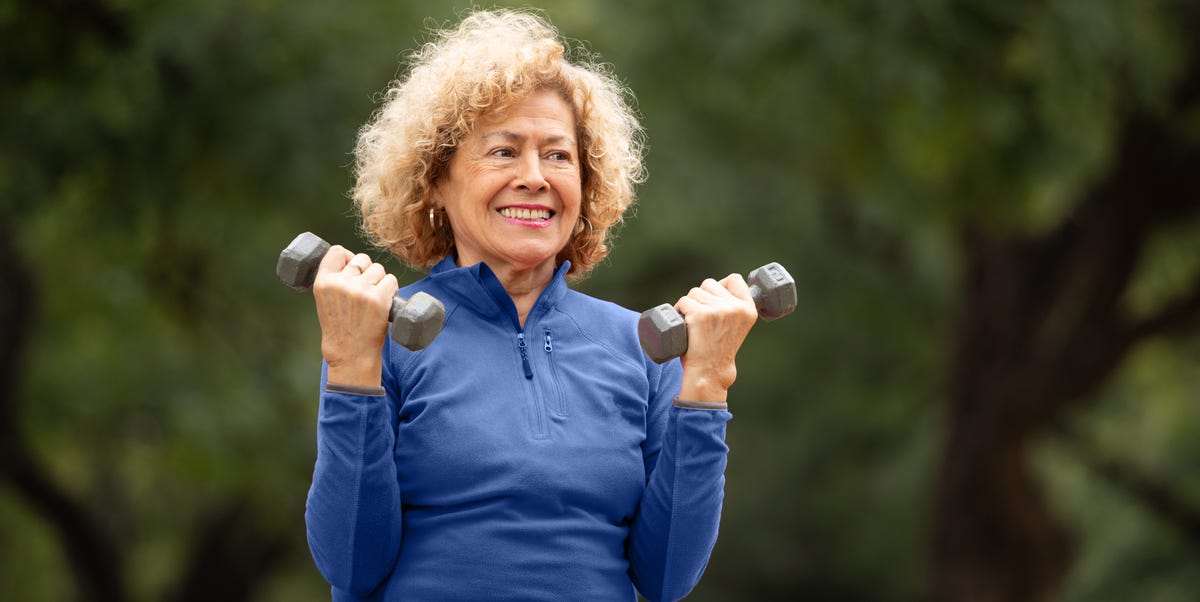
So many of the benefits of strength-training as you age have to do with the ways this form of exercise supports your joints. Even if you have a steady workout regimen, these places where two or more bones connect (which allow you to bend, extend, and move your body) change with age, making joint-friendly exercises so important to include in your routine.
Meet the experts: Gbolahan Okubadejo, M.D., a spine surgeon and head of The Institute for Comprehensive Spine Care in New Jersey; Tina Tang, C.P.T., a personal trainer in Jersey City, NJ.
“As we get older, joints naturally lose some cushioning and lubrication. Cartilage thins, tendons stiffen, and muscles weaken if they are not trained,” explains Gbolahan Okubadejo, M.D., a spine surgeon and head of The Institute for Comprehensive Spine Care in NJ. “When muscles weaken, joints end up doing more of the work, which is why aches, stiffness, and injuries become more common with age. This does not mean you should stop strength training. It means you should train smarter.”
Though it may be counterintuitive to do something that may cause some initial discomfort, moving is key. “One myth about joint care is that you should avoid moving them. Joints need movement,” says Dr. Okubadejo. “Healthy movement bathes the joint in fluid, which carries nutrients to the cartilage and lubricates tissues that allow movement. Without this regular motion, the range of motion becomes limited, joints stiffen, muscles shorten, and basic movements of daily life become more difficult and painful.” Still, it’s important to choose exercises that support your joints, not strain them. “Protecting joints doesn’t mean freezing them. It means using them wisely and progressively,” says Tina Tang, C.P.T., a personal trainer in Jersey City, NJ. “The key is finding appropriate entry points—ways to move that respect current ability while still gently training strength and mobility.”
According to research in the journal Arthritis and Rheumatology, people who strength-train regularly are up to 23% less likely to experience joint pain, plus less likely to develop osteoarthritis.
Ahead, find powerful exercises to help strengthen your muscles while supporting your joints.
Joint-friendly exercises for people over 50
Three of the large joints that require the most care as you age are the knees, hips, and shoulders. Below, you’ll find exercises that are gentle on these potential pain points while strengthening the surrounding muscles to set you up for success.
Sit-to-stand squats
“Lowering yourself down onto a bench or chair and standing up again activates your glutes, quads, and core without pounding your knees,” says Dr. Okubadejo.
To do: Stand about two feet in front of a bench, box, or chair with your feet shoulder-width apart, holding light to medium dumbbells at your sides (if desired). Bend your knees and press your butt back, lowering down to the chair while keeping your knees over your ankles. Pause for a moment, then return to standing.
Wall sits

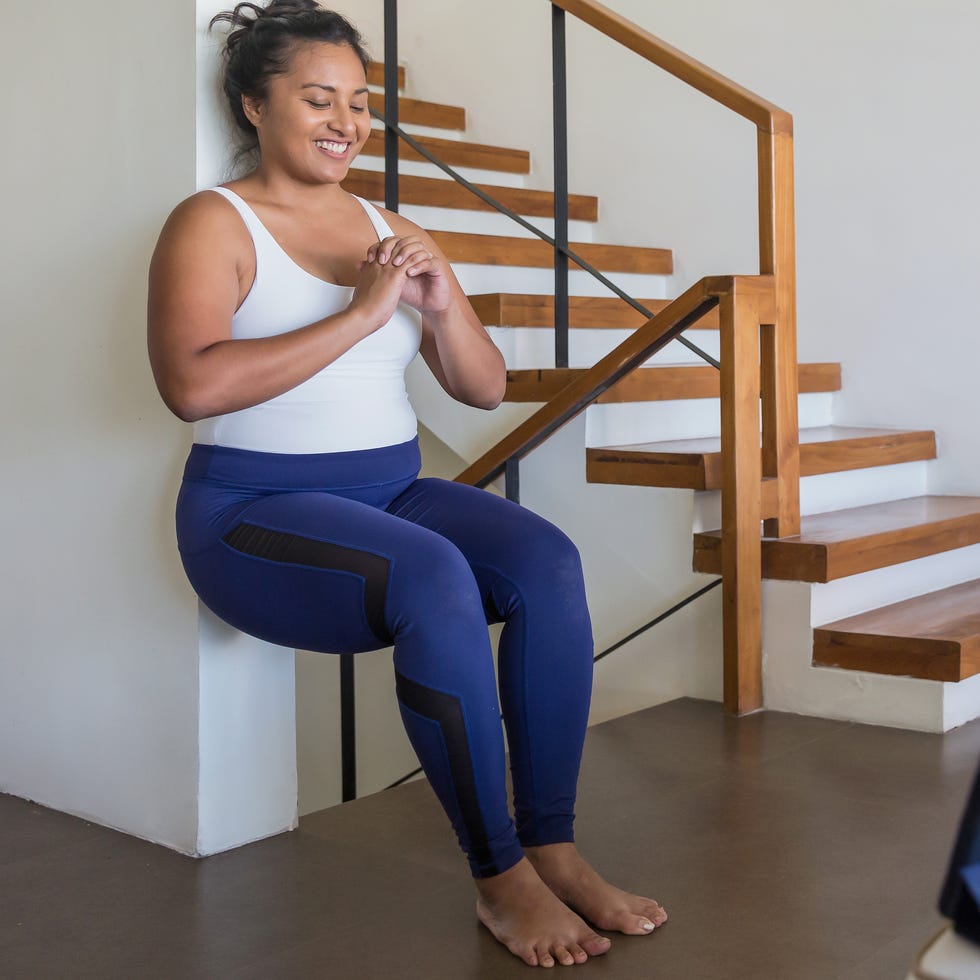
“Holding a seated position against a wall builds strength without movement,” Tang explains. “The knee angle can be adjusted higher or lower based on comfort.”
To do: Stand with your back flat against a wall. Slowly walk your feet out, bending your knees and letting your back slide down the wall, until you feel the muscles of your legs engage, then hold.
Reverse lunges

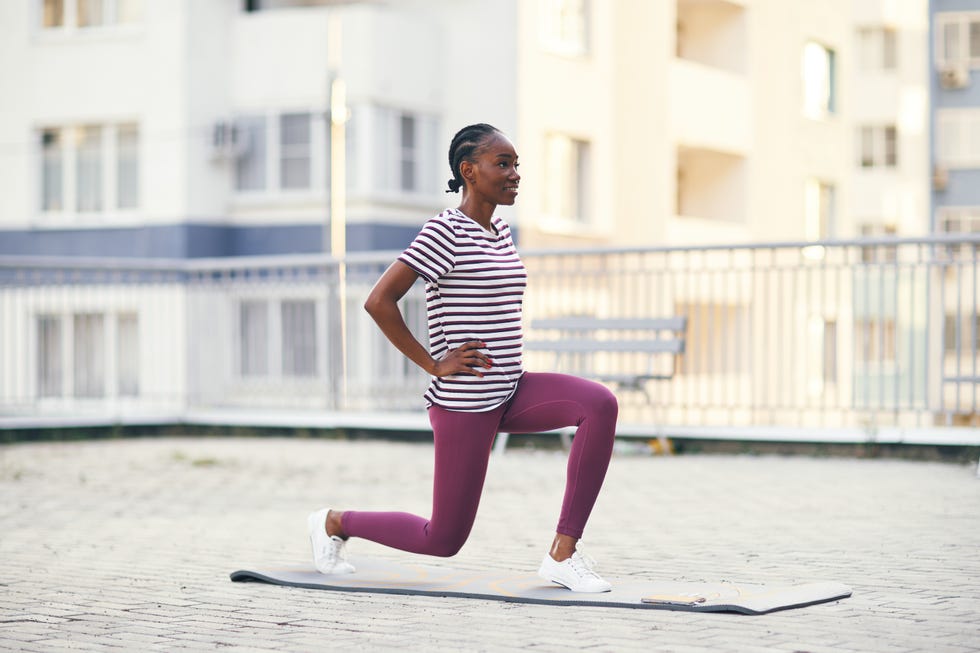
Forward lunges put a lot of pressure on the knee of the front leg, but stepping backwards instead removes this tension without sacrificing the work for the glutes and thighs, says Dr. Okubadejo. “Reverse lunges also tend to feel more stable for many.”
To do: Stand with your feet together, holding light to medium dumbbells at your sides (if desired). Take a large step back with one foot, bending both knees to form right angles (or as close as you can get), then push off the back foot to return to standing. Repeat on the other side.
Glute bridges

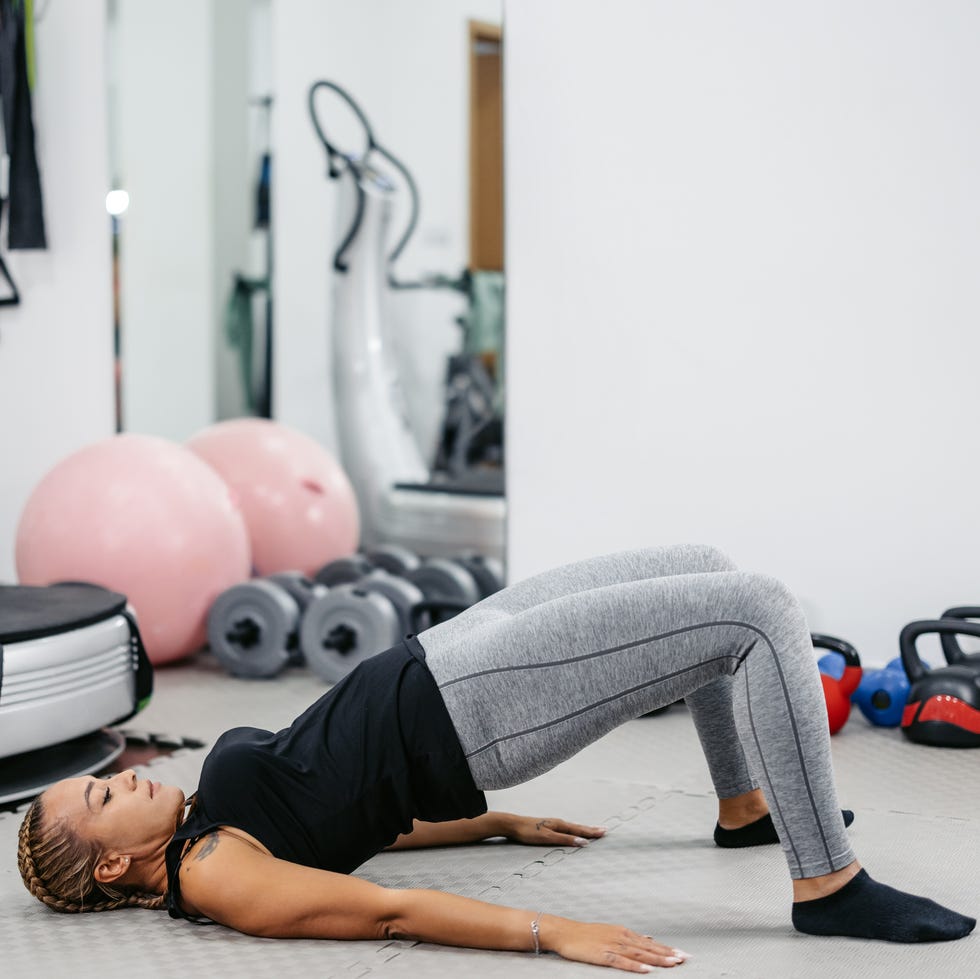
“This exercise isolates your glutes and hamstrings without knee involvement,” says Dr. Okubadejo. “It also strengthens your lower back and pelvis.”
To do: Lie on your back with your knees bent and feet flat on the floor. Press through your heels and squeeze your glutes to lift your hips, keeping your upper back on the floor, then lower back down.
Romanian deadlifts

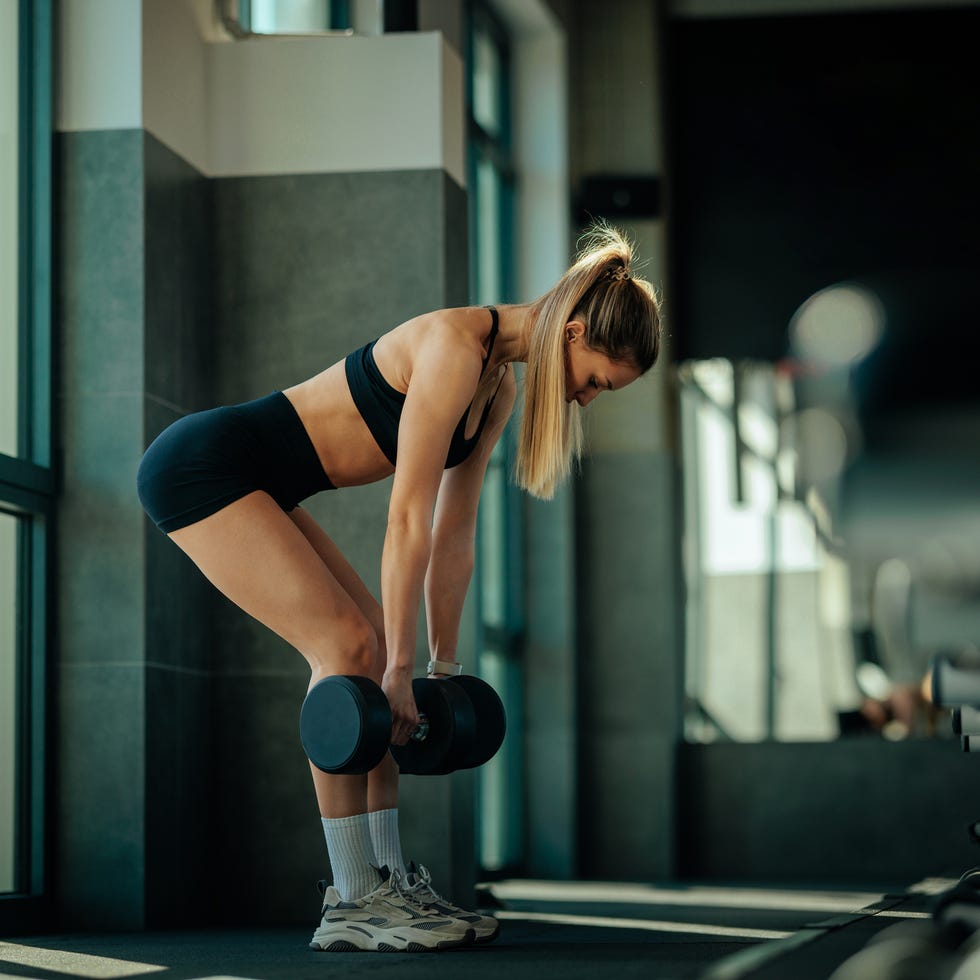
Romanian deadlifts, or RDLs, help strengthen the hips, glutes, and the entire back of your body, explains Tang. “This reduces strain on the knees during daily movement.”
To do: Stand with your feet hip-width apart, a slight bend in your knees, holding light to medium dumbbells parallel to your thighs (if desired), palms facing your body. Hinge at the hips to lower your hands toward your feet, stopping when you feel a strain in the backs of your legs, then lift back up to start.
Incline shoulder presses

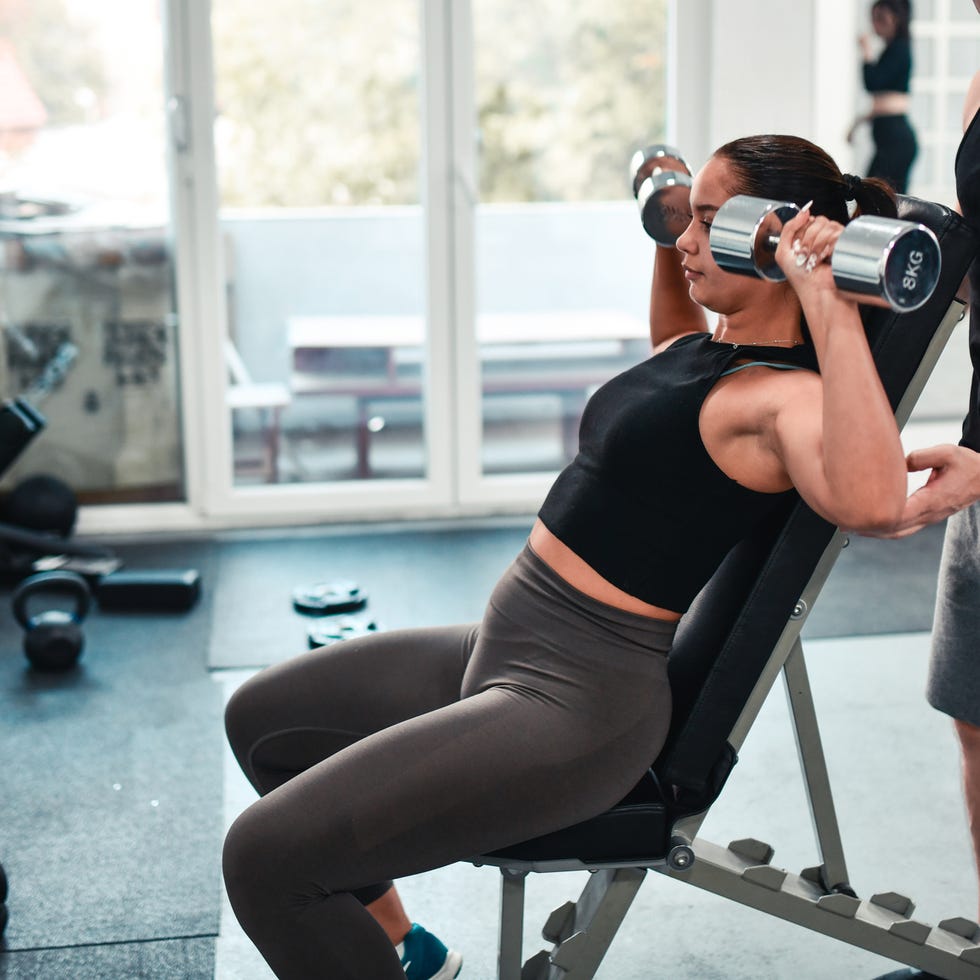
“Many people notice that lifting weight overhead becomes uncomfortable with age, past injuries, or shoulder stiffness,” Tang says. “Pressing at an angle, like in this exercise, instead of straight overhead, allows the shoulder to move naturally while still building strength.”
To do: Sit on a bench or chair so that you’re leaning back slightly without lying all the way down. Hold light to medium dumbbells at your shoulders. Press them straight up to the ceiling, then return to start.
Wall or incline push-ups

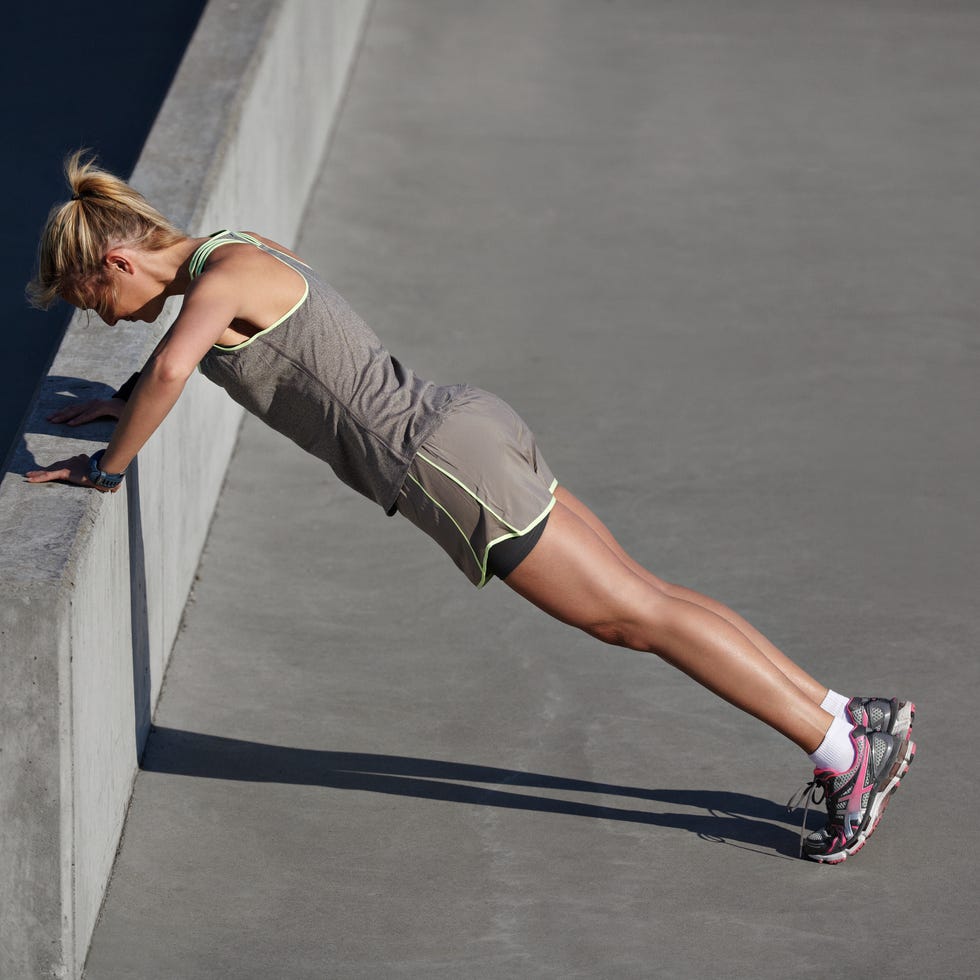
These push-up variations allow you to build shoulder and arm strength while allowing you to control the range of motion, says Tang. Plus, they lighten the load without impact on the knees.
To do: Place your hands on a wall, bench or chair, then walk your feet back until your body forms a straight line from your head to your heel. Bend your elbows to lower your chest, keeping your back flat, then press back up to return to start.
Half lateral raises

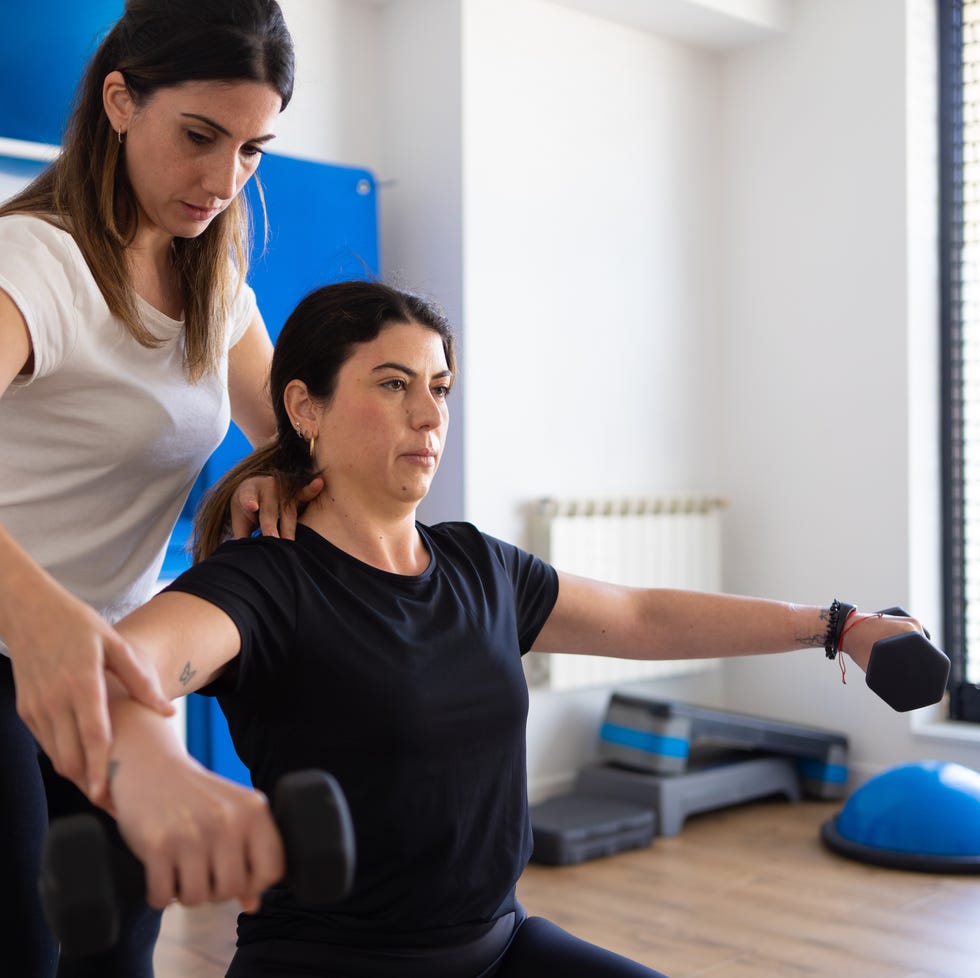
“Partial range of motion raises that don’t bring your arms all the way out to the side will still tax the shoulder muscles without dipping into ranges where most people feel pinching,” explains Dr. Okubadejo.
To do: Stand with your feet hip-width apart, holding light dumbbells at your sides, palms facing in. Keeping your shoulders pressed down and elbows slightly bent, raise the weights out to the sides, stopping a few inches before you get parallel to the floor, then lower back down.
Bicep curls

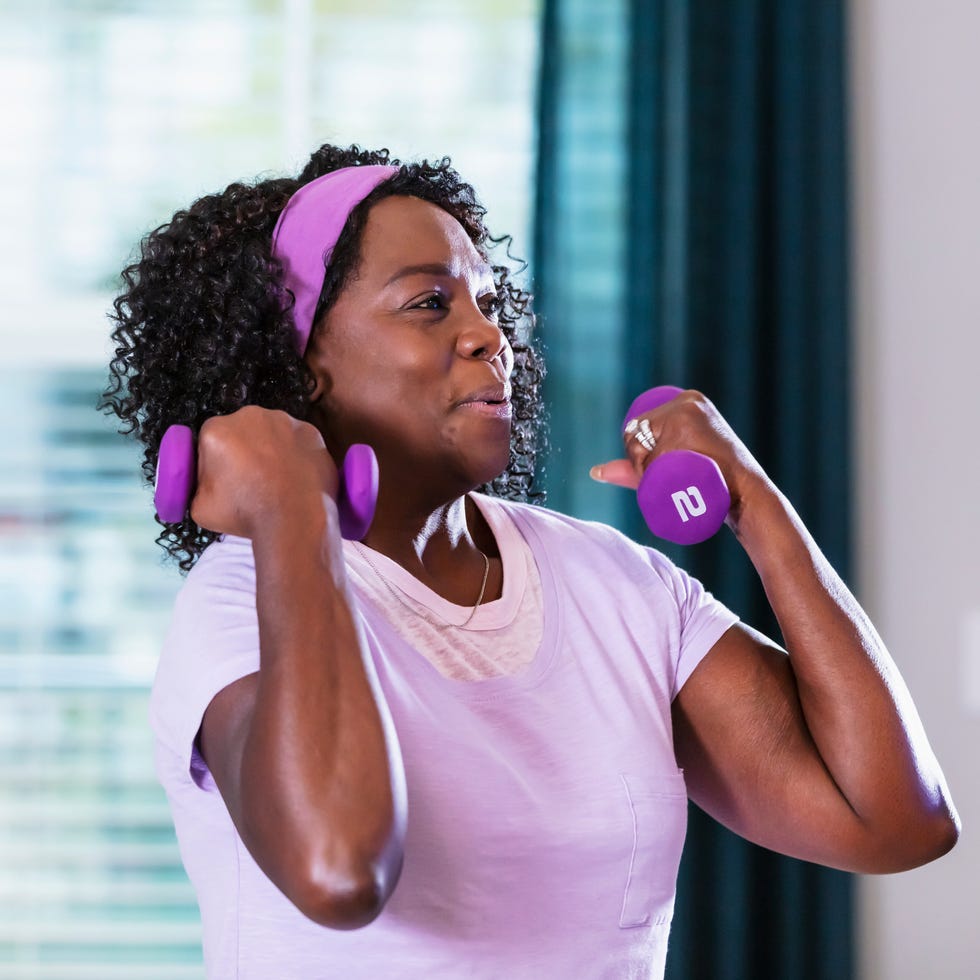
“Isolating arm movements will allow you to build arm strength without putting pressure on your shoulder joint,” Dr. Okubadejo says.
To do: Stand with your feet hip-width apart, holding light to medium dumbbells at a 90-degree angle at hip height. Keeping your upper arms steady, curl your arms up, sending the weights up to your shoulders, then slowly lower back down.
Triceps kickbacks

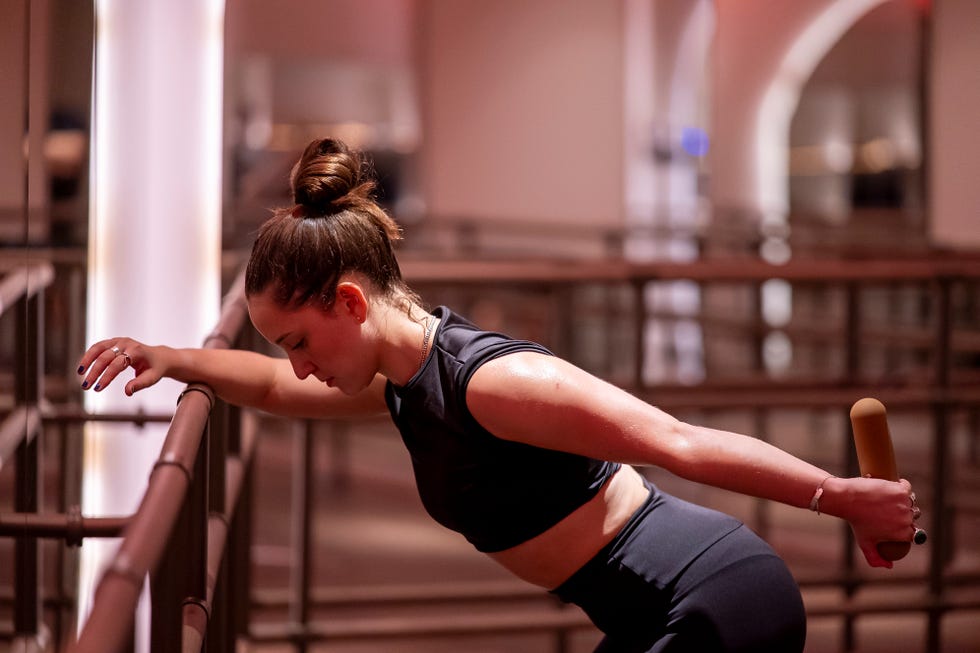
Triceps kickbacks are another way to build the arm muscles that support the shoulder joint without any added strain, says Tang.
To do: Stand with your feet hip-width apart. Bend your knees and hinge slightly at the hips. Holding light dumbbells, pull them up to the sides of your rib cage with your shoulders pressed down your back. Keeping your upper arms steady, extend arms fully, with weights going back towards the wall, then return to the start.
Lateral lunges
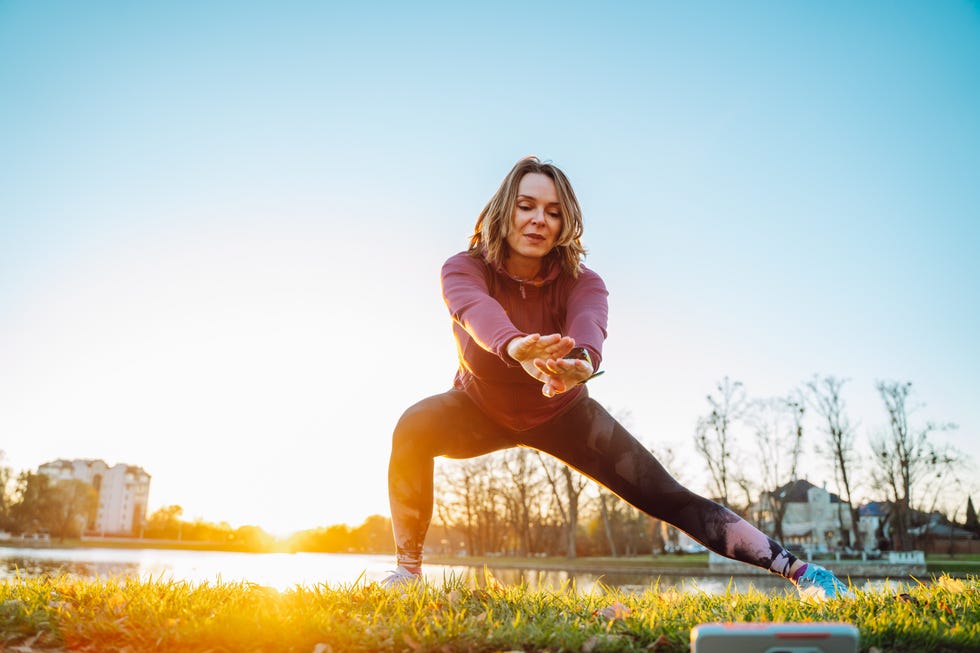
“Lateral lunges build strength and mobility side-to-side, a range of motion we often lose as we age but need for balance and daily movement,” explains Tang.
To do: Stand with your feet together. Take a large step out to one side, keeping your opposite leg straight and pressing your hips back as you bend your knee. Push off the stepping foot to return to standing, then repeat on the other side.
Fire hydrants

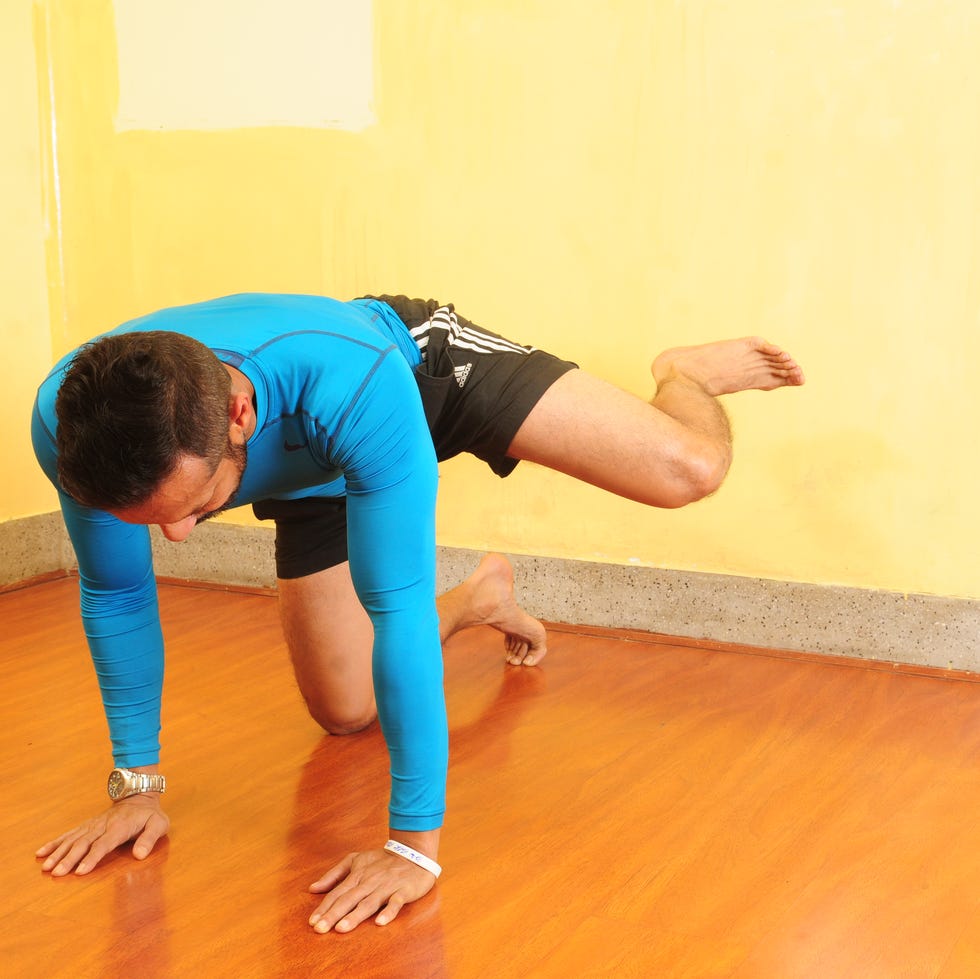
“Fire hydrants strengthen the hip stabilizers that support walking, stepping, and balance,” Tang says.
To do: Come onto all fours. Keeping your body steady and your hips pointed towards the ground, lift one knee straight out to the side, as near a 90-degree angle as you can from your body, then lower back down. Complete your desired number of reps, then switch sides.
Read the full article here


