



Maintaining healthy lean muscle mass is critically important to your overall health at any age, but it becomes especially key once you hit 50 and beyond. However, the strategies that helped you build and maintain muscle in your 20s likely won’t work as well for your body anymore. Fortunately, there are plenty of expert-approved strategies for building muscle after 50 that can help you hit your goals.
But first, why make building and maintaining muscle mass a priority after 50? “Lean muscle mass naturally declines as you age,” said Albert Matheny, R.D., C.S.C.S., a co-founder of SoHo Strength Lab. “But if you build more muscle mass as you get older, you’re more resilient.” Building muscle also helps protect your bones, lowering your risk of developing osteoporosis and mobility issues, said Maurice Williams, a NASM-certified personal trainer and assistant professor of kinesiology at Freed-Hardeman University. What’s more, having muscle “plays a crucial role in stability, healthy weight, injury prevention, and metabolism,” said Chrysten Crockett, a NASM-certified personal trainer and founder of Get Fit With Chrys.
Meet the experts: Albert Matheny, R.D., C.S.C.S., a co-founder of SoHo Strength Lab; Maurice Williams, a NASM-certified personal trainer and assistant professor of kinesiology at Freed-Hardeman University; Chrysten Crockett, a NASM-certified personal trainer and founder of Get Fit With Chrys; Doug Sklar, a certified personal trainer and founder of New York City fitness training studio PhilanthroFIT.
Here, trainers share their top tips for how to optimize your workouts to build and maintain muscle at 50 and beyond.
The best ways to build muscle after 50
Building muscle after 50 doesn’t just happen in the gym—it happens in the kitchen and in between workouts, too. Read on for the best strategies.
Try bodyweight exercises.
In case you’re not familiar with them, bodyweight exercises use the weight of your body to make you stronger. “Bodyweight exercises like push-ups, squats, and pull-ups will help maintain and develop a strong foundation on which you can add additional types of exercises,” explained Doug Sklar, a certified personal trainer and founder of New York City fitness training studio PhilanthroFIT. Lunges can also be a helpful exercise, Matheny said. Using just your bodyweight helps you focus on proper form, ensuring you are working all the muscles you want to strengthen while minimizing injury risk.
Incorporate some heavier weights, too.
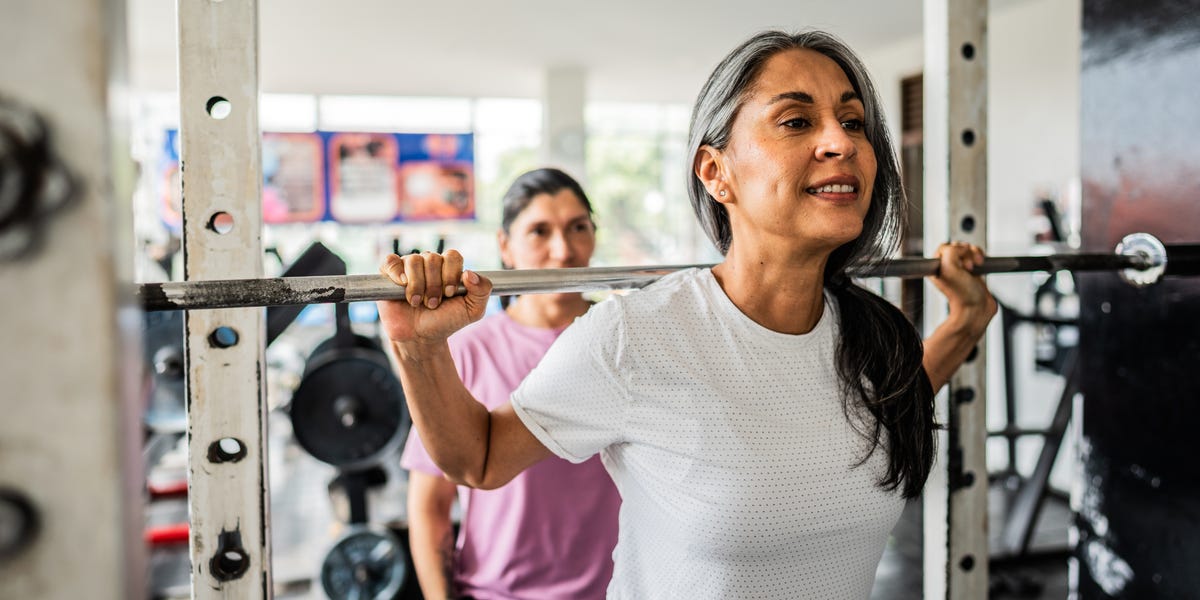
Strength training with weight is helpful for building muscle after 50, just like it is when you’re under 50, Matheny said. If you have experience lifting heavy weights, there’s no reason to stop as you get older. “Don’t be afraid to move heavy weight, but take extra caution to use proper technique,” said Sklar. (If you’re unsure of proper technique, ask a trainer at your local gym for pointers.) Williams suggested doing strength training workouts with weights two to three times a week. “Train the entire body with two to three sets of eight to 15 reps, with moderate to heavy weights,” she said.
Schedule recovery periods.
Post-exercise recovery slows down as you get older, Matheny said. “For strength training, it may not be something you do every day to give your body more time to recover,” he added. Matheny suggested alternating strength training days or muscle groups you focus on during each session to allow your body to recover fully before you work those muscles again. “Unless you’ve been training your whole life, you have a higher risk of injury,” he said. But building in good recovery periods allows your muscles time to rest, reducing the chances of pain, soreness, and overuse injuries.
Prioritize protein intake.
“I’ve worked with thousands of clients from age 22 to 82 and one thing remains constant: Nine out of 10 people do not prioritize protein intake,” Crockett said. But she points out that protein is essential for muscle repair, growth, and maintenance, making this an important element to focus on if your goal is to build muscle. “Try to get at least 20 to 25 grams of protein in your larger meals, and at least seven to 12 grams of protein in your snacks,” she said. Williams suggested focusing on healthy protein sources like red meat, fatty fish, poultry, and legumes.
Mix up your workouts.
Strength training doesn’t have to mean just pumping iron. It’s usually good to have a mix of exercise formats in your fitness routine, Matheny said. “Do things like cycling and swimming, too,” he suggested, which tend to be gentler on your joints than lifting weights. Alternating lower-impact workouts with tougher, load-bearing ones help you consistently build both muscle and bone. “Just mix it up,” Matheny said.
Aim for 7 to 9 hours of sleep.
The Centers for Disease Control and Prevention (CDC) recommends that most adults get seven to nine hours of sleep a night. “Sleep is where your body does its best work,” Crockett said. “Not only is it going to reset and restore what you’ve depleted during the day, it’s also going to repair the muscle you’ve broken down working out.” That recovery will allow you to continue to build muscle, she explained. “If you’re not giving your body the time it needs to recover, your workouts are going to be counterproductive.”
Don’t be afraid to challenge yourself.
“Some people think [this time in your life] is time to slow down but, in reality, it’s a great time to try new things, challenge yourself, start over in some areas, and pick up new habits,” Crockett said. “It’s a reminder to honor your body for how far it’s gotten you by appreciating it even more.”
If you’ve already been strength training, experts say you’re just fine to keep doing what you’ve been doing. But Sklar said there’s no reason to be intimidated if you’re new to strength training. “You are never too old to incorporate strength training and muscle building exercises into your fitness routine, he said. “If you don’t include them now, today is a perfect day to start.”
Read the full article here


