







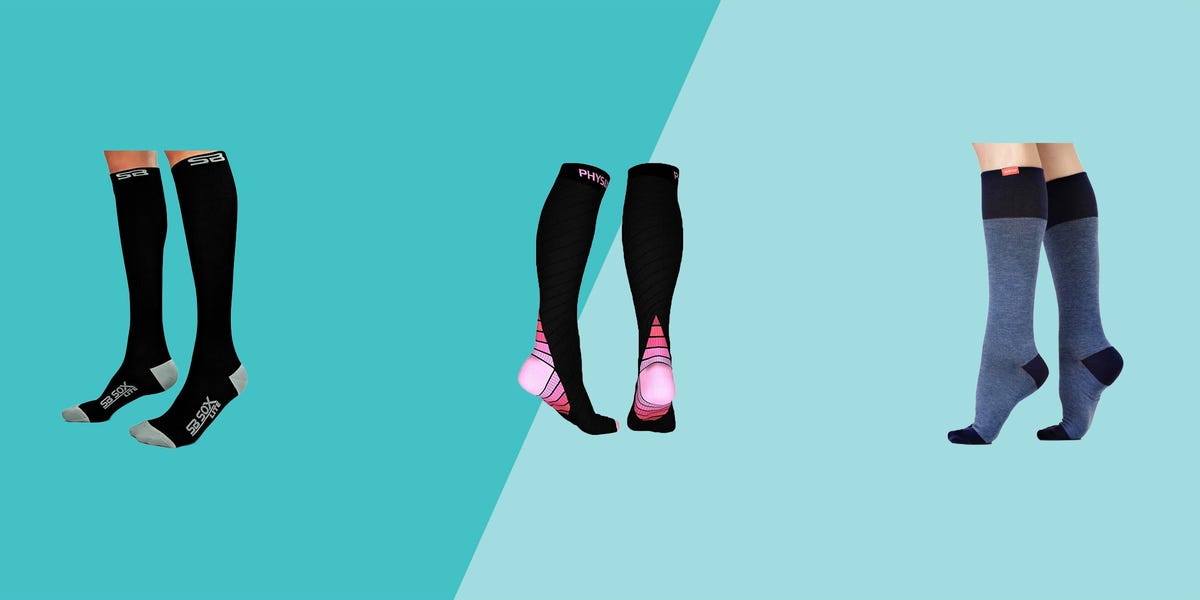
✔️ Pick the right pressure level. The pressure in compression socks is measured in millimeters of mercury (mmHg). Some compression socks have a mild pressure rating between 10 to 20 mmHg or 15 to 20 mmHg, while those on the firmer side have a pressure rating of 20 to 30 mmHg. Generally speaking, compression socks should fit snugly, but they shouldn’t be too tight that they’ll cut off circulation either.
“I usually recommend a lighter compression, like 10 to 15 or 15 to 20, to begin with, and for more moderate to severe swelling, we start to go up in numbers, such as 20 to 30 or 30 to 40, which should be a custom fit and prescribed by a doctor,” Parthasarathy says.
You should always talk to your doctor about what the best pressure rating is for you, especially if you have an underlying condition. Once you know which rating you’re looking for, you can find a top-quality pair (or two) online.
✔️ Choose the best material. Compression socks are typically made from materials such as nylon, Spandex, cotton, and wool. You’ll want to find the best material that fits your needs. If you’re planning to wear your socks in hot weather or your feet generally run hot, for example, you’ll want to opt for a breathable, moisture-wicking fabric. On the other hand, warmer and thicker options like merino wool may be more ideal for cooler seasons.
✔️ Find the right coverage and fit. Most compression socks are typically knee-length, but they can also come in other lengths and sizes; you’ll want to choose based on your preferred amount of coverage. Compression sleeves, for instance, offer coverage of the calves but not the feet, while low-rise compression socks only come to the ankle.
Read the full article here


