







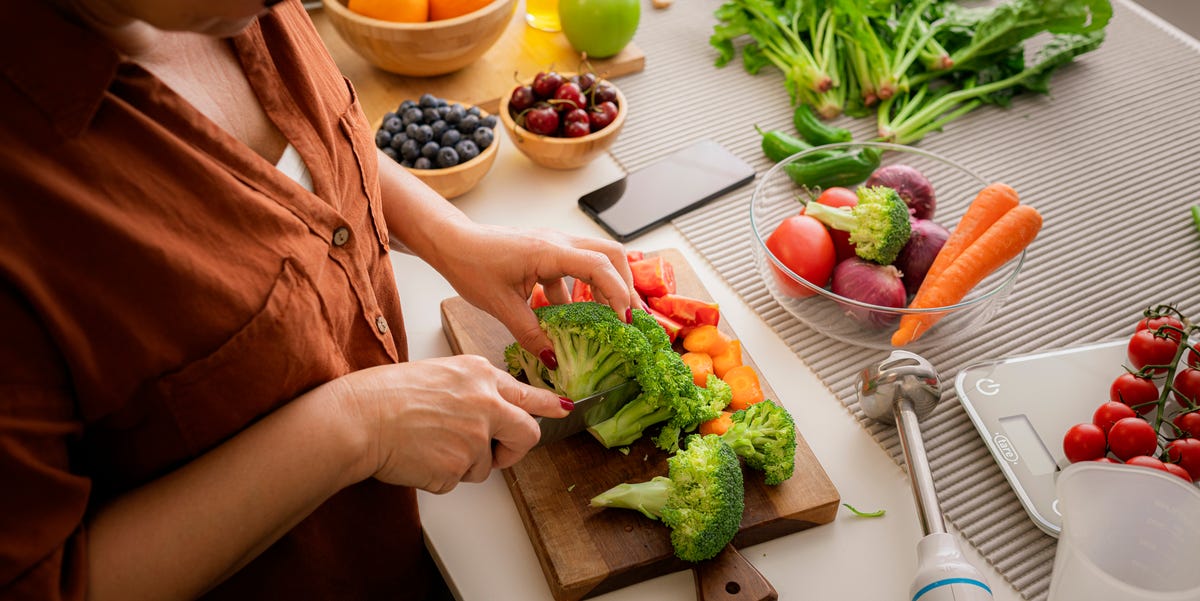
There are many strategies that can help you stay mentally sharp as you age. While regular exercise, staying social, and getting plenty of sleep all support cognition, filling your plate with the best foods for brain health is a simple and powerful place to start.
According to Maggie Moon, M.S., R.D., an LA-based registered dietitian and author of The MIND Diet: 2nd Edition, there are a variety of nutrients that help support better brain health. At the top of this list are omega-3s. Found in fatty fish like salmon and mackerel, “omega-3s are essential fatty acids that the body can’t produce on its own,” Moon explained. “These healthy anti-inflammatory fats are literally part of the structure of brain cells, keeping their cell membranes flexible and healthy.”
Meet the experts: Maggie Moon, M.S., R.D., LA-based registered dietitian and author of book, The MIND Diet: 2nd Edition; Alma Simmons, R.D.N., L.D., C.D.C.E.S., a registered dietitian and certified diabetes care and education specialist at The Ohio State University Wexner Medical Center; Julie Duffy Dillon, M.S., R.D.N., an eating disorder specialist, food behavior expert, and author of Find Your Food Voice; Lauren Harris-Pincus, M.S., R.D.N., author of The Protein-Packed Breakfast Club.
B vitamins also help keep your brain healthy. “In particular, B6, B9 (folate), and B12 work together to reduce levels of neurotoxins associated with cognitive decline,” explained Moon. Choline, lutein, polyphenols, and potassium are a few more that help the organ.
Magnesium also plays a big part in brain health and energy metabolism, explained Julie Duffy Dillon, M.S., R.D.N., an eating disorder specialist, food behavior expert, and author of Find Your Food Voice. “When a person is eating enough and adds magnesium-rich foods, it can help lower insulin levels, improve cognitive function, and promote more restful sleep,” she said.
Finally, it’s important not to forget about the foods that help support other organs and systems that contribute to brain health, explained Alma Simmons, R.D.N., L.D., C.D.C.E.S., a registered dietitian and certified diabetes care and education specialist at The Ohio State University Wexner Medical Center. “Research has shown that eating nuts can improve heart health markers, and having a healthy heart is linked to having a healthy brain and a lower risk of neurological disorders,” she explained.
Read on to discover the dietitian-recommended foods that may help improve cognition and keep your brain healthy as you age.
Best foods that support brain health
Pistachios
“Pistachios have a high antioxidant capacity that rivals that of popular antioxidant-containing foods, and they are a plant-based source of complete protein,” explained Lauren Harris-Pincus, M.S., R.D.N., author of The Protein-Packed Breakfast Club. “Foods that are high in antioxidants can be a powerful weapon against disease and premature aging of your body and your brain.”
Salmon
Salmon is a top source of omega-3 fatty acids, which play multiple critical roles in brain health. “Consuming more EPA and DHA omega-3 fatty acids improves cognition and working memory and may aid in slowing cognitive decline,” Harris-Pincus said. “Omega-3s also play a role in mood regulation, helping the brain communicate using the neurotransmitters serotonin and dopamine, and reducing inflammation in the brain, which has been linked to depression.”
Avocado
Avocados not only offer healthy fats which studies show boost overall and cognitive health, but they also contain those all-important omega-3s. “Omega-3 is needed for the brain cell membranes,” Duffy Dillon explained. “It is also required to create myelin sheaths, the coating surrounding nerves which help transmit messages throughout the body.”
Dark chocolate
Dark chocolate is high in cacao polyphenols, which have antioxidant and anti-inflammatory properties. According to Moon, they work to reduce neuroinflammation and oxidative stress in the brain so that it can function at its best. Polyphenols also “improve blood flow to the brain, which means a better supply of nutrients and oxygen to fuel how we think, learn, and remember,” Moon said. Science backs this up. One small study found that adults who ate chocolate high in cacao polyphenols performed better on a cognitive test than those who ate chocolate low in cacao polyphenols.
Wild blueberries
Eating “wild blueberries regularly may be an effective way to enhance some aspects of brain function and maintain others,” Harris-Pincus explained. “Studies have shown wild blueberries can improve executive function, enhance memory, may slow down age-related cognitive decline, and improve metabolic health, which benefits brain health.”
Spinach
Leafy greens like spinach and kale offer major brain-healthy nutrients like vitamin K, lutein, folate, and beta carotene, Harris-Pincus said. In fact, research in The Journal of Nutrition, Health, and Aging showed that consumption of green leafy vegetables may help improve cognitive function and slow cognitive decline associated with aging.
Beans
Various types of beans “contain folate, iron, magnesium, and antioxidants, which are all important to maintaining good brain health,” Harris-Pincus said. “Folate plays a role in neurodevelopment and cognitive function while iron helps with oxygen transport to the brain. Magnesium supports numerous biochemical reactions in the brain and helps with neurotransmitter regulation. Antioxidants like polyphenols help protect brain cells from oxidative stress and chronic inflammation.”
Pumpkin seeds
“Pumpkin seeds contain antioxidants that may protect the body and brain from free-radical damage. They’re also an excellent source of other nutrients important for brain health, including magnesium, zinc, iron, and copper,” said Simmons.
Eggs
Simmons explained that eggs are a good source of nutrients tied to brain health, including vitamins B6 and B12, folate, and choline. Choline is particularly important. “The brain needs choline to make acetylcholine, a neurotransmitter that supports early brain development and lifelong memory maintenance,” Moon explained.
Green tea
Research shows that green tea may help with cognition, thanks to the high levels of antioxidants. “Green tea contains caffeine, which may boost brain function and improve alertness, performance, memory, and focus,” Simmons added.
Broccoli
Simmons pointed to broccoli as another brain-boosting food. “Broccoli contains compounds such as sulforaphane that provide anti-inflammatory and antioxidant effects and may help protect the brain against damage. Sulforaphane levels are highly concentrated in broccoli sprouts,” she said.
Trout
Ideal for those observing a pescatarian eating plan, or people simply looking to change up their menu, trout is a great brain food option. The fish is chock-full of omega-3s, which Duffy Dillon recommended adding to your menu.
Corn tortillas
Corn tortillas contain lutein, a carotenoid with antioxidant benefits found in yellow and green foods. “Lutein collects in the brain and eye area to protect them against oxidative stress,” Moon explained. “We need this because the brain uses 20% of our oxygen, making it susceptible to oxidative stress.” Duffy Dillon also recommended corn tortillas.
Chia seeds
High in omega-3s, chia seeds are another great choice. Studies show that eating chia seeds every day may aid in cognition. Enjoy them as a pudding by pairing them with healthy fats (like almond butter) and berries for a truly brain-boosting breakfast.
Tomatoes
Staying hydrated is key for brain health. “Drink plenty of water, but you can eat your hydration by enjoying any fruit or vegetable that is crisp like cucumbers and bell peppers, or juicy like tomatoes or watermelon,” explained Moon.
Tasty recipes packed with brain-boosting foods
Add these delicious eats to your weekly rotation to aid in cognition and generally give your mind a boost.
Foods to avoid for better brain health
Perhaps unsurprisingly, our experts recommended consuming the below in moderation or steering clear if you’re inclined.
But at the end of the day, fueling your body is what’s most important. After all, the body needs calories to function. “Eating enough food calorically, including enough carbohydrates, proteins, and fats will help the brain preserve cognitive functions,” explained Duffy Dillon. And if you can work in a variety of the foods on this list on a regular basis, that’s even better.


Melissa Prest, R.D., D.C.N. is a registered dietitian nutritionist and holds a Doctor of Clinical Nutrition degree from Rutgers University. Melissa owns Kidney Nutrition Specialists, a nutrition practice dedicated to helping individuals living with chronic kidney disease, and is the Foundation Dietitian for the National Kidney Foundation of Illinois where she focuses on disease prevention, health education, and nutrition consultation.
Read the full article here


