







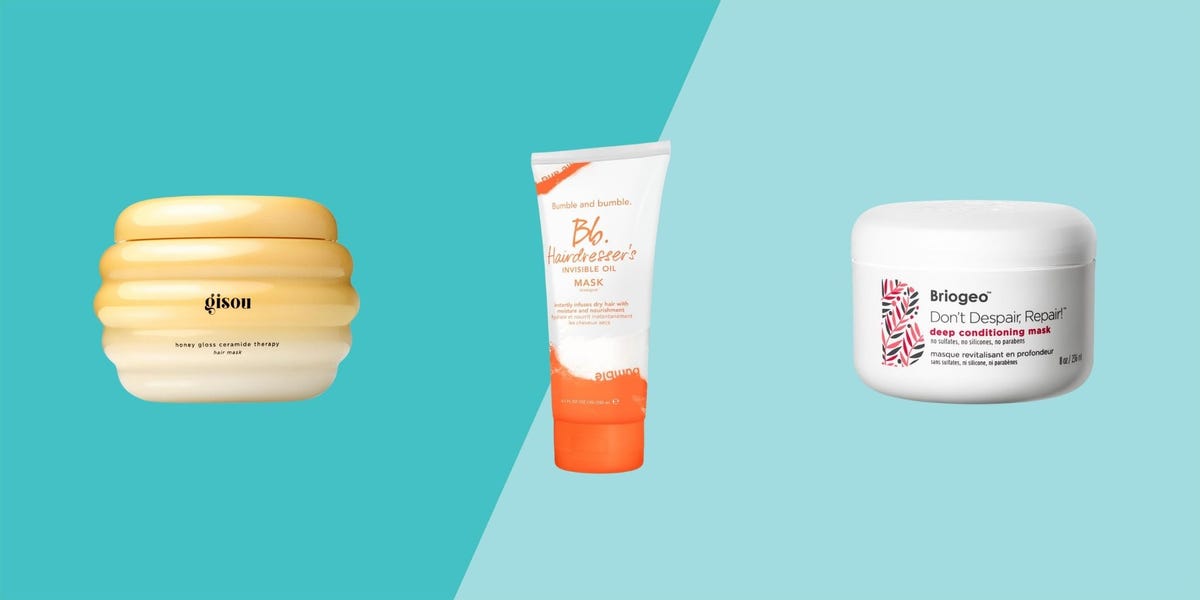
“If you’re using heat tools regularly or getting color services, a weekly hair mask isn’t optional, it’s essential,” Pugh explains. You wouldn’t skip moisturizer if your skin were dry, right? Your hair deserves the same care!” Below, experts share their top tips for applying a hair mask for maximum benefits. (Note: These directions do not apply to specialized treatments like K18 and Olaplex, which have their own specific instructions.)
✔️ Apply evenly to damp hair. After shampooing, gently squeeze the hair to get rid of any excess water. Then, apply your hair mask of choice, focusing on mid-lengths to ends, says Pugh, who adds that there’s usually no need to apply the mask to your scalp, especially if you’re looking to maintain volume. “I always recommend using a wide-tooth comb in the shower to help evenly distribute the product,” Pugh adds.
✔️ Give the mask time to sink in. Once your hair mask is evenly applied, don’t rinse it out right away! Most hair masks will have their own suggested time to leave the mask on, so when in doubt, follow the directions on the package. But, for those with fine or straight hair, Pugh says just a few minutes in the shower (say, about five) is sufficient. Those with thicker, curly, coily, or extra-dry hair may want to leave the mask on a bit longer, Pugh says, and may benefit from the steam method below.
✔️ Maximize benefits with steam or heat. To amplify the moisturizing and nourishing abilities of your mask, our experts say that adding heat or steam is worth considering. Dr. Luke suggests using a portable steamer or conditioning cap (designed to be heated up before applying). “These types of treatment allow for better penetration of water and conditioning ingredients,” she explains. Dr. Downie adds that you can even use a shower cap or heated towel on the head to help the mask penetrate more deeply.
✔️ Be gentle with wet hair. Once you’ve rinsed out your hair mask, Dr. Downie advises you to be extra careful with your wet hair to avoid damage. Particularly for those with curly or coily hair, she says to always use a wide-tooth comb, “and plenty of patience,” avoiding any yanking or pulling. “Quite frankly, that is the same advice I would give anyone with straight hair as well. Wet hair tends to be a bit more stretchy, but the issue is that after the hair stretches, it can break, so everyone has to be careful when combing, brushing, or styling wet hair,” Dr. Downie emphasizes.
Read the full article here


