







Probiotics have become increasingly popular in recent years for their potential benefits on gut health. In fact, according to a recent study published in the Clinical Gastroenterology and Hepatology, probiotic supplement use increased by 287% among U.S. adults from 2009 to 2023. But how do you know if you need to take probiotic supplements?
Ahead, we had experts weigh in on the most common signs you may benefit from taking probiotic supplements—while also sharing who shouldn’t take them, what to know before taking them, their favorite supplements, and more.
Meet the Experts: Susan Kais, M.D., a dual board-certified gastroenterologist and hepatologist in Cincinnati; Ruvini Wijetilaka, M.D., a board-certified internal medicine physician and medical advisor for VSL Probiotics; and Arkady Broder, M.D., a board-certified gastroenterologist and chief of the Division of Gastroenterology and Hepatology at Saint Peter’s University Hospital in New Brunswick, NJ.
What is a probiotic?
“Probiotics are live microorganisms that have the potential to provide some health benefits,” says Susan Kais, M.D., a dual board-certified gastroenterologist and hepatologist in Cincinnati. “They can help support a healthy, diverse microbiome in the gut, which plays an important role in digestion, immune function, and maintaining the intestinal barrier. Certain strains of probiotics may help target specific digestive symptoms like constipation, bloating, and diarrhea.”
Probiotics can be naturally found in fermented foods such as yogurt with live and active cultures, kefir, kimchi, sauerkraut, miso, kombucha, certain aged cheeses, and more. Experts generally recommend incorporating these foods into your daily diet before reaching for a probiotic supplement. “Most healthy people with a varied, fiber-rich diet don’t need a daily probiotic to thrive,” notes Ruvini Wijetilaka, M.D., a board-certified internal medicine physician and medical advisor for VSL Probiotics.
best probiotic for bloating
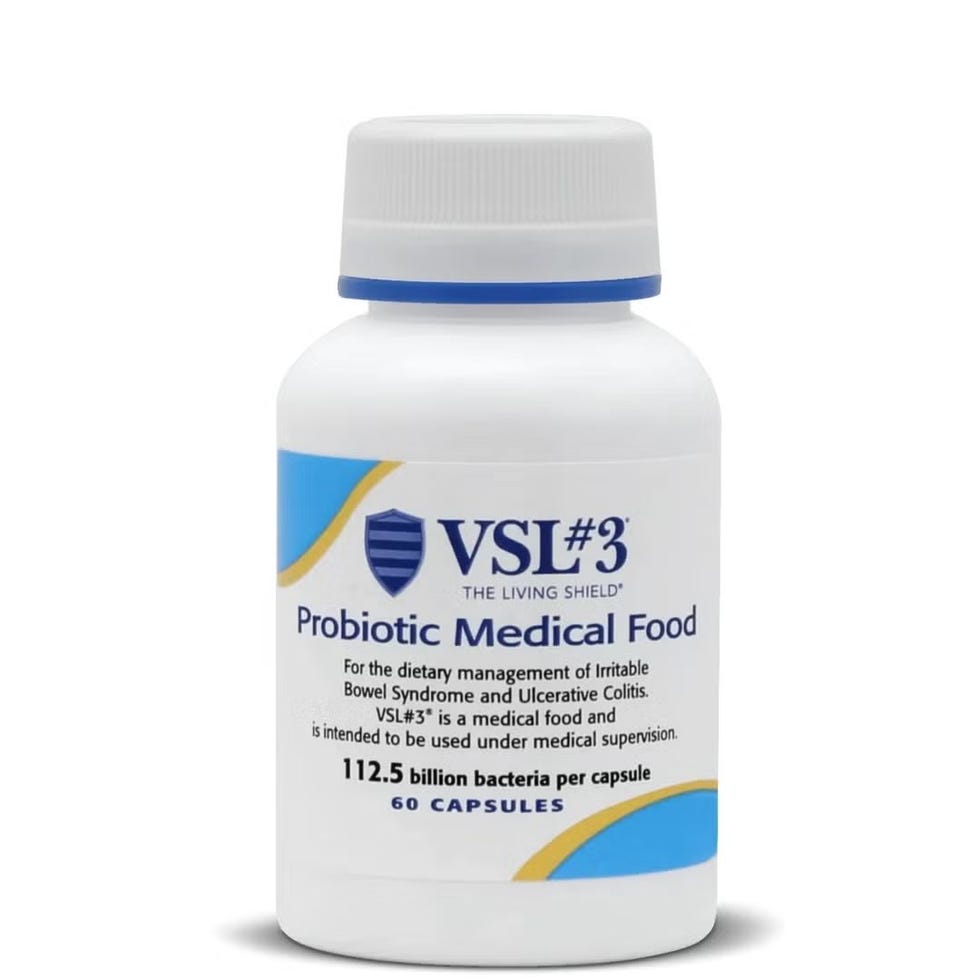
VSL #3

best probiotic for bloating
VSL #3
However, there are certain conditions in which taking probiotics may be helpful. In these cases, “the right strain, at the right dose, can support more regular digestion, reduce bloating and gas, strengthen the gut lining, and even help modulate inflammation throughout the body,” says Dr. Wijetilaka. She recommends supplements from VSL Probiotics—specifically VSL#3, a multi-strain probiotic medical food, which has the honor of earning our best probiotic for bloating).
What are the benefits of probiotics?
According to Arkady Broder, M.D., a board-certified gastroenterologist and Chief of the Division of Gastroenterology and Hepatology at Saint Peter’s University Hospital in New Brunswick, NJ, specific benefits of probiotics include aiding digestion, rebalancing the gut and strengthening the gut barrier, crowding out harmful microorganisms, and boosting the immune system.
Dr. Broder says the strongest evidence for probiotic supplement use is for gastrointestinal conditions such as irritable bowel syndrome (IBS), acute infectious diarrhea and antibiotic-associated diarrhea, ulcerative colitis (a type of inflammatory bowel disease that causes inflammation and sores in the colon), and pouchitis (inflammation after certain colon surgeries).
But it’s not just your digestive health that can benefit from probiotics—research suggests that it can even help boost immunity and support mental health, according to Dr. Wijetilaka. “The gut is really the control center for so much more than digestion—immune function, mood, hormone metabolism, even skin health all trace back to the microbiome in some way,” she explains. “When the balance of good bacteria in your gut is disrupted, whether from antibiotics, stress, a poor diet, or illness, probiotics can help restore that balance.”
Who should not take probiotics?
”Probiotics are considered safe for most healthy children and adults, but caution is warranted in immunocompromised people, critically ill or ICU patients, premature or very low-birth-weight infants, those with central venous catheters, and people with structural heart disease,” warns Dr. Broder. “In these groups there have been reports of serious bloodstream infections. Anyone in these categories should talk to a clinician first.” In fact, Dr. Kais advises that anyone thinking of starting an OTC probiotic should first discuss it with their healthcare team.
What are the signs you need a probiotic?
Here are the common signs your gut health may benefit from probiotics, according to experts:
You have frequent bloating, gas, diarrhea, and/or constipation
According to Dr. Broder, one of the most common signs that you may benefit from probiotics is if you’re experiencing digestive issues or IBS-type symptoms—such as bloating, cramping, diarrhea, constipation, and irregular bowel habits.
“Swinging between constipation and diarrhea, or just generally unpredictable bathroom habits, is one of the clearest gut-microbiome red flags I see in practice,” Dr. Wijetilaka shares. She also flags frequent bloating and gas as one of the specific signs. “If you’re regularly uncomfortably full or gassy after normal meals, it’s often a sign your gut bacteria are out of balance and struggling to break food down efficiently,” she notes.
Thankfully, research shows that taking probiotics may “improve bloating, abdominal discomfort, and stool regularity, though results vary and no single product works for everyone,” says Dr. Broder. For example, “certain probiotic strains can help normalize bowel movements and ease the discomfort of constipation for some people”—and if you have ongoing diarrhea or a recent stomach bug, they “can modestly shorten how long symptoms last by helping restore normal gut flora,” he explains.
You recently took antibiotics
“Antibiotics don’t discriminate between harmful and beneficial bacteria, so they can wipe out a meaningful chunk of your gut flora along with the infection they’re treating. This is one of the situations where I most confidently recommend a probiotic,” says Dr. Wijetilaka.
According to Dr. Broder, studies show that probiotic supplements specifically may be helpful for preventing antibiotic-associated diarrhea. “Antibiotics wipe out good bacteria along with the bad, which can trigger diarrhea,” he explains. “This is one of the best-supported uses of probiotics—starting them alongside antibiotics may reduce that risk.”
You have frequent colds or infections
Getting sick often could be another sign that your gut health may need attention. “A large portion of your immune system is trained and regulated in the gut, so if you feel like you’re constantly getting sick, an imbalanced microbiome may be part of the picture,” Dr. Wijetilaka explains. In fact, some studies suggest that certain probiotic strains may reduce the risk or duration of upper-respiratory infections.

Add Prevention as a preferred source in your Google search results.
Use your Google account to add this to your settings.


You have skin flare-ups
“Conditions like acne, eczema, and rosacea have a documented gut-skin connection. When I see patients with stubborn skin issues that haven’t improved with topical treatment alone, I’m always thinking about what’s happening in their gut,” shares Dr. Wijetilaka. Ongoing research suggests that certain strains of oral probiotics may support skin health and improve symptoms of some inflammatory skin conditions, including acne and eczema.
You have low mood or brain fog
“The gut produces a significant amount of the body’s serotonin and communicates directly with the brain through the vagus nerve,” Dr. Wijetilaka explains. “Persistent low mood or difficulty concentrating, especially alongside digestive symptoms, is worth a closer look at gut health.” Ongoing research on the gut–brain axis does indeed suggest that probiotics may influence mood and cognitive function—for example, one 2025 study found that a multispecies probiotic was associated with reduced negative mood in healthy adults after about two weeks.
You have food intolerances
Some studies suggest that certain probiotics may help manage food intolerances—particularly lactose intolerance. “Some probiotics—and fermented foods like yogurt and kefir—contain organisms that help break down lactose, which can reduce gas and bloating after dairy,” Dr. Broder explains. “Kefir, for example, is often better tolerated than plain milk.”
Which probiotic should you take?
When it comes to choosing a probiotic supplement to take, “strain specificity matters more than almost anything else,” says Dr. Wijetilaka. “Different strains do genuinely different jobs, so a probiotic marketed generically for ‘gut health’ without naming its strains is a red flag for me.” She also advises checking that it’s third-party tested and has a track record of published research. “I look for products that disclose the exact species and strain (not just Lactobacillus, but which Lactobacillus), the CFU count, and whether that dose is backed by actual clinical research for the condition you’re trying to address,” she says.
One specific probiotic that Dr. Wijetilaka highly recommends is VSL#3, a multi-strain probiotic medical food that’s formulated for the dietary management of IBS, ulcerative colitis, and pouchitis that comes in three different forms—capsules, powder., and double strength powder. It’s also Prevention’s top choice for best overall probiotic for bloating.
“Most over-the-counter probiotics rely on just one or two strains, while VSL#3’s combination is designed to work across multiple points in the GI tract at once,” Dr. Wijetilaka notes. “It’s also dairy-free, gluten-free, and non-GMO, which matters because a lot of my patients with gut issues are already sensitive to common trigger ingredients.”
If you don’t have a diagnosed GI condition but still want “ongoing, everyday support for regularity and digestion,” Dr. Wijetilaka recommends the VSL#4 Gut capsules. “It’s a lower-dose daily supplement rather than a medical food, so it’s a nice option for maintenance once someone’s more significant symptoms have been addressed with VSL#3,” she says.
Currently, you can take 15% off VSL Probiotics supplements with the code PREVENT15. Just apply the code when checking out your online shopping cart.
While VSL#3 is our top choice for bloating, there are a variety of other probiotics that also come recommended by experts. Some of our top choices for the best probiotics for bloating and best probiotics for women include Culturelle Digestive Daily Probiotic, Align Probiotic Pro Formula, and Garden of Life Dr. Formulated Once Daily Women’s Probiotics.
Dietary supplements are products intended to supplement the diet. They are not medicines and are not intended to treat, diagnose, mitigate, prevent, or cure diseases. Be cautious about taking dietary supplements if you are pregnant or nursing. Also, be careful about giving supplements to a child, unless recommended by their healthcare provider.
Read the full article here


