







We all want to live as long as possible—and ideally, we’ll feel as amazing as we can while we’re here. But is that a lofty dream or an achievable reality? A new study in the journal Nature Medicine (happily!) suggests that the answer is the latter, and it spells out one important habit that can help you enjoy healthy longevity.
Researchers studied the diet patterns, age, and health outcomes of more than 100,000 adults using data from the Nurses’ Health Study and the Health Professionals Follow-Up Study. After 30 years of follow-up, 1 in 10 participants reached age 70 physically, cognitively, and mentally healthy and free from chronic disease. Data analysis revealed that these participants closely adhered to a diet pattern known as the Alternative Healthy Eating Index (AHEI), and they were 86% more likely to achieve these healthy aging bragging rights than people who didn’t follow the AHEI.
Want to live into your 70s (and beyond!) feeling healthy and vibrant? Experts share some of the top foods that the healthiest, longest-living Americans eat on the reg.
What Is the AHEI Diet?
The Alternative Healthy Eating Index is richest in fruits, vegetables, whole grains, legumes, nuts, unsaturated fats, and low-fat dairy, with limited amounts of sodium, alcohol, trans fat, and red and processed meat. It may sound similar to the Mediterranean diet, another popular eating pattern that research shows is associated with good health and lower chronic disease risk.
“Diet is one of the most powerful daily choices we have when it comes to healthy aging, because it influences far more than weight alone,” says Lauren Manaker, M.S., R.D.N., L.D.N. “The way we eat over time can help protect muscle, bone, brain, heart, and metabolic health—the systems that really determine how well we age.”
Top Foods for Healthy Longevity
If your goal is not only to reach your golden years, but to enjoy and live them to the fullest, the time to focus on what you eat is now. Whether you’re in your 30s or approaching 70, it’s never too late to eat more of the foods (below) that support healthy aging and longevity.
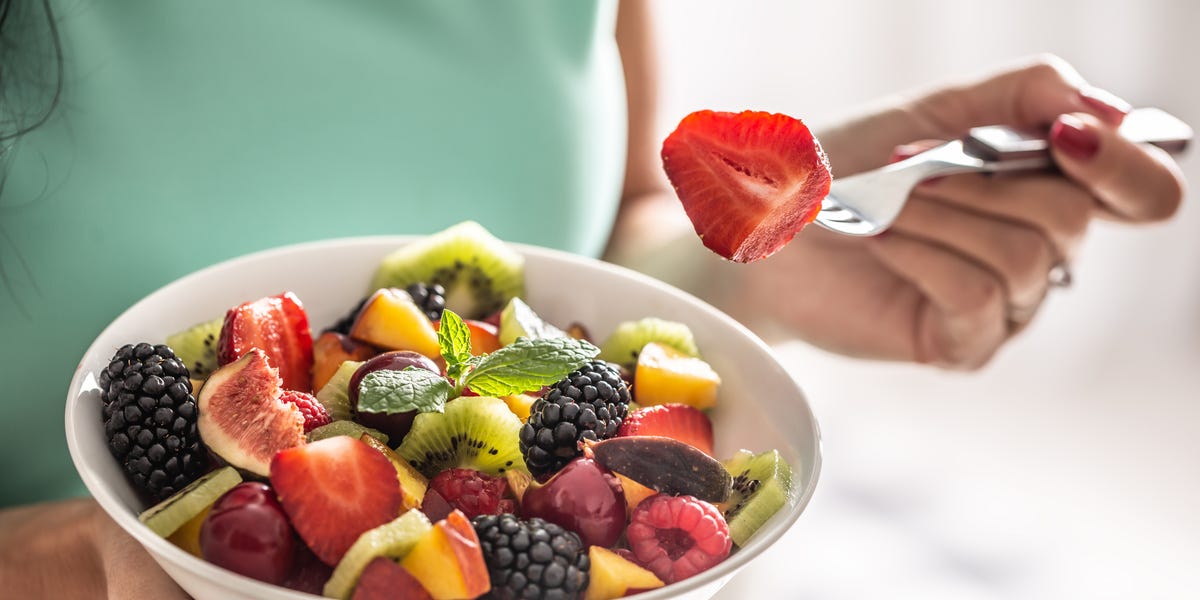
Fruit
Berries on yogurt, a banana during your commute, or a fresh, juicy peach just because—all of the fruits that the internet loves to tell you have “too much sugar” are actually some of the healthiest fruits that are consistently linked to healthier aging. “Fruits support healthy aging because they deliver fiber, water, vitamins, minerals, and antioxidant compounds that help support heart health, digestive health, and overall resilience as we get older,” explains Manaker.
For many, fruit is an easy addition to meals and snacks you’re already eating, with so many flavors, textures, and options to choose from. And if your favorite fresh fruit isn’t readily available, canned and frozen choices are just as nutritious.
Vegetables
If you’ve ignored advice to “eat your vegetables” up to this point, now is the time to make greens (and yellows, reds, purples, and oranges) a priority, as living a long and healthy life may actually depend on it. Vegetables are loaded with nutrients like fiber, potassium, and plant compounds like antioxidants and polyphenols that work to protect cells from damage and support healthy blood pressure, blood sugar, and cholesterol levels as you age. Each colorful veggie brings a different combination of nutrients, so keep things interesting by eating the rainbow.
If your diet is lacking in vegetables, a few simple additions can make a big difference. Toss a handful of spinach into your eggs or pasta, and make your plate more veggie-rich by adding tossed salads to meals and roasting or grilling vegetables for an easy side dish.
Whole Grains
While occasional sweet treats or slices of white bread won’t automatically shave years off your life, regularly choosing whole grains on most days is associated with healthy aging and a lower risk of heart disease and stroke. Not only are whole grains rich in fiber to support gut health and healthy blood sugar levels, they’re also a good source of B vitamins, iron, magnesium, and zinc—all of which support immune health, red blood cell production, and energy. “I often say whole grains help people age with steadier energy and better metabolic health, which becomes increasingly important in midlife and beyond,” says Manaker.

Add Prevention as a preferred source in your Google search results.
Use your Google account to add this to your settings.


Easy ways to eat more whole grains include swapping white bread, rice, and pasta for whole-grain varieties or adding more naturally whole-grain foods like oats, farro, popcorn, and millet to your meals and snacks.
Nuts
Just a small handful of nuts can have a big effect on how well you age. “Nuts pack a lot of nutrition into a small package, including unsaturated fats, vitamins, minerals, fiber, and bioactive phytochemicals such as polyphenols,” says Jennifer Pallian, R.D. “Together, these components may help reduce oxidation and inflammation, two processes involved in aging.”
Regularly eating nuts is associated with better cognitive health, mood, and heart health. In a study of over 70,000 older women, those who ate five or more servings of nuts per week (including peanuts) had a 20% lower risk of frailty than those who ate less than one serving each month.
For a daily serving of nuts, toss a small handful of walnuts, peanuts, pistachios, or cashews in oatmeal, yogurt parfaits, salads, pasta, granola, or trail mixes.
Legumes
Beans and lentils are consistently linked to better health outcomes, so it’s no surprise that research shows these plant-based proteins appearing regularly in the diets of the healthiest, oldest adults in the world.
Beans can be used as a side or addition to a number of meals, including chili, soups, casseroles, and dips. And it’s also a pro hack to use beans to replace some or all of the meat in a dish (for instance, you could make meatballs with half ground turkey and half lentils). “Beans and legumes are a plant-based protein and fiber source that can easily stand in as your main protein source for a few meals each week,” says Jackie Bridson, M.A., R.D.N.
Unsaturated Fats
“Healthy unsaturated fats, like olive oil, avocado, and the fats found in nuts and seeds, are linked to better aging outcomes and reduced cardiovascular risk over time,” says Bridson. This also includes foods high in omega-3s, which are found in foods like fatty fish and nuts. In one study, unsaturated fats appeared to slow signs of aging (such as skin frailty) while saturated fats were shown to possibly accelerate them. Unsaturated fats may also help reduce chronic inflammation, and research shows that inflammation is associated with the development of chronic diseases such as heart disease.
Consider adding avocado to your toast or tossing it on salads, and use olive or avocado oil for cooking and baking. Swapping meat for fatty fish like salmon, tuna, or sardines a few times a week can also help you eat more omega-3 fatty acids.
Low-Fat Dairy
Low-fat dairy is consistently associated with healthy aging, largely because it’s a muscle-building food and also has bone-protective nutrients. “Dairy milk provides high-quality, complete protein and essential nutrients like calcium and vitamin D, helping to not only build muscle and preserve bone strength, but also may be linked to a reduced risk of certain chronic diseases,” says Manaker.
You can enjoy low-fat milk by the glass, in smoothies, or for baking, and enjoy low-fat yogurt, kefir, and cottage cheese in meals and snacks daily to support your muscles and bones as you age.
The Bottom Line
Living a long and healthy life starts younger than you think. New research finds that those who spend decades eating a diet rich in fruit, veggies, legumes, whole grains, nuts, low-fat dairy, and unsaturated fats are more likely to reach their 70s in optimal health. By focusing on eating patterns, and not strict diet rules, a diet rich in these whole foods can be sustainable for a lifetime, supporting your health today and as you age.
Read the full article here


