







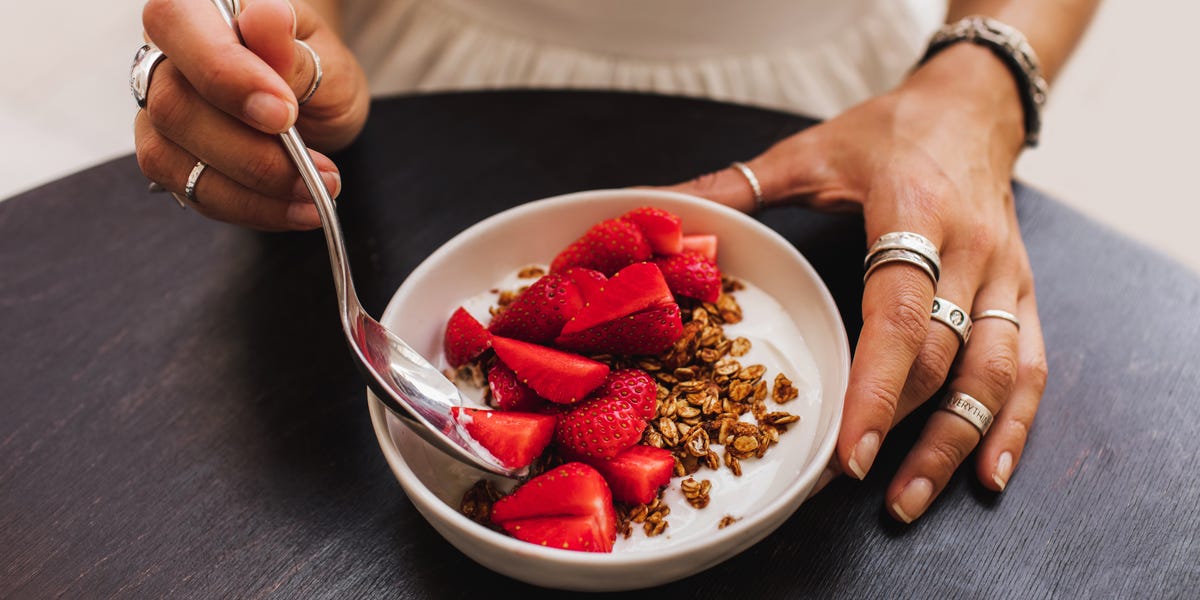
Protein is a hot topic in fitness and nutrition circles, and so are the best high-protein snacks. But if you’re looking for an easy and delicious way to incorporate more protein into your diet, don’t overlook the humble high-protein yogurt. Nutrient-dense, satisfying, and versatile, the best high-protein yogurts can enhance a wide variety of meals and snacks to help you meet your protein goals—and most of them probably taste better than the average protein bar or shake.
Meet the experts: Mia Syn, M.S., R.D., is the owner of Nutrition by Mia. Jordan Hill, M.C.D., R.D., C.S.S.D., registered dietitian with Live It Up; Katie Schimmelpfenning, R.D., founder of Eat Swim Win; Melissa Prest, D.C.N., R.D.N., spokesperson for the Academy of Nutrition and Dietetics.
But first, what actually counts as a high-protein yogurt? “For a food to be labeled ‘high in protein,’ it must contain at least 20% of the recommended daily value of protein per serving, which is equivalent to 10 grams of protein based on a 2000-calorie diet,” explains Mia Syn, M.S., R.D., owner of Nutrition by Mia. “Therefore, yogurt is generally considered ‘high-protein’ if it contains at least 10 grams of protein per serving.”
Whether you prefer it as a granola-topped breakfast, a star ingredient for sauces and dips, or just on its own, high-protein yogurt makes a worthy addition to virtually any kitchen. Ahead, dietitians share their favorite options, plus what to look for on your next grocery run.
Best high-protein yogurts
Below are some of the favorites of the registered dietitians we spoke with:
Chobani High-Protein Yogurt Cups and Drinks
Protein: 20 grams (g) per 6.7-ounce cup; 15, 20, or 30 g per 7, 10, or 14-ounce drink
Syn likes these lactose-free treats because “they are made with real fruit, zero added sugar, and no added protein concentrates,” she says. “They also deliver probiotics, six live and active cultures, and are high in naturally occurring vitamin B12, making it a smart choice for gut health [support], muscle support, unlocking energy, and feeling satiated.”
Fage Total Greek Yogurt 0%
Protein: 16 g per 5.3 ounces
This one, as well as Fage 1%, are both high-protein Greek yogurts with a creamy texture and no added sugar, says Jordan Hill, M.C.D., R.D., C.S.S.D., a registered dietitian with Live It Up.
Katie Schimmelpfenning, R.D., founder of Eat Swim Win, echoes that Fage “is the creamiest and one of the most filling yogurts on the market.” She adds that it has “a tart flavor and can easily be used in savory dishes or as a substitute for sour cream. It can also be dressed up with honey or fruits to take on a sweet taste.”
I have to second (or third) that—Fage is a regular repurchase for me, and I’m always scraping the sides of the container, in awe of my ability to use it in so many applications. I personally like to add this one to smoothies to cut the chalkiness of my protein powder without sacrificing satiety.
Siggi’s Icelandic Simple Ingredient Skyr
Protein: 16 g per 5.3 ounces
This pick “is a high-protein option with little to no sugar [depending on the flavor] and no artificial flavors,” says Hill. “It also has a thicker consistency and isn’t watery like some other options.” It’s great plain, and there are also plenty of fruity flavors.
Oikos Triple Zero Greek Yogurt
Protein: 15 g per 5.3 ounces
This one is Hill’s personal favorite for its variety of “yummy flavor options that are sweetened with the natural sweetener, Stevia,” she says. “It has zero grams of added sugar and is considered a high-protein option.” Flavors include triple berry, strawberry, cherry, and more.
Too Good Zero Sugar Greek Yogurt
Protein: 13 g per 5.3 ounces
This is a high-protein, low-sugar option made with monk fruit for those who like a sweeter taste profile, Hill says. It’s made with skim milk, which makes it a low-fat option, and natural flavors, and Amazon reviewers are surprised by how good it tastes. They also enjoy the creamy texture.
Chobani Zero Sugar Greek Yogurt
Protein: 12 g per 5.3 ounces
Hill recommends this one because it’s “a great lactose-free option that’s high in protein.” It is also available in multiple flavors, including strawberry, vanilla, key lime pie, black cherry, and more.
Silk Greek-Style Coconut Milk Yogurt Alternative
Protein: 10 g per 5.3 ounces
This is a good plant-based option made with pea protein, Hill explains. It contains 10 grams of protein, more than other plant-based options on the market, she adds, and there are four kinds, including vanilla, strawberry, lemon, and blueberry.
As someone who has developed a general “ick” toward plant-based yogurts because of their typical watery consistency, I was pleasantly surprised when I tried Silk Greek-Style Vanilla. I couldn’t tell it was made of coconut milk; it had a thick, creamy texture, and I enjoyed it regularly with granola for breakfast.
What to look for in a high-protein yogurt
- Look out for added sugar: “There are many yogurts on the market with very little protein content and as much added sugar as a candy bar,” Hill says. Grabbing one with zero added sugar is ideal.
- Be mindful of artificial sweeteners: Look for natural sweetener options—like monk fruit or stevia—or none at all, Hill recommends.
- Consider fat content: Low-fat options (0% or 1%) are often recommended for heart health, Hill says. That’s because some dairy products contain saturated fat, which, if consumed in excess, can raise cholesterol in some individuals. That said, the role of sugar-free, plain yogurt—especially as part of a balanced diet—is complex and still being researched. If you’re unsure what’s best for you, talk to a registered dietitian or your healthcare provider. For certain, though, heart-healthy fats that experts do encourage include those found in oily fish like salmon, nuts, and avocados.
- Aim for 10+ grams of protein: A high-protein yogurt should ideally contain 10, but preferably 12 grams of protein per serving, according to Syn and Hill.
Does Greek yogurt have more protein than regular yogurt?
You may have noticed that many of the recommended options above are Greek yogurts. That’s no coincidence, according to Melissa Prest, D.C.N., R.D.N., spokesperson for the Academy of Nutrition and Dietetics. “The primary difference [between Greek yogurt and regular yogurt] is the straining process,” she explains. “Greek yogurt is strained multiple times to remove whey, the liquid portion of milk. This creates a thicker, creamier product with more concentrated protein.”
How much protein should you eat in a day?
Protein is an important part of any balanced diet, but there’s no one threshold that everyone needs to meet to be healthy. “Protein needs depend on factors such as age, activity level, overall health, and specific medical conditions,” Prest explains. “Rather than focusing solely on a specific number, I often encourage people to include a source of protein at each meal and snack and to make at least one-quarter of their meal plate protein-rich.”
Your protein needs may also change over time, according to Prest. “Protein helps support muscle maintenance, satiety, immune function, and overall health, and needs may increase for older adults, physically active individuals, or people recovering from illness or injury.”
Should anyone avoid eating high-protein yogurt?
While a diet featuring high-protein yogurt works for many people, it’s not for everyone. “People with lactose intolerance may be sensitive to yogurt and should find a lactose-free option,” Prest warns. “Anyone with a true milk protein allergy should avoid all dairy-based yogurts.”
The bottom line
A yogurt that contains 10 grams of protein or more per serving can be considered high-protein and can make an ideal breakfast, snack, or meal-enhancer. But as with any addition to your diet, it’s important to find the right balance for you.
Read the full article here


