







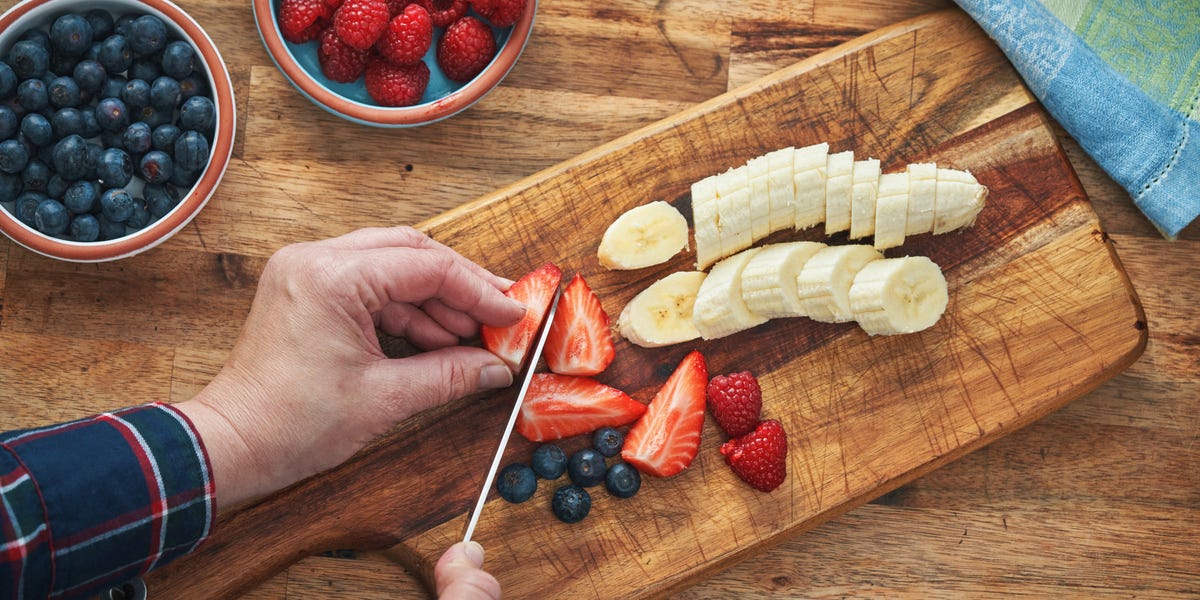
Fruits are some of the tastiest and most nutritious foods to add to a healthy diet. While it’s tough to go wrong with any fresh fruit, some picks, like bananas and berries, tend to rise above the rest. But if you were to pit them against each other, bananas vs. berries, is there a clear victor?
Meet the experts: Samantha Peterson, M.S., R.D.N., a registered dietitian nutritionist and owner of Simply Wellness; Juliana Vocca, M.S., R.D., a registered dietitian and owner of Prime Women Nutrition.
“Different fruits provide different nutrients, fibers, and plant compounds that support the body in different ways,” says Samantha Peterson, M.S., R.D.N., a registered dietitian nutritionist and owner of Simply Wellness. Read on to discover everything you need to know about bananas and berries.
Bananas vs. berries: Nutrition
You’ve likely noticed that we are discussing bananas, a single type of fruit, and berries, a handful of different fruits. Here, you’ll find nutrition information for bananas and two of the most popular types of berries, raspberries and blueberries.
Bananas nutrition
According to the U.S. Department of Agriculture (USDA), one medium ripe banana contains:
- 105 calories
- 1 gram (g) of protein
- 0 g of fat
- 27 g of carbohydrates
- 3 g of fiber
- 14 g of sugar
Raspberries nutrition
One cup of raspberries, per the USDA, contains:
- 64 calories
- 2 g of protein
- 1 g of fat
- 15 g of carbohydrates
- 8 g of fiber
- 5 g of sugar
Blueberries nutrition
Finally, according to the USDA, ½ cup of blueberries contains:
- 84 calories
- 1 g of protein
- 1 g of fat
- 22 g of carbohydrates
- 4 g of fiber
- 15 g of sugar
Benefits of bananas
Bananas are one of the most practical and accessible fruits out there, says Peterson. Plus, they offer numerous health perks. “One of their biggest benefits is that they provide a quick and reliable source of carbohydrates, which are your body’s preferred energy source,” Peterson explains. “That makes bananas especially helpful to eat before or after workouts, during busy days when someone needs something easy to grab, or as part of a balanced snack to help maintain energy levels.”
Then there’s the impressive vitamin and mineral content, led by potassium and magnesium. “The potassium helps counter sodium to keep blood pressure in check, while magnesium supports healthy muscle and nerve function,” says Juliana Vocca, M.S., R.D., a registered dietitian and owner of Prime Women Nutrition. Research suggests that eating more potassium may be key to lowering your blood pressure, and eating bananas every day (which contain about 10% of the recommended daily potassium intake, per the National Institutes of Health) is a great way to ensure you’re getting enough.
“Another underrated benefit is digestive support,” Peterson says. “Bananas contain fiber, including a type called resistant starch, when they are slightly underripe. Resistant starch can help support gut health and feed beneficial gut bacteria.” According to research in Frontiers in Nutrition, resistant starch has also been shown to improve glycemic response and insulin resistance.
All told, Vocca says that bananas are “a simple fruit that quietly supports long‑term cardiovascular and metabolic health.”
Possible downsides of bananas
“For most people, bananas are a very healthy food and do not need to be avoided,” says Peterson. However, because they are higher in carbohydrates, when and how you eat them does matter. Peterson notes that a banana on its own is not super filling, but “pairing it with protein or fat, like Greek yogurt, nuts, peanut butter, or cottage cheese, often creates a more balanced snack that supports steadier energy and satiety.” Likewise, a less ripe banana is likely to be more filling and satisfying than a ripe one. “Greener bananas contain more resistant starch, which behaves like fiber and supports a slower, steadier rise in blood sugar,” Vocca explains. “As bananas ripen, their starch converts to sugar, making them sweeter and more likely to raise blood sugar.”
Depending on whether you have allergies and/or digestive sensitivities, you may experience some GI issues from bananas. “Everyone’s tolerance is a little different,” Peterson says. Finally, if you havediabetes and are watching your blood sugar or kidney disease and need to monitor your potassium intake, you may need to watch your banana intake more closely.
Benefits of berries
“Berries are incredibly nutrient-dense and are one of the foods most consistently associated with long-term health benefits,” says Peterson. “They are rich in fiber, antioxidants, and plant compounds called polyphenols, which help support everything from heart health to brain health to inflammation balance.”
Despite being small in size, berries tend to be high in fiber—especially raspberries, which contain the most fiber per serving of all fruits. “The fiber in berries helps slow digestion and supports more stable blood sugar responses compared to many other sweet foods,” Peterson explains. “Many people struggle to get enough fiber throughout the day, and adding berries to yogurt, oatmeal, smoothies, chia pudding, or even snacks can make a big difference.”
The antioxidants in berries, the plant compounds that give them their deep vibrant colors, have been shown to deliver a host of health benefits. Research has linked these compounds, known as anthocyanins, to a lower risk of age-related illnesses, less inflammation in the body, and improvements in overall metabolic health.
There’s also the fact that berries are an excellent way to satisfy your sweet tooth, especially if you’re trying to limit your sugar intake. “They provide a lot of flavor and volume without being extremely high in sugar,” says Peterson, which makes them a great dessert pick.
Possible downsides of berries
As is the case with bananas, berries are overwhelmingly healthy for most people. That said, “consuming them in excess can cause digestive discomfort, such as gas, bloating, or stomach cramps, due to their high fiber and fructose content,” says Vocca. It’s also worth noting that fresh berries can be expensive and spoil quickly, which may be a barrier for some people. Fortunately, frozen berries are also a great option, notes Peterson. “They are still incredibly beneficial, often more affordable, and easy to keep on hand year-round,” she says.
Bananas vs. berries: Which is best for weight loss?
While it’s possible to enjoy both bananas and berries if your goal is weight loss, Vocca says berries do have a slight edge here. “Berries are superior for maximizing volume while minimizing calorie intake, making them ideal for weight loss. They also have a higher fiber-to-calorie ratio, keeping you full longer,” she explains. Still, there is a time and place for a banana, such as when you need some energy on the go or if you need a boost before a workout or some quick fuel afterwards.
If you really want to maximize your fruit snack, Peterson says the most important thing to consider is what you’re pairing it with. “Snacks like berries with Greek yogurt and chia seeds, a banana with peanut butter, cottage cheese with berries, or a smoothie with banana, protein, and fiber tend to work much better than focusing on avoiding one fruit over another,” she explains.
Bananas vs. berries: Which is better for blood sugar management?
Berries carry the slight edge when it comes to blood sugar management as well. “They have a lower glycemic index, lower sugar content, and higher fiber, which helps prevent spikes,” says Vocca. “Berries are packed with antioxidants that may even improve insulin sensitivity.”
But again, this doesn’t mean bananas are bad for blood sugar or that there aren’t good fruits to eat to keep your blood sugar stable. “It is important to avoid being unnecessarily fearful of fruit,” says Peterson. “Consistently under-eating carbohydrates or avoiding fruit altogether can sometimes backfire by increasing cravings, overeating later, or making meals less sustainable overall.”
Bananas vs. berries: Which is healthier?
Fruit offers numerous health benefits and bananas and berries are no exception. However, they do offer different ones. “Berries are exceptional for antioxidants, fiber, and blood sugar support,” says Peterson. “Bananas shine more for quick energy, potassium, convenience, exercise support, and digestive benefits.” Ultimately, eating a variety of fruits on a daily basis is going to be the best for you.
Read the full article here


