







Eating carbohydrates in any form can be a tricky endeavor for people with prediabetes or diabetes or those watching their blood sugar. But just as there are certain fruits to eat to keep your blood sugar stable, choosing the best breads to lower blood sugar can allow you to still enjoy this pantry staple without worries.
“People who are trying to support healthy blood sugar levels can absolutely still eat bread,” says Samantha Peterson, M.S., R.D.N., a registered dietitian nutritionist and owner of Simply Wellness. “One of the biggest misconceptions around blood sugar management is that bread itself is automatically ‘bad.’ In reality, blood sugar response is influenced by a lot more than one single food. The type of bread, how processed it is, portion size, and what it is paired with all make a difference.”
Meet the experts: Samantha Peterson, M.S., R.D.N., a registered dietitian nutritionist and owner of Simply Wellness; Michelle Routhenstein, M.S., R.D., C.D.N., a preventive cardiology dietitian at Entirely Nourished.
Not only is it possible to still enjoy bread when you’re watching your blood sugar, but Peterson says it may also support a more well-rounded and satisfying diet overall. “People sometimes become so focused on avoiding carbohydrates that meals end up feeling restrictive, unsatisfying, or hard to maintain long-term. That can lead to more cravings, overeating later, or constantly thinking about food throughout the day,” she explains. But if you choose the right bread, it will make your meal or snack more filling and nourishing, helping you make your best food choices.
Read on to discover dietitians’ top picks for the best breads for blood sugar management, along with how to make sure you’re picking a good one and the food pairings that will help keep your blood sugar levels in check.
The best bread options for blood sugar management
“The best breads to choose are ones that are made with 100% whole or sprouted grains, which not only have fiber to blunt the blood sugar rise, but also contain magnesium, potassium, and phytonutrients which are protective for your heart,” says Michelle Routhenstein, M.S., R.D., C.D.N., a preventive cardiology dietitian at Entirely Nourished. The fiber component is especially critical, as it will slow down digestion, thus slowing the absorption of glucose into the bloodstream. “Look for at least three grams of fiber per slice,” suggests Routhenstein. “This helps control the net carbohydrates and helps adjust your total meal carbohydrate load.” It will also help increase your overall fiber intake, which research in the World Journal of Diabetes suggests may improve glycemic control and weight management in people with type 2 diabetes.
In addition to checking the fiber content, Peterson suggests choosing a bread that has some form of “whole grain” or “whole wheat” listed first in the ingredients. “A lot of breads are marketed to sound healthy even when the first ingredient is still refined flour,” she says. The rest of the ingredient list should also be relatively short and simple. Finally, “texture can also tell you a lot,” says Peterson. “Softer, ultra-fluffy breads tend to digest very quickly, while breads with more density, grains, seeds, or chew are usually broken down more slowly, which can help with fullness and may help avoid blood sugar spikes.”
So, what are some examples of breads that fit the bill? Peterson and Routhenstein recommend the following:
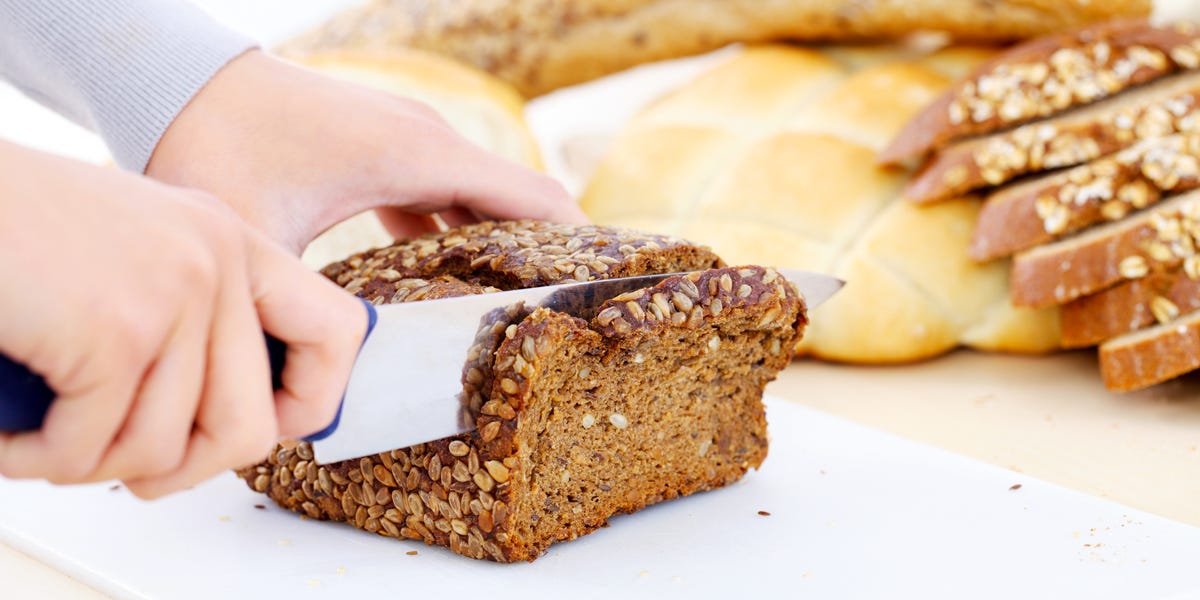
- Seeded whole grain bread: “Made with more intact grains, it tends to contain more fiber and protein than traditional white breads,” says Peterson. “It usually has more texture and chew as well, which can naturally slow down eating and help meals feel more grounding and filling.”
- Sprouted 100% whole grain bread: “Sprouting increases fiber and protein, makes nutrients like zinc more bioavailable, and can lead to a lower glycemic response than many other breads,” Routhenstein explains.
- Whole grain rye bread: “Dense rye bread tends to be higher in fiber and has a hearty texture that many people find very filling,” Peterson says.
- Whole wheat sourdough: “The natural fermentation process may help slow how quickly the carbohydrates are absorbed compared to standard white bread,” says Peterson.
How to eat bread to minimize blood sugar spikes
For anyone looking to avoid blood sugar fluctuations, Peterson says the most important thing is to avoid eating bread by itself. Instead, pairing it with the right nutrients can help support a steadier blood sugar response. “To minimize the blood sugar spike, pair your bread with lean protein and fiber,” suggests Routhenstein. “This combination slows down digestion and allows for your body to process sugar more efficiently, reducing the amount left in your bloodstream.”
Try pairing one of the breads above with the following foods for a nourishing meal that supports stable blood sugar levels:
- Eggs and avocado
- Turkey or chicken with vegetables
- Greek yogurt dip, sauteed greens and onions
- Peanut butter or almond butter
- Tuna salad
- Cottage cheese
Peterson also recommends taking your time and enjoying your food whenever possible. “Eating quickly often makes it harder for the body’s fullness and blood sugar regulation signals to keep up,” she explains. “Simply sitting down, chewing more thoroughly, and not rushing through meals can sometimes make a noticeable difference in how someone feels afterward.”
The bottom line
If you’re structuring your overall diet in a way that supports blood sugar management, it will matter little what bread you choose to enjoy. While those mentioned above are some of the best options, Peterson says that you shouldn’t get too caught up in finding the “perfect” bread. “Sometimes the better approach is simply upgrading from a highly refined bread to one with more fiber, grains, or texture,” she says. “The best option is usually the one someone genuinely enjoys, tolerates well, and can consistently enjoy and build meals around long-term.”
Read the full article here


