







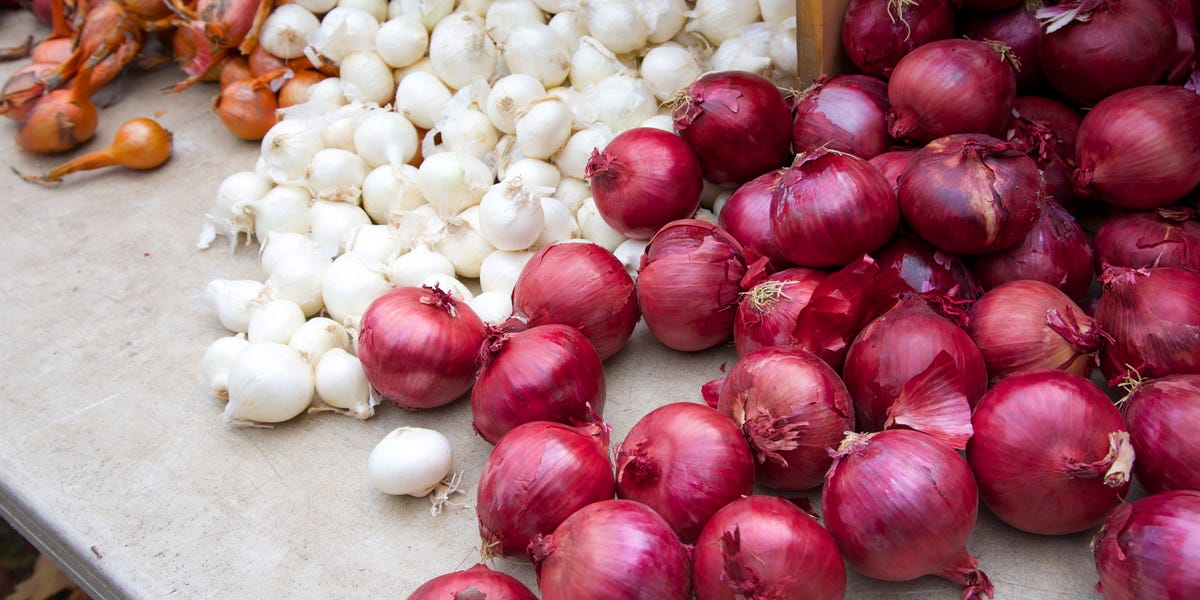
If you’re an avid home cook, you’re likely using plenty of onions in your dishes on a weekly or even daily basis. But are red onions or white onions healthier, and should you be using one more often than the other?
Meet the experts: Jamie Baham, M.S., R.D.N., L.D., a cancer prevention registered dietitian at Ladybug Nutrition; Jordan Hill, M.S., R.D., C.S.S.D., a registered dietitian at Live it Up.
Here, dietitians reveal the healthy plant compounds found in both red and white onions, plus how to make each a part of your healthy diet.
Red onions vs. white onions: Nutrition
Despite the difference in color, red and white onions are fairly similar from a nutritional standpoint.
Red onion nutrition
According to the U.S. Department of Agriculture (USDA), 100 grams (g) of red onion, or roughly 1 cup sliced, contains:
- 44 calories
- 1 g of protein
- 0 g of fat
- 10 g of carbohydrates
- 2 g of fiber
White onion nutrition
Per the USDA, 100 g of white onion, or about 2/3 cup chopped, contains:
- 36 calories
- 1 g of protein
- 0 g of fat
- 8 g of carbohydrates
- 1 g of fiber
Health benefits of red onions
“Red onions are a tasty and savory addition to many meals,” said Jamie Baham, M.S., R.D.N., L.D., a cancer prevention registered dietitian at Ladybug Nutrition. “These deep purple beauties are rich in anthocyanins, meaning they may be cardio-protective and helpful in cancer risk reduction.” These antioxidants, which are also found in red, purple, and blue fruits like berries, grapes, and cherries, may help combat chronic illnesses like osteoporosis, cancer, and heart disease, according to research in Frontiers in Nutrition. Red onions are also rich in quercetin, which has been shown to fight inflammation, protect against cell damage, block the growth of cancer cells, and potentially lower blood pressure and reduce cholesterol levels, per a review in Pharmaceuticals.
Red onions are also a good source of potassium, which plays a key role in heart health, and phosphorus, which helps form bones, teeth, and ATP, the body’s main source of energy, per the National Institutes of Health (NIH). “I love to add red onions for a raw punch of flavor in my Greek salads,” Baham said.

Add Prevention as a preferred source in your Google search results.
Use your Google account to add this to your settings.


Potential drawbacks of red onions
Baham noted that if you have any gastrointestinal issues, such as irritable bowel syndrome (IBS), red onions may cause some ill effects. “Onions are high in fructans, a fermentable carbohydrate that can ferment in the gut and produce gas and bloating in those who are sensitive or have conditions like IBS,” she explained. But if your GI tract is relatively healthy, there are minimal downsides to enjoying red onions.
Health benefits of white onions
“White onions are high in vitamin C, folate, and fiber,” said Jordan Hill, M.S., R.D., C.S.S.D., a registered dietitian at Live it Up. “They support heart function and have antibacterial properties, supporting immune function.” Antioxidants like quercetin and anthocyanins are also present in white onions, just in slightly smaller amounts than in red onions, according to a study in Frontiers in Nutrition. White onions also contain phosphorus for bone health and zinc for immune health, per research in the Journal of Functional Foods.
“Onions are fat-free, low in sodium, and an excellent ingredient for adding flavor to your meals,” noted Baham.
Potential drawbacks of white onions
Unless you have a food allergy, sensitivity, or intolerance to white onions, Baham said they are a smart choice without any downsides. Hill added that they are less likely to cause problems for people with GI conditions than red onions are.
Red onions vs. white onions: Which color supports weight loss?
“Both colors can be an excellent choice for those who have a goal of weight loss,” said Baham. Raw, pickled, and roasted red onions add loads of flavor to meals without any fat, sugar, or additives. Likewise, cooking with white onions provides a flavorful and satisfying base for so many healthy homemade dishes.
Red onions vs. white onions: Which are better for you?
Both red and white onions deserve a place in your diet. “White onions tend to be easier to digest, but red onions have higher amounts of antioxidants, specifically quercetin and anthocyanins,” said Hill. Given that they are often used and enjoyed in different ways, it’s easy to incorporate both colors into your meals on a weekly basis—a choice for which your body will thank you.
Read the full article here


