







Dinner is often the largest and heaviest meal of the day for Americans. And while it can be a nutritious and socially connective way to end your evening, large portions or inactivity after eating can cause bloating, gas, and pain.
It’s not that dinner is inherently harder to digest than breakfast or lunch; it’s simply a timing issue. Your body often has over 12 hours to break down and absorb breakfast, but only a few to digest dinner before you head to bed. The best after-dinner drink for digestion helps to minimize these uncomfortable symptoms and set you up for a good night’s sleep.
Meet the experts: Michele Waide, R.D.N., L.D.N., registered dietitian and member of the Academy of Nutrition & Dietetics; Allyson Balzuweit, M.P.H., R.D.N., L.D., registered dietitian and nutrition consultant
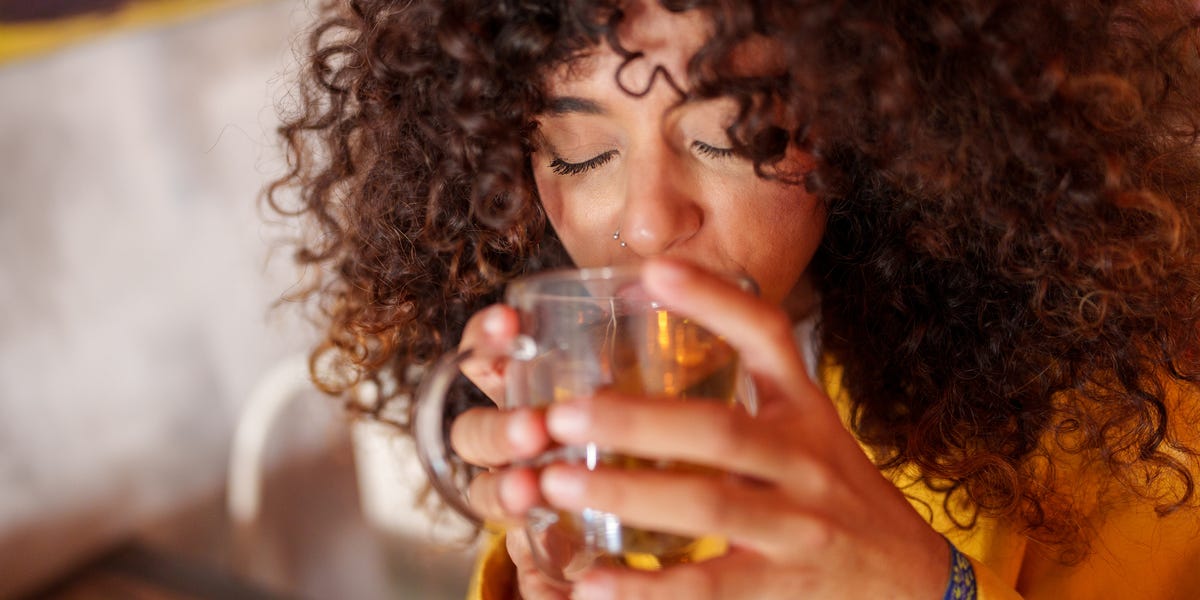
So what should you do if you feel indigestion start to creep in? Experts agree: When it comes to the best after-dinner drink for digestion, ginger tea takes the gold. “I love ginger tea after dinner,” says Michele Waide, R.D.N., L.D.N., registered dietitian and member of the Academy of Nutrition & Dietetics. “It really is very soothing, and it does contain compounds that help to speed up gastric emptying so it does help to accelerate the movement of food through the gastrointestinal tract.”

Add Prevention as a preferred source in your Google search results.
Use your Google account to add this to your settings.


While almost all herbal teas contain polyphenols that positively impact the gut microbiome and aid digestion, ginger root contains a specific compound called gingerol. Research shows gingerol has anti-inflammatory and antioxidant properties that help to reduce bloating and nausea.
And it’s not just the ginger providing that extra digestive support. “Water, in and of itself, is essential for digestion and metabolism,” Waide adds. “It is important for dissolving nutrients. Adequate hydration will help prevent constipation, and it also helps to maintain the cells of the intestines.” Because of this, almost any beverage after dinner will support digestion. Just make sure to look for drinks that don’t have caffeine or added sugar to avoid being kept up at night.
To enhance the digestive effectiveness of your ginger tea, you’ll want to increase the concentration. “If you think about a tea bag of ginger tea, you’re not really getting much ginger,” says Allyson Balzuweit, M.P.H., R.D.N., L.D., registered dietitian and nutrition consultant. Grating fresh ginger or slicing a piece to steep in hot water will help maximize the potency of its digestive properties. However, Balzuweit also notes that if that’s not a sustainable habit for you, store-bought tea bags can still be soothing.
In addition to pouring a warm mug of ginger tea, “My top tip for digesting, especially after dinner, is to get a little movement,” Balzuweit says. A short walk around the block or even just vacuuming a few rooms in your house will significantly aid digestion.
So next time you experience uncomfortable symptoms after the final meal of the day, don’t just plop down on the couch. Instead, consider taking a leisurely walk and putting on the kettle when you get back.
Read the full article here


