






It’s not a coincidence that countless people suffer from constipation and the majority of adults don’t get enough fiber in their diets. But can eating more fiber actually make constipation worse? While it seems like the answer should be no, it’s not quite that simple.
Meet the experts: Augustine Tawadros, M.D., a gastroenterologist with Middlesex Monmouth Gastroenterology in Freehold, N.J.; Ritu Nahar, M.D., a gastroenterologist at Allied Digestive Health in Somerset, N.J.
“Not getting enough fiber can contribute to constipation. Fiber helps increase stool bulk and, depending on the type of fiber, can help stool retain water and become easier to pass,” explains Augustine Tawadros, M.D., a gastroenterologist with Middlesex Monmouth Gastroenterology in Freehold, N.J. “However, constipation is not always caused by inadequate fiber, and increasing fiber does not help everyone.”
Read on to discover how and for whom increasing your fiber intake can actually worsen constipation, plus how to incorporate more fiber into your diet in a healthy, gut-friendly way.
How can fiber make constipation worse?
There are a few ways that increasing your fiber intake can make you feel more backed up than when you started. Here are the biggest ones doctors say you should know.
You increased your intake too quickly
The first way more fiber can make constipation worse is if you increase the amount of fiber you’re eating too quickly, especially if you weren’t eating much to begin with. “A sudden increase in fiber can lead to bloating, gas, and firmer stools before the digestive system has time to adapt, making constipation feel worse temporarily,” explains Ritu Nahar, M.D., a gastroenterologist at Allied Digestive Health in Somerset, N.J.
You didn’t increase your fluids
If you quickly increase your fiber intake without upping your fluids at the same time, you may run into some problems. “Some types of fiber absorb and retain water, which helps produce softer, easier-to-pass stools. If fiber intake is substantially increased without adequate fluid intake, the stool can become bulkier without becoming sufficiently soft, potentially making it more difficult to pass,” Dr. Tawadros says. He adds that if you start taking a fiber supplement like psyllium without drinking enough water along with it, you’ll likely experience this effect.
There’s an underlying health condition behind your constipation
While everyday triggers like not eating enough fiber, not drinking enough water, lack of exercise, and constantly changing routines can all contribute to constipation, there are also some health conditions that can cause constipation—and if you have one of them, upping your fiber likely isn’t going to help. “People with very slow movement of stool through the colon, fecal impaction, or difficulty evacuating stool due to pelvic floor or defecatory disorders may experience more bloating, pressure, and discomfort when large amounts of fiber are added,” says Dr. Tawadros. “Patients with a known or suspected intestinal narrowing, stricture, or obstruction should also be cautious about substantially increasing bulky fiber and should discuss it with their healthcare provider.”

Add Prevention as a preferred source in your Google search results.
Use your Google account to add this to your settings.


He adds that for people who have irritable bowel syndrome with constipation (IBS-C), increasing intake of soluble fiber (the type that dissolves in water) may improve constipation while insoluble fiber (the type that doesn’t) may cause bloating, discomfort, and potentially make it worse.
You didn’t consider the type of fiber
Simply eating more fiber-rich foods without considering the type of fiber you’re consuming may not yield the results you’re looking for. “Not all fiber is the same,” says Dr. Nahar. “Soluble fiber attracts water and then dissolves, while insoluble fiber adds bulk to the stool. Too much of one type can lead to digestive issues, especially if your body tolerates one type better than the other.”
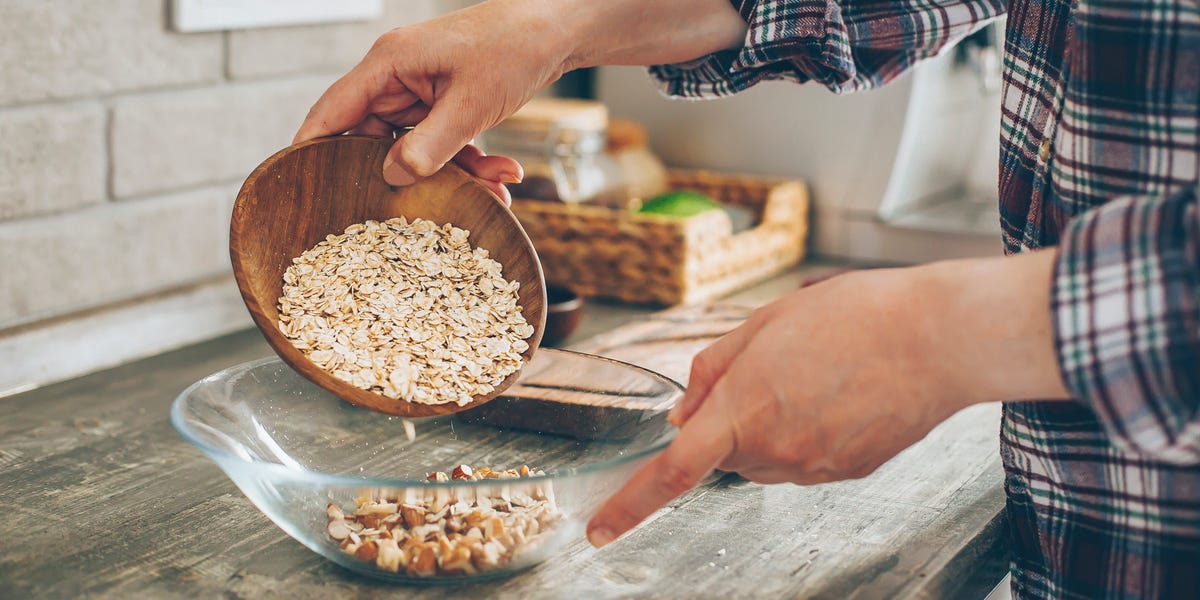
Dr. Tawadros adds that when it comes to constipation, soluble fiber, which is found in foods like psyllium, oats, beans, and apples, tends to be the most helpful. Meanwhile, fermentable (or prebiotic) fibers, like those in bananas and cabbage, may cause gas and bloating and some coarse insoluble fibers, like those in whole wheat flour, nuts, and cauliflower, may worsen symptoms for people with sensitive GI tracts.
Strategies for increasing your fiber intake
The good news is that if you increase your fiber intake the right way, chances are it will have the intended effect and improve your constipation. The key, say Dr. Nahar and Dr. Tawadros, is to do so gradually, over several weeks, incorporating different high-fiber foods into all of your meals throughout the day. “For most adults, a reasonable goal is approximately 20 to 30 grams of fiber per day, preferably from a variety of foods such as fruits, vegetables, whole grains, legumes, nuts, and seeds,” Dr. Tawadros says.
In addition, Dr. Nahar stresses the importance of drinking plenty of water and staying physically active, both of which can help you avoid constipation and help your body adapt to a higher fiber intake. And if you need to take a fiber supplement to boost digestion, Dr. Tawadros suggests psyllium husk. One study published in Food Bioscience found that psyllium husk helps relieve and reduce constipation and nourish the gut microbiome.
The bottom line
Adding more fiber-rich foods to your diet is an excellent way to combat constipation—but if you add too much too fast, don’t up your fluid intake to compensate, don’t vary your fibers, or have a health condition that’s making you backed up, this strategy can backfire. Increasing your fiber intake gradually with a wide variety of foods is the best way to improve constipation.
That said, if you’ve gradually increased your fiber intake and nothing has changed, it may be time to give your doctor a call. “If constipation persists despite these measures—or if it is accompanied by rectal bleeding, unexplained weight loss, significant or worsening abdominal pain, vomiting, anemia, or other concerning symptoms—it should be evaluated by a healthcare professional,” says Dr. Tawadros. They can help you get to the bottom of things and eliminate your constipation for good.
Dietary supplements are products intended to supplement the diet. They are not medicines and are not intended to treat, diagnose, mitigate, prevent, or cure diseases. Be cautious about taking dietary supplements if you are pregnant or nursing. Also, be careful about giving supplements to a child, unless recommended by their healthcare provider.
Read the full article here


