




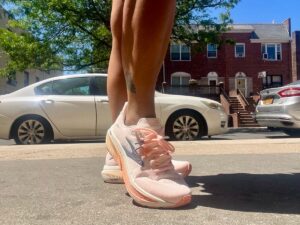



✔️Find the right features. Our experts suggest looking for cushioning in the arches and heels, roomy toe boxes, mesh uppers, durable soles with traction, and removable insoles. Each will keep your feet feeling much more comfortable during walks of any distance and allow you to avoid common pitfalls like blisters and arch pain.
✔️ Opt for flexibility. “Avoid walking shoes that are too heavy, too rigid, and too narrow in the toe box,” Tulpule warns. If your shoes aren’t friendly to your feet, your walks will be more painful, and you might end up hurting yourself, or just walking less than you’d like to.
✔️ Identify your foot type. Knowing your specific foot type is crucial to finding the right walking shoes. You can identify your feet type by looking at the wear pattern in your shoes and the imprints your feet leave in wet sand, says Sharkey. Flat feet will cause excessive wear on the inner portion of shoes and will leave behind a pretty complete footprint in the sand. High arches will cause more wear on the outer borders of shoes and won’t show in footprints. Neutral feet will show fairly even wear on shoes and show about half of the arch in footprints, she explains.
✔️ Shop for your unique feet. People with flat feet should ideally find a shoe with more stability and support in the arch and heel area, says Ricardo Cook, M.D., an orthopedist at the Centers for Advanced Orthopedics in Maryland. People with higher arches should look for more cushioning to help absorb shock. And if you have arthritis or trouble with ankle instability, opt for more cushioning and support instead of lighter options, recommends Damian A. Richardson, M.D., a foot and ankle surgeon.
✔️ Don’t deal with pain. While it’s normal for shoes to have an adjustment period, “they should absolutely not cause pain or blisters,” Sharkey notes. “If this is the case, then return them and try a different style.”
Read the full article here


