






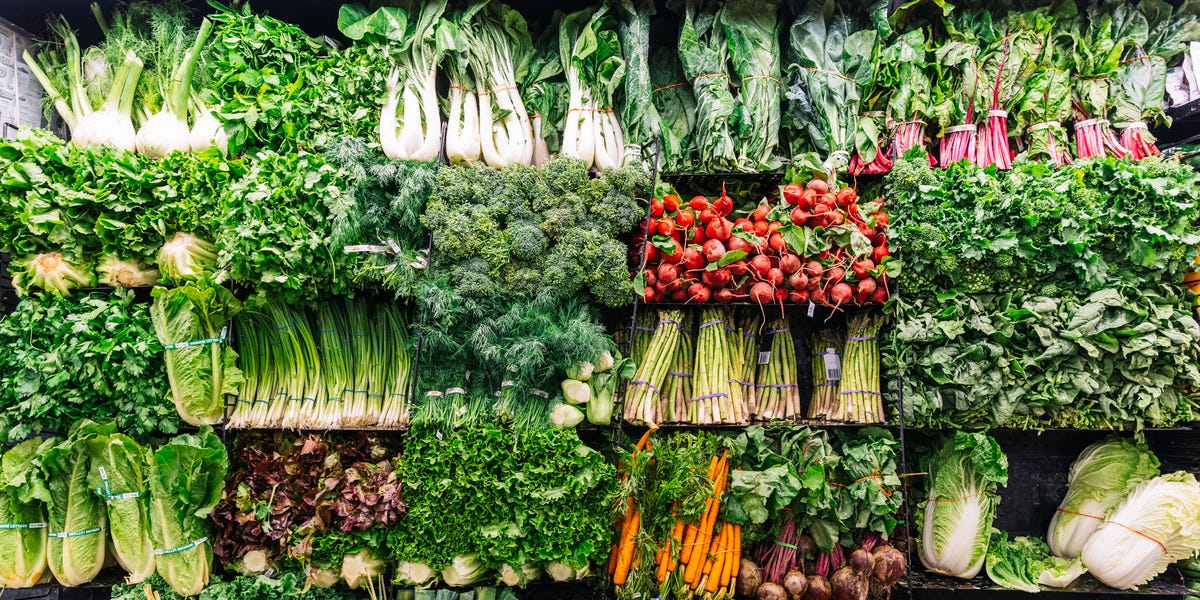
- Cases of cyclosporiasis are surging in the U.S.
- The parasitic infection can cause explosive, watery diarrhea.
- Due to the outbreak, food safety experts recommend being cautious about some foods.
Cyclosporiasis cases have risen rapidly in recent weeks. As of July 15, the Centers for Disease Control and Prevention (CDC) had received reports of the illness in 34 states, with the largest outbreak in Michigan. Confirmed cases totaled 1,645, with more than 5,100 additional likely cases—though the CDC cautions that the real number is probably much higher than that.
Amid the outbreak, concern about cyclosporiasis—a parasitic infection known to cause “explosive” diarrhea, which can last for a month or longer without treatment—is reaching a fever pitch on social media. Because it usually spreads through produce, some people are urging the public to avoid fresh fruits and vegetables for now, out of an abundance of caution.
The CDC said in a recent outbreak alert that at least some clusters of cases may be linked to a lettuce supplier used by Taco Bell. “Do not eat shredded iceberg lettuce from Taco Bell locations in Indiana, Kentucky, Michigan, Ohio, and West Virginia,” the alert reads.
But that only seems to be part of the picture. The CDC continued by noting that the agency is “also investigating other outbreaks and illnesses of cyclosporiasis nationally that are unrelated to this outbreak.”
It’s understandable to feel nervous about cyclosporiasis, but is avoiding all produce the way to go? Here’s what food safety experts are doing themselves—and what they want you to know.
Meet the experts: Wade Syers, D.Soc.Sci., extension specialist for food safety at Michigan State University Extension; Darin Detwiler, author of the book Food Safety: Past, Present, and Predictions and a professor at Northeastern University; Kalmia E. Kniel, Ph.D., professor and chair of microbial food safety at the University of Delaware; Swapnil Patel, M.D., vice chair of Medicine at Hackensack Meridian Jersey Shore University Medical Center
What foods have traditionally been linked with cyclosporiasis?
In the past, cyclosporiasis outbreaks in the U.S. have been linked to a variety of fresh produce that’s eaten raw—particularly produce with a rough or uneven surface, says Kalmia E. Kniel, Ph.D., professor and chair of microbial food safety at the University of Delaware. “The smoother the surface, the less they will attach,” Kniel says. “Things like cherry tomatoes are likely fine.”
Wade Syers, D.Soc.Sci., extension specialist for food safety at Michigan State University Extension, says these are the most common culprits:
- Raspberries
- Basil
- Cilantro
- Mesclun lettuce
- Salad mixes
- Snow peas
- Green onions
However, that doesn’t mean these foods are the cause this time around. “History is helpful because it tells investigators where to begin looking,” says Darin Detwiler, author of the book Food Safety: Past, Present, and Predictions and a professor at Northeastern University. “But it shouldn’t be mistaken for proof of what’s causing the current outbreak. Every investigation is different, and it’s important to let the evidence—not assumptions—identify the source.”
It also may not be as simple as isolating a single food. Kniel points out that the large number of cases suggests that something else is fueling cases beyond the produce itself. “Water is likely involved,” she says. “Produce can become contaminated if it’s irrigated with contaminated water.”
What foods should you avoid due to cyclosporiasis?
This is a little tricky. The CDC has flagged shredded lettuce from Taco Bell as a possible culprit, so you’ll want to avoid that. (Taco Bell is also working to remove this lettuce from its restaurants.)
But no foods or food producers have been definitively linked to the other cyclosporiasis cases in the U.S., making it hard to say for sure that you should avoid any foods.
For Syers, who lives in Michigan, that’s enough reason to be cautious about leafy greens. “It is possible for lettuce to become contaminated in a variety of ways, including through contact with contaminated irrigation water, rinse water, or even through improper handling practices,” he explains. “In addition, lettuce is usually consumed raw, meaning there is no chance for heating to deactivate the parasite.”
While he’s not avoiding lettuce entirely (aside from that served at Taco Bell), Syers says he’s following recommendations from the Michigan Department of Health and Human Services (MDHHS) right now. Those include:
- Buying whole heads of lettuce instead of pre-washed, bagged lettuce or pre-mixed salad kits.
- Discarding the outer two to three layers of leaves before preparing a head of lettuce.
- Thoroughly washing the inner leaves under clean running water.
- Cooking any greens that can be cooked to at least 158 degrees Fahrenheit.
Syers also says he’s making a point to store different types of produce separately, and is being “diligent” about following food safety practices. “This means I am washing my hands before preparing any fruits or vegetables, and between different kinds, and when I am done,” he says. “It also means rinsing produce under running water, and if it is a harder fruit or vegetable, using a produce brush to give it a scrub.”
Detwiler is also taking some precautions. “I am being a little more cautious with raw leafy greens prepared away from home, particularly in fast food and other quick-service restaurants,” he says. “That’s not because we know those restaurants are the source—we don’t. It’s because I have far less visibility into where those ingredients came from or how they moved through the supply chain than I do with food I prepare myself.”
But while some people on social media say you should avoid all produce, that’s overkill, according to Kalmia E. Kniel, Ph.D., professor and chair of microbial food safety at the University of Delaware. “I’m eating produce,” she says. However, Kniel is being more cautious on her mother’s behalf. “I did not let my mom eat raw herbs the other day,” she says. “If you are immunocompromised, elderly, or on chemotherapy, you don’t want to put your system at risk.”
Swapnil Patel, M.D., vice chair of Medicine at Hackensack Meridian Jersey Shore University Medical Center, agrees that you shouldn’t avoid all fruits and vegetables right now. “If I were to avoid anything, it would be pre-washed lettuce, berries, and foods that have a lot of crevices for the parasite to hide,” he says.
What else can lower your risk?
Syers urges people to stay informed as the CDC continues to investigate outbreaks, and to be on the lookout for symptoms. “Anyone experiencing persistent watery diarrhea, especially if it lasts more than a few days, should contact a healthcare provider because Cyclospora infections can last for weeks if left untreated,” he says.
In addition to being cautious with your lettuce, Syers suggests these food safety tips to lower your risk of cyclosporiasis:
- Wash your hands before, during, and after food preparation.
- Rinse your produce under running water.
If there is no cyclosporiasis outbreak in your area, Kniel also recommends buying your produce locally, like from a farmer’s market. “You can buy local without any concern,” she says. ‘It’s a wonderful time to do that.”
Read the full article here


