







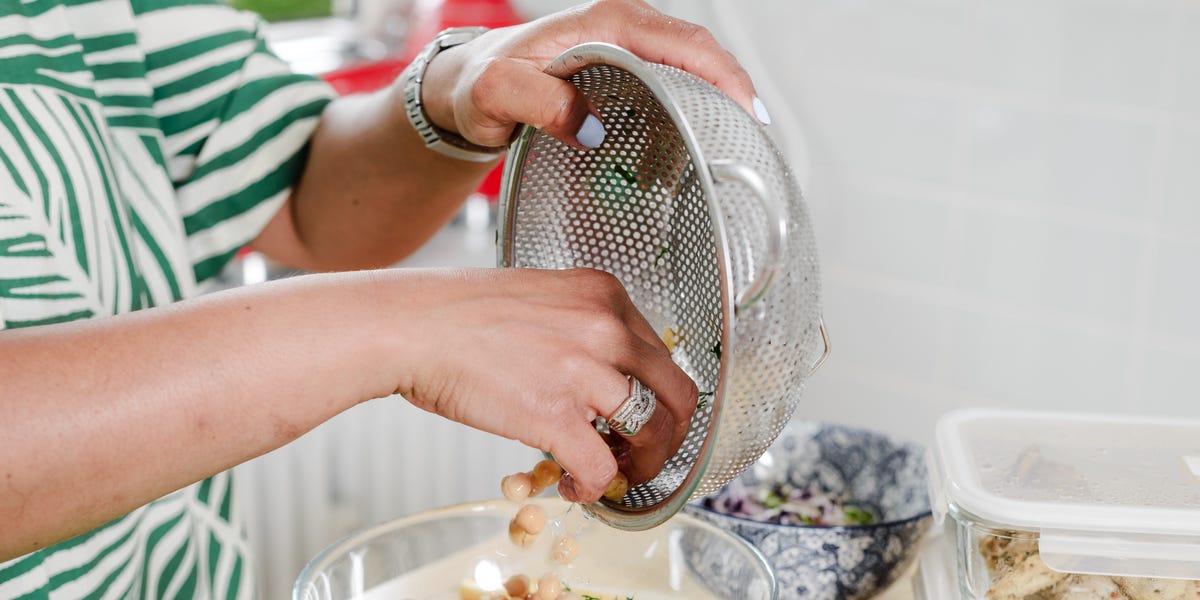
A can of chickpeas is one of those things you pretty much always have in your pantry. Whether it ever makes it into a meal? Well, that depends on if you know how to use it.
Folks stock up on the legume with the best of intentions—and for good reason. Chickpeas are a nutritional stalwart as far as canned foods go, offering both nine grams of protein and eight grams of fiber per one-half cup serving. Not to mention, they’re packed with the kind of nutrients that are typically hard to come by in plant-based proteins, like iron and calcium—and all at the low, low price of around $1 or so at most major retailers. Provided the can itself is in good condition, you can also count on what’s inside lasting for one year to several.
So while it makes sense that people are inclined to buy this bean in bulk, that doesn’t mean it’s always making it out of the pantry. Unlike other basic ingredients, such as pasta and rice, that’s partially because its uses aren’t as obvious. Cracking open a can is simple enough, but figuring out what comes next is where many wind up stumped.
If you’re among the population that isn’t sure how to proceed with a can of chickpeas—but want to work the nutrition into your meals—never fear. According to registered dietitians, there are loads of ways to put these little legumes to work. And many don’t even require as much effort as pasta, since canned options are pre-cooked and ready to eat.
We asked nutrition experts which tricks work best to get chickpeas from your cupboard to your plate. These are the six picks they said you shouldn’t miss.
Meet the experts: Whitney Linsenmeyer, Ph.D, R.D, associate professor and director of the Didactic Program in Dietetics at Saint Louis University; Cara Harbstreet, M.S., R.D.; Rhyan Geiger, R.D.N., founder of Phoenix Vegan Dietitian.
Make your own chana masala.
Chickpeas are indigenous to the Levant and Mediterranean and their use has long been documented in cuisines all around Asia and Europe—particularly in Indian classics like chana masala, a chickpea curry with garlic, ginger, chilis, mixed spices, and tomatoes. Though this may be the type of dish you’d normally order at a restaurant, making a simplified but equally delicious version at home is entirely possible with a handful of common cooking components, says Whitney Linsenmeyer, Ph.D, R.D., associate professor and director of the Didactic Program in Dietetics at Saint Louis University.
Opt for canned tomatoes over fresh, as well as a tablespoon of a store bought or homemade garlic-ginger paste (plus a sprinkle of chili flakes) to make this a dish you can pull together with pantry staples and almost no prep, Lisenmeyer says. Start by sautéing one tablespoon of the ginger-garlic paste and chili flakes in one tablespoon of canola oil over medium heat. Then add one tablespoon of curry powder and cook briefly, about 30 seconds. Add one 15-ounce can of drained chickpeas and one 15-ounce can of pureed tomatoes, then simmer for about 20 minutes. Serve it over a bed of steamed rice or with a side of whole wheat naan for a full meal.
Mash the beans for an uncanny vegan chicken salad dupe (or dip).
“Since canned chickpeas are pre-cooked, they’re soft enough to easily mash with a fork,” says Cara Harbstreet, M.S., R.D., That’s why they’re great for no-cook meals, including dishes like imitation chicken salad.
In addition to being both vegetarian- and vegan-friendly, it also offers way more fiber than meat-based versions. Harbstreet generally uses it as her protein and fiber source in sandwiches, wraps, and leafy salads, but says it also makes a great chunky dip when served with pretzel bites and raw, chopped vegetables like carrots or celery.
But the best part? The one Harbstreet makes is so simple that you don’t even need a real recipe. Drain most (but not all) of the liquid from a can of chickpeas. This liquid, also known as aquafaba, has thickening and emulsifying properties, so keeping a bit of it will help you get a creamy, more cohesive final product. Transfer the rest of the can’s contents to a separate bowl and use a fork to smash it into a thick chunky texture. Then mix in whatever additions you prefer. She’s partial to diced onion and celery, fresh herbs, garlic powder, red pepper flakes, and a squeeze of mayo or plain yogurt, but feel free to experiment until you find what you like.
Or keep them whole for a Mediterranean-style salad.
If you’re pressed for time, forget about mashing chickpeas and keep them intact instead, says Harbstreet. Her Greek salad-inspired dish takes a cue from the viral dense bean salad recipes circulating on social media, which typically involve combining a whole can of drained beans with various vegetables and protein sources for a texturally diverse and nutritionally rich lunch or dinner.

Add Prevention as a preferred source in your Google search results.
Use your Google account to add this to your settings.


To make it, start by draining a can of chickpeas completely. Combine them—rinsed or not, your preference—in a large bowl with diced cucumbers, sliced red onions, and fresh halved or quartered tomatoes, as well as fresh herbs like parsley or mint, a drizzle of olive oil, and a squeeze of lemon juice. You can top the whole thing off with an additional protein source such as tinned fish or a cheese like feta for a vegetarian-friendly option. “Season with garlic, sumac, lemon zest, cumin, or other spices of your choice before digging into this easy, no-cook meal,” Harbstreet says.
Crisp chickpeas for snacking and beyond.
Although canned chickpeas technically don’t need any additional prep, a quick turn in the oven is all it takes to turn them into a crispy snack, says Lisenmeyer. Drain and rinse the legume before drying thoroughly—this step will ensure they get nice and crunchy instead of soggy. Then, toss them with two tablespoons of olive oil, a fourth of a teaspoon of salt, and a shake of cumin, smoked paprika, and garlic powder. Roast at 400 degrees F for 25 to 30 minutes, stirring periodically to ensure they cook evenly, then remove and let them cool before storing in an airtight container.
Once your chickpeas are finished, eat them on their own for a quick hit of protein and fiber, or consider using them to add both those nutrients and texture to another meal, like a soup or salad.
Combine them with ground meat for fiber-rich burger patties.
Maybe you’ve come around to the idea of using chickpeas, but still aren’t a huge fan of the way they taste. In those cases, one of Geiger’s favorite tricks is to sneak them into another dish, like by blending them into a homemade burger patty. It’s an easy way to start eating more plants without feeling like you’re giving anything up—and picky eaters can also count on it to fully conceal chickpea’s flavor.
She recommends swapping half the meat for chickpeas to start, and going up or down from there depending on your preference. “Just season your chickpeas the same way you’d season meat; don’t skip that step for max flavor,” she adds.
When in doubt, get your food processor out and make a speedy hummus.
Hummus is such a classic chickpea dish for a reason: It’s infinitely adaptable, great as a spread or dip, and basic versions couldn’t be easier to make, says Geiger. You can use a recipe, but it’s also hard to go wrong simply eyeballing a mix of chickpeas with tahini, olive oil, lemon juice, garlic, and salt. Get everything into a food processor, pulse until smooth, then taste and adjust as necessary.
But the reason she keeps coming back to the dish is that there are so many ways to make it your own. “Blend in roasted beets for a vibrant purple dip, avocado or dairy-free pesto for green, or you can play with herbs and spices to make it spicy, sweet, or savory,” she says. Remember that hummus works equally as well as a dip with chips or crudité as it does a spread in a sandwich or wrap, so exactly what you do with it is entirely up to you.
Read the full article here


