







About 10 years ago, I was walking down a flight of stairs in my house while simultaneously looking at a bunch of paint chips and pondering how the colors would reflect the light. I was distracted—as usual—and took a major tumble down the stairs, fracturing my ankle.
This led to my moment of clarity.
As I spent six weeks healing from the injury, I had plenty of time to consider what felt like my life’s failings. This was not my first injury caused by distraction: I’d sprained both ankles in college after trying to read while going up a flight of stairs. I later got a master’s degree, but I’d only made it through the endless boring classes by daydreaming, doodling, and making lists of what I’d do next. I got excellent grades, but I had to rely on heavy caffeine usage, all-nighters, and makeup tests to get there.
As an adult, I’d had an increasingly difficult time managing my life. My keys and credit cards went MIA every week. I triple-booked myself for the doctor, the dentist, and the car mechanic, and regardless of which I showed up for, I’d be late. I attributed the tardiness to my being distracted—or possibly just dumb. After all, I couldn’t manage to follow a set of instructions unless I read them three or four times.
My to-do list piled up, and I’d sign up for classes on a whim but quit as soon as I remembered how much I’d have to sit and listen.
I powered my life as a freelance writer with multiple doses of caffeine each day, which worked as both motivation and reward. But still, I would often sit down to meet a deadline and then get sucked into a black hole of Facebook or clickbait, or I would go down a rabbit hole, hyper-focusing on one subject, like paint colors, for hours.
Thirty-nine at that point, I wondered, When will I finally learn how to be an adult?

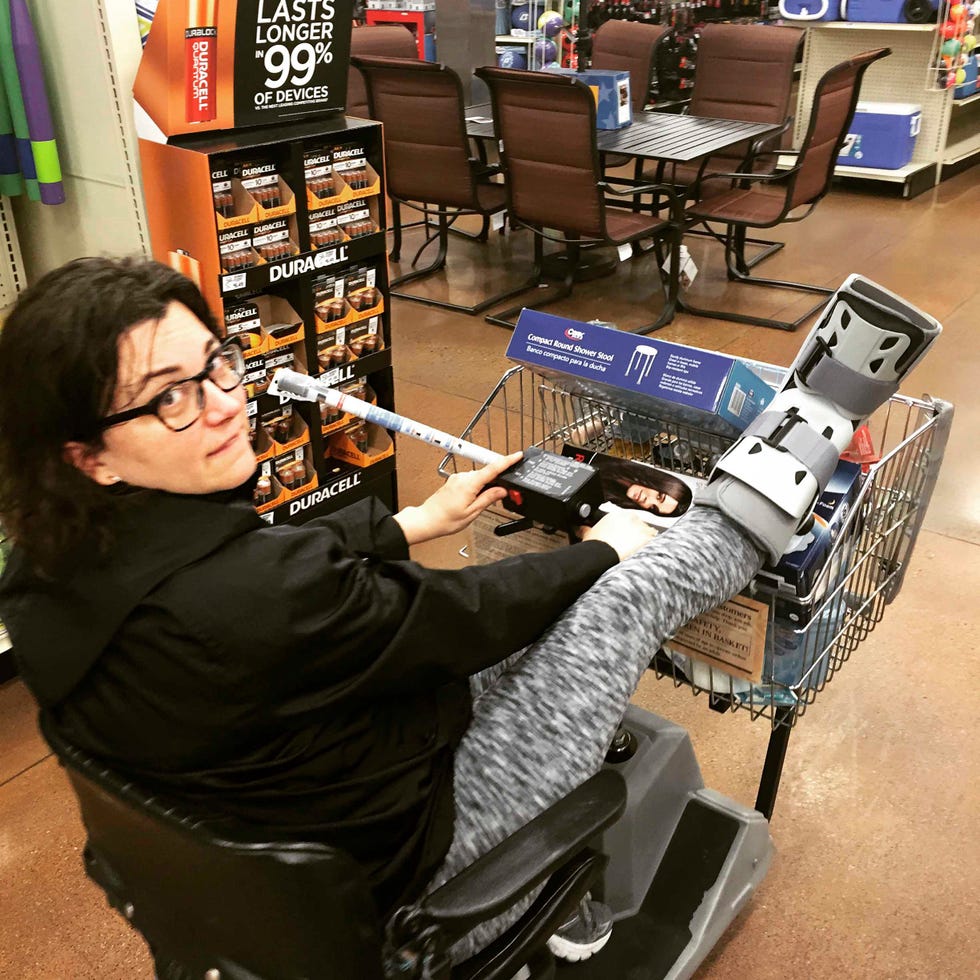
The author recovering from her fractured ankle
A Moment of Revelation
Sometime during my recovery, I remembered what a friend had once told me: “You sound like me—it sounds like you might have ADHD.” This was so confusing.
I thought of attention-deficit/hyperactivity disorder (ADHD) as a diagnosis for young boys who couldn’t sit still and were always getting in trouble. My bright, talkative friend explained that there were different types of ADHD, including a version that resulted in hyperactivity and impulsivity and another that stemmed from inattention.
As soon as I was able to walk again, I met with my family practice care provider. I tentatively asked about ADHD, half expecting her to dismiss the idea as ridiculous. Instead, she handed me a multipage questionnaire about symptoms. By the second page, I was in tears—so much of it described me.
After reading through the results, the doctor asked a few more questions, gave me a tissue, and wrote a prescription. I had to try a few medications until I found a good fit, but the one I’m on now helps me focus my attention for a full day.
My diagnosis encouraged me to read up on ADHD, and I also talked to therapists and worked with coaches.
Over a few years, I developed a framework for understanding why organization and deadlines are such a challenge for me, and how to use tools to make it easier on myself.
Over the past three years, my lists have decreased. I don’t triple-book, I do show up on time (mostly), and I rarely lose my keys or phone (thanks to locator devices like Tile). I still struggle with tasks or projects that seem overwhelming, but I know how to break those down into smaller, more manageable steps so I can get started. Frequent breaks to stop and refocus are routine, necessary, and appreciated.
Beyond the medication and ADHD mind hacks, acknowledging my neurodiverse brain dramatically boosted my self-confidence and willingness to see the positives. Before my diagnosis, I thought I was eternally broken, but now I see my challenges in context with my strengths. I remain a person who gets bored quickly, but I can appreciate now that I’m also someone who loves new experiences and challenges, as well as research and learning…and I can enjoy these things without tripping on the stairs.
Women and ADHD
Nearly 7 million American women have a current diagnosis of ADHD, though more than half go undiagnosed until they are adults, according to data from the Centers for Disease Control and Prevention (CDC).
Some people first realize they have ADHD issues while they’re in college, while others finally seek a diagnosis and treatment when the demands of work, family, and friendships exceed their functional abilities, says therapist Sari Solden, author of three books on ADHD, including co-authoring A Radical Guide for Women with ADHD: Embrace Neurodiversity, Live Boldly, and Break Through Barriers.
Some women realize their lifelong struggles are due to ADHD only when their children get a diagnosis, and others finally seek help during perimenopause, when hormonal changes can worsen ADHD symptoms around working memory and executive function.
As children, some girls might slip through the cracks, as their behaviors tend to be less disruptive than boys’ behaviors. While boys are more likely to exhibit impulsivity and hyperactivity, girls tend to daydream, doodle, and low-key fidget, explains psychotherapist Terry Matlen, LMSW, who specializes in women with ADHD.
For women, symptoms may include:
- Feeling chronically overwhelmed
- Severe disorganization with regard to time, money, or things
- Difficulty maintaining routines and keeping track of logistics
- A tendency to create clutter
- Feeling disorganized
- Difficulty blocking out distractions, such as a barking dog or random internal thoughts
- Tendency to hyperfocus on one subject
- Challenges with addictions such as gambling, internet use, or shopping
- Underachieving at work or in relationships
Read more medical mystery and misdiagnosis stories via My Diagnosis, which focuses on stories of real-life struggles and journeys to wellness. Have one you’d like to share? Write us at mydiagnosis@prevention.com.
Read the full article here


