






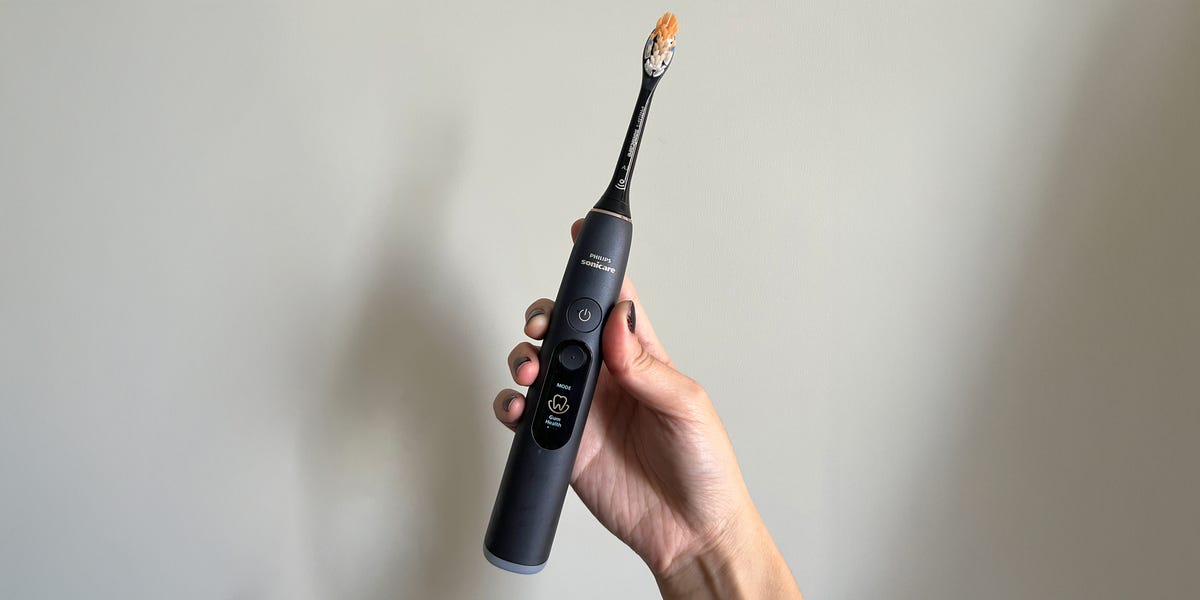
I’ll admit it: I’m not the best at brushing my teeth—or flossing—regularly. In fact, I was informed at my last dentist appointment that my gums were looking pretty inflamed (which came as no surprise, as they’ve been bleeding frequently when I brush or floss). So, I’ve been looking for something to help me take better control of my oral health—which is what led me to the new Philips Sonicare DiamondClean 9900 Prestige, one of the smartest and most advanced electric toothbrushes on the market right now.
I’ve tried electric toothbrushes before (my go-to for years has been the Oral-B Pro), but never a smart electric toothbrush like this one. The new Philips toothbrush uses specialized AI-powered technology to monitor pressure, motion, and coverage to automatically adapt and adjust intensity, while also providing real-time mouth mapping and personalized guidance to help you brush better. But does a toothbrush really need all those fancy bells and whistles—and could those features really make a difference in my oral health? Most importantly, is it actually worth its steep $380 price tag?
To find out, I decided to put the toothbrush to the test myself. After trying it for weeks, here are my honest thoughts on the Philips Sonicare DiamondClean 9900 Prestige electric toothbrush.
Specs: Philips Sonicare DiamondClean 9900 Prestige

| Intensities | 3 levels (High, Medium, Low) |
| Modes | 8 modes (Clean, Deep Clean, Polish, Sensitive, Gum Health, White, Max Care, Comfort) |
| Colors | 3 options (Quartz Black, Silver White, Satin Mauve) |
| Battery life | 14 days |
| Warranty | 2 years |
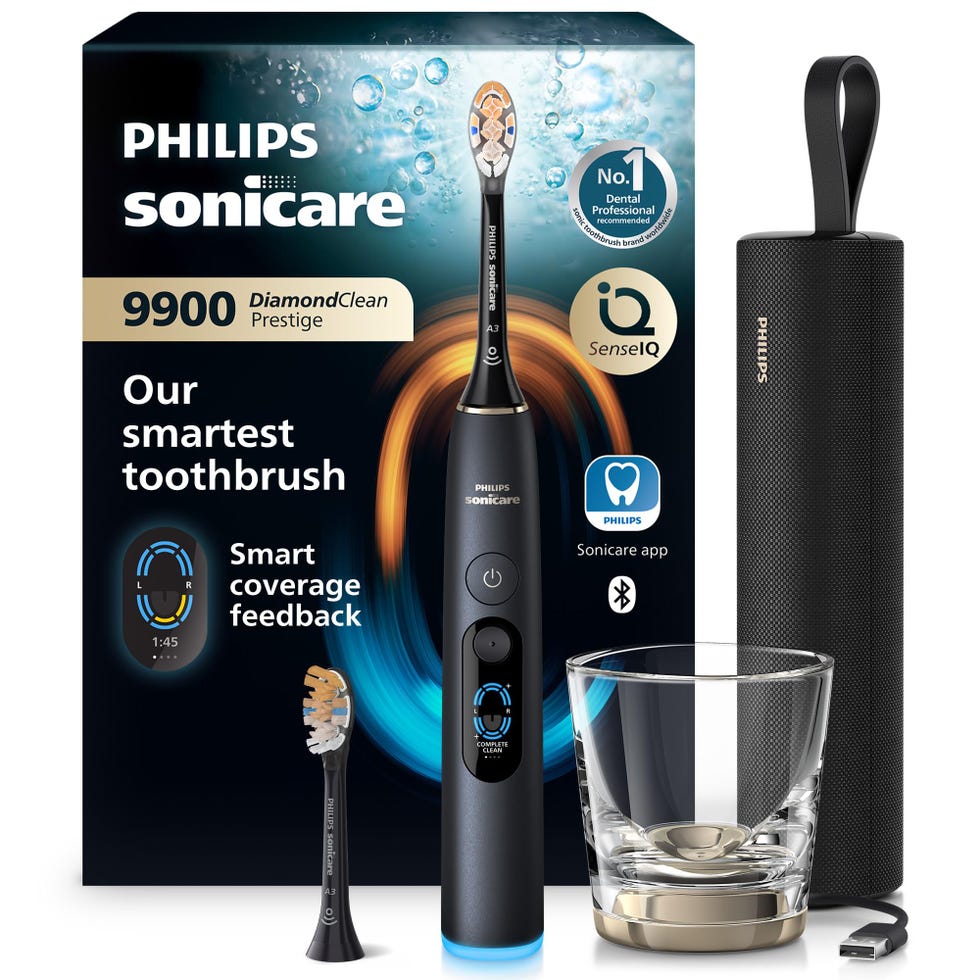
The Philips Sonicare DiamondClean 9900 Prestige is an electric toothbrush, meaning it uses automatic bristle movements to clean teeth—and it also comes with AI-powered features and technology to optimize and guide your brushing technique.
Benefits of a smart toothbrush
It improves our overall health. Oral hygiene is a key facet to more than just our mouth’s health—unclean teeth and gums can have an impact on other aspects of your well-being because the mouth leads into both the digestive tract and the respiratory tract, making it a prime spot for harmful (and sometimes helpful!) germs to enter.
It’s easier to use and more accurate than manual toothbrushes. Generally, experts say that electric toothbrushes are considered more effective and thorough at removing plaque and keeping teeth clean than manual toothbrushes. “They eliminate a lot of mistakes people tend to make when they brush at home and keep people on a routine,” Adam Salm, D.M.D., dentist and founder of Salm Dental, previously told Prevention. Plus, the timers on electric toothbrushes can be helpful for ensuring you’re brushing the full two minutes for a proper clean.
Enhanced features can improve the safety of your teeth and gums. “Some electric toothbrush models can limit the amount of pressure you can put on the teeth and gums,” Keith Arbeitman, D.D.S., dentist and co-founder of the Arbeitman & Shein Aesthetic and Restorative Dentistry in New York City, previously explained. “The majority of dental work I do is either as a consequence of someone brushing too hard and damaging their teeth and gums or not brushing hard or long enough and allowing bacteria to linger, causing gingivitis or cavities.”
How I tested
I used the Philips Sonicare DiamondClean 9900 Prestige every day for about three weeks, brushing at least twice per day and making sure to test out the different intensity levels and cleaning modes offered. I also downloaded and paired the toothbrush via Bluetooth with the Philips Sonicare app, which tracks and offers feedback on total brushing time, missed areas, pressure, and scrubbing, and includes features such as a real-time visual mouth map, daily tracking, and more.

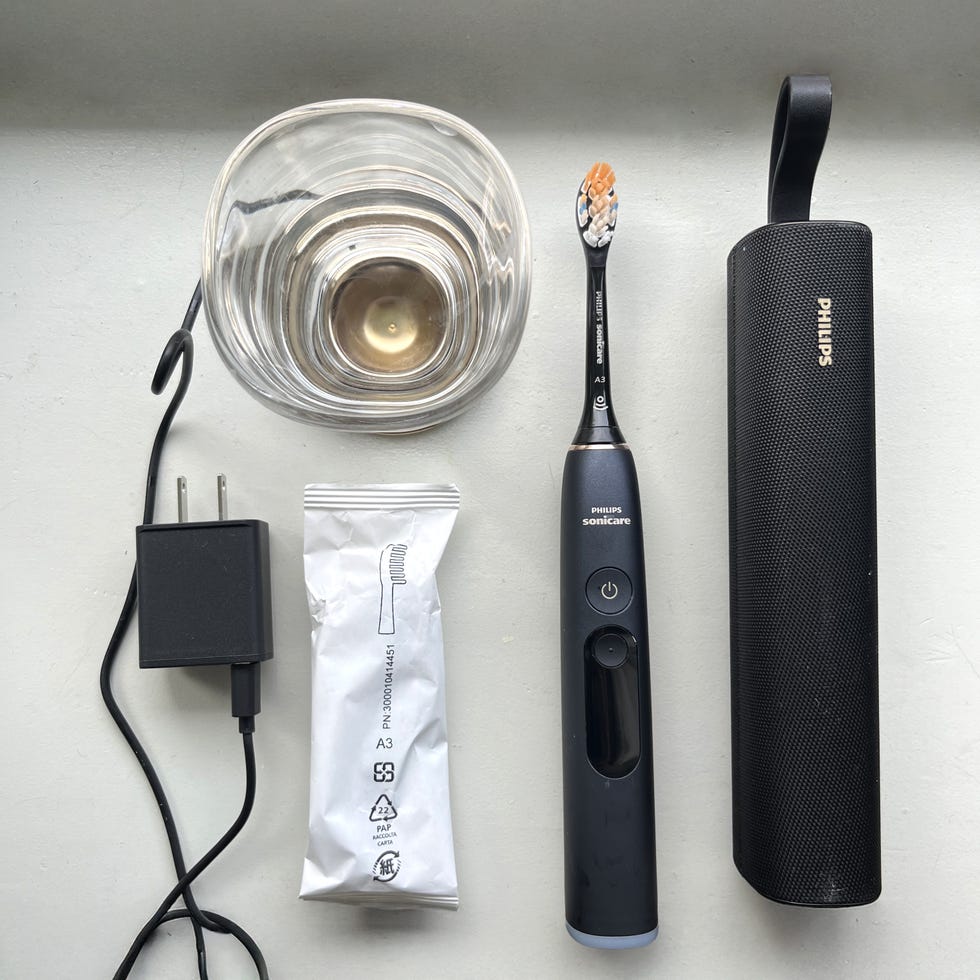
The Philips electric toothbrush with the glass cup charger, charging travel case, extra toothbrush head, and USB charging cable
The design
The DiamondClean 9900 Prestige is sleek, lightweight, and comfortable to hold. It’s designed with two buttons (a power button and a secondary button) as well as a built-in touchscreen on the handle, which I found easy and straightforward to use: You can swipe through the different cleaning modes and intensity levels, and select an option by pressing the secondary button. The touchscreen also displays brush head tracking, battery life, and a mouth map to track your brushing coverage (more on this later!).
The toothbrush also comes with an extra toothbrush head, a glass cup charger, and a travel case. I found the charging function to be thoughtfully designed: The glass cup sits on top of a charging base, which is plugged into an outlet with the provided cable. You simply place the toothbrush in the cup (at any angle, it doesn’t have to sit upright!) and it immediately starts charging. I appreciated that the glass cup could also be lifted off the base and used to rinse my mouth after brushing.
The travel case is also super convenient. It’s not only sleek, slim, and compact, but it also doubles as a charger with an integrated charging port at the bottom so you can easily recharge while you’re on the go. The one drawback, though, is that there isn’t space in the case itself for the charging cable, meaning you’d have to store and carry that separately.

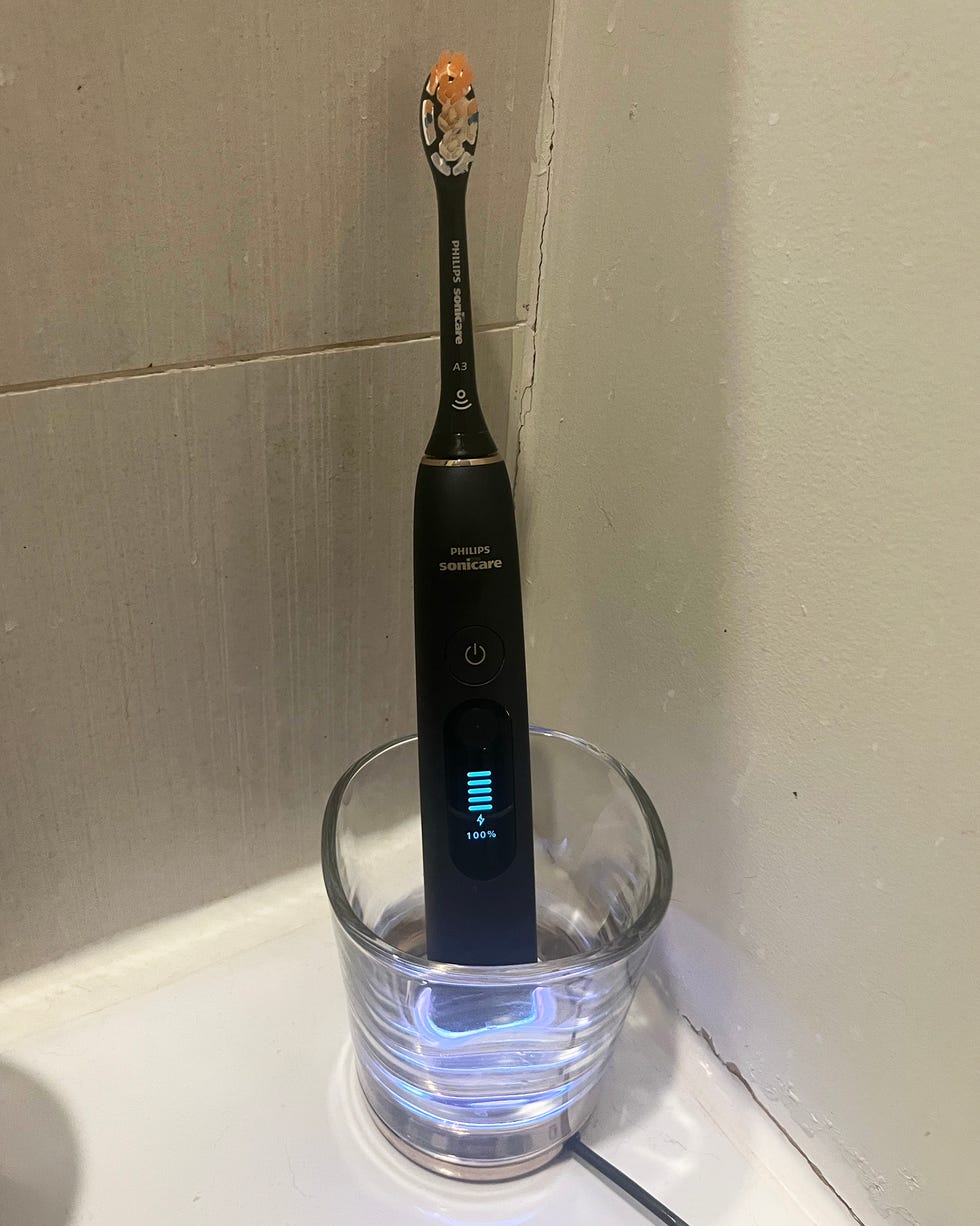
The Philips electric toothbrush charging in the glass cup charger

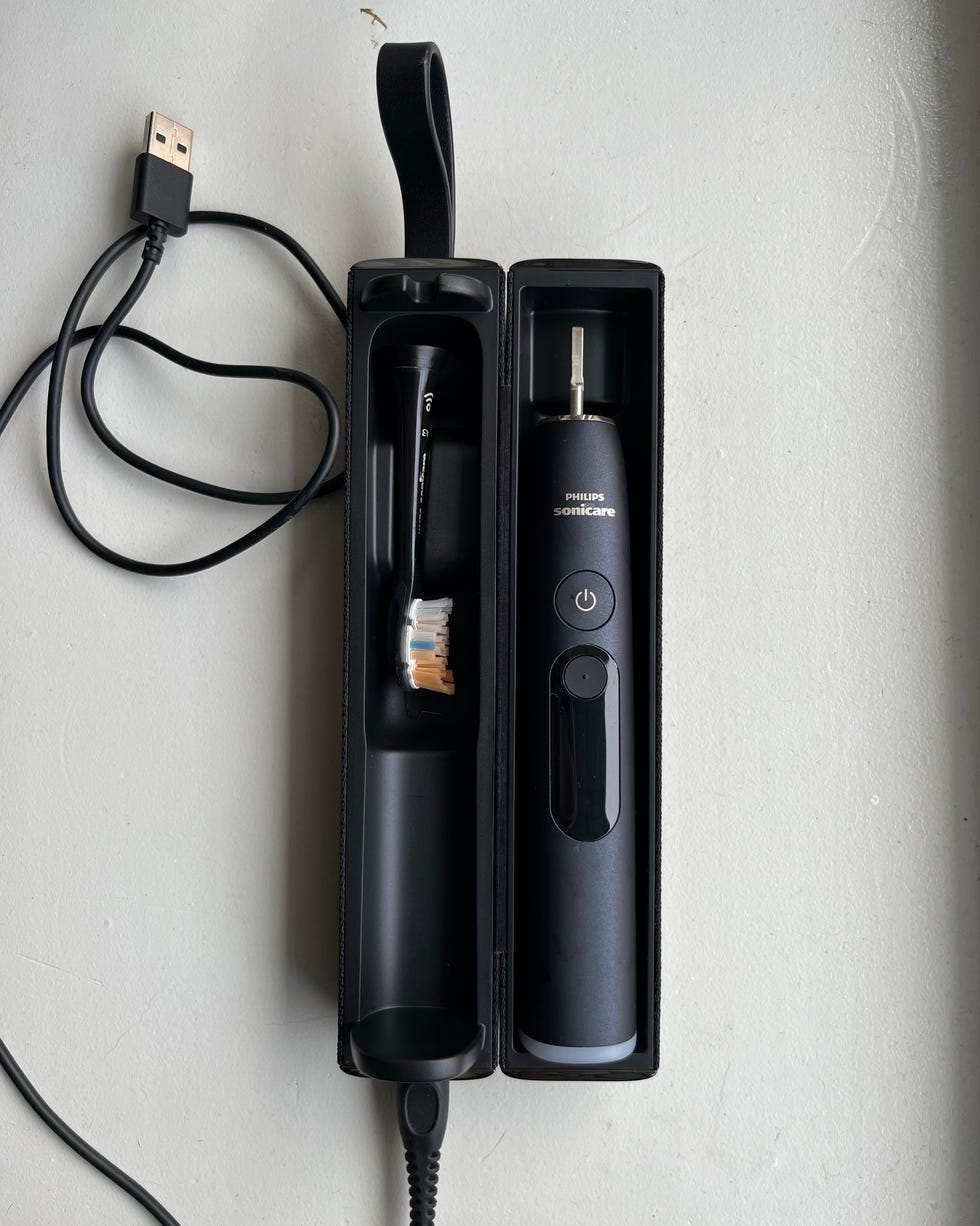
The Philips electric toothbrush in the charging travel case
Performance and features
The DiamondClean 9900 Prestige is Philips Sonicare’s most advanced power toothbrush—in fact, the brand says it removes up to 20 times more plaque, results in 15 times healthier gums in six weeks, and shows 100% more stain removal in less than two days compared to a manual toothbrush. The toothbrush’s cleaning performance is powered by the following features:
Modes and intensity levels
The Philips toothbrush offers three intensity levels: Low, Medium, and High. I found the High setting to be pretty powerful—a bit too strong for my liking, especially on my more sensitive gums. I ended up using the Low and Medium intensity levels most often instead—the Low level is recommended specifically “for sensitive teeth and gums,” and I found it to provide the perfect gentle pressure while still feeling effective, while the Medium level felt like the perfect middle ground.
In addition to the three intensity levels, the toothbrush also offers eight different cleaning modes: Clean, Deep Clean, Polish, Sensitive, Gum Health, White, Max Care, and Comfort. The Clean mode is the standard setting—designed for an everyday clean with a two-minute timer—while the Deep Clean runs for an extended three minutes. I used these two settings most often, but I appreciated that I could also choose other modes to address specific problems with my oral health. For example, I frequently used the Gum Health mode (which allows for additional time designed to clean your back teeth and improve your gum health) and the Sensitive mode (soft vibrations for a gentle yet effective clean for sensitive teeth and gums) to address my gum inflammation issues.

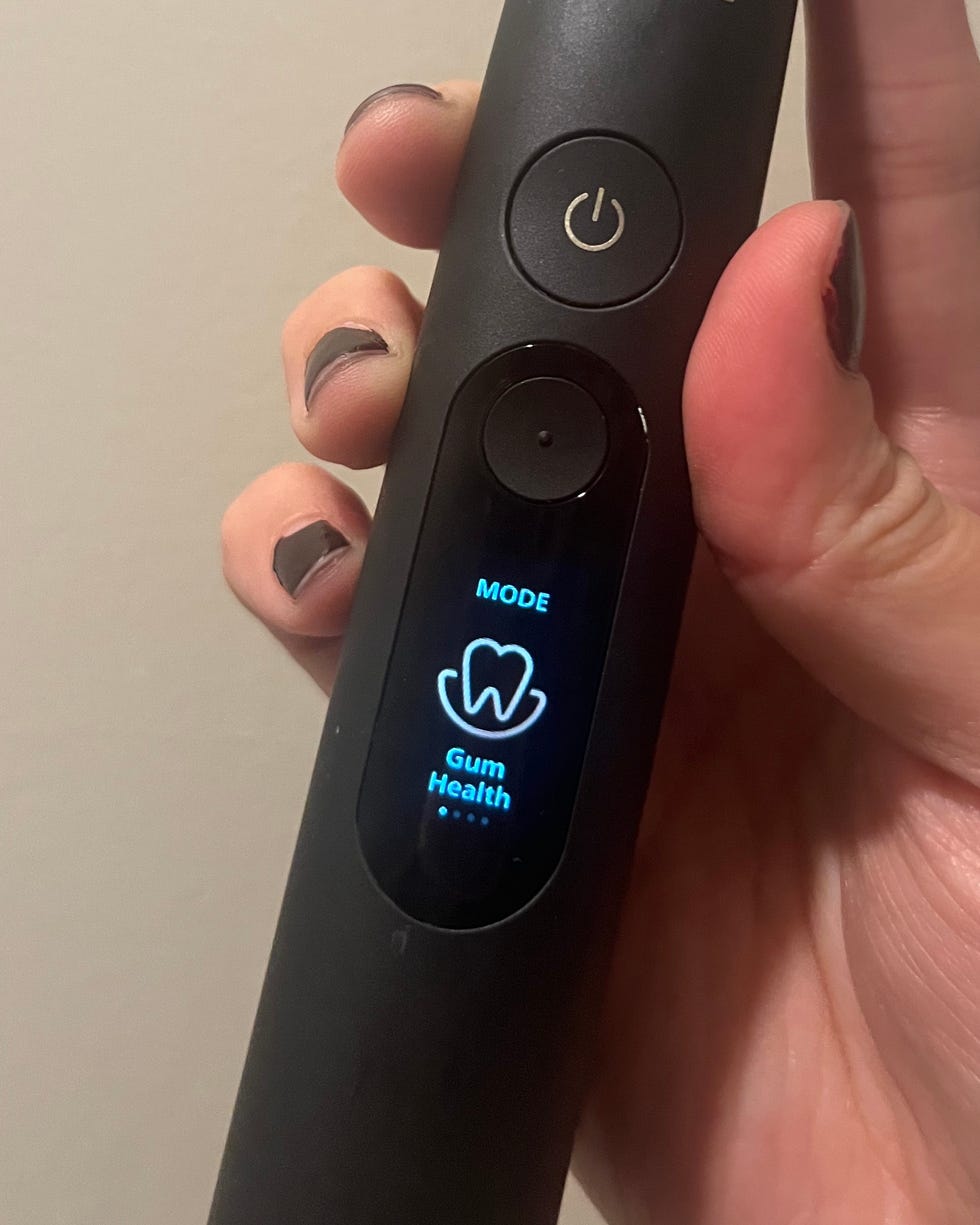
Selecting the “Gum Health” mode on the toothbrush display
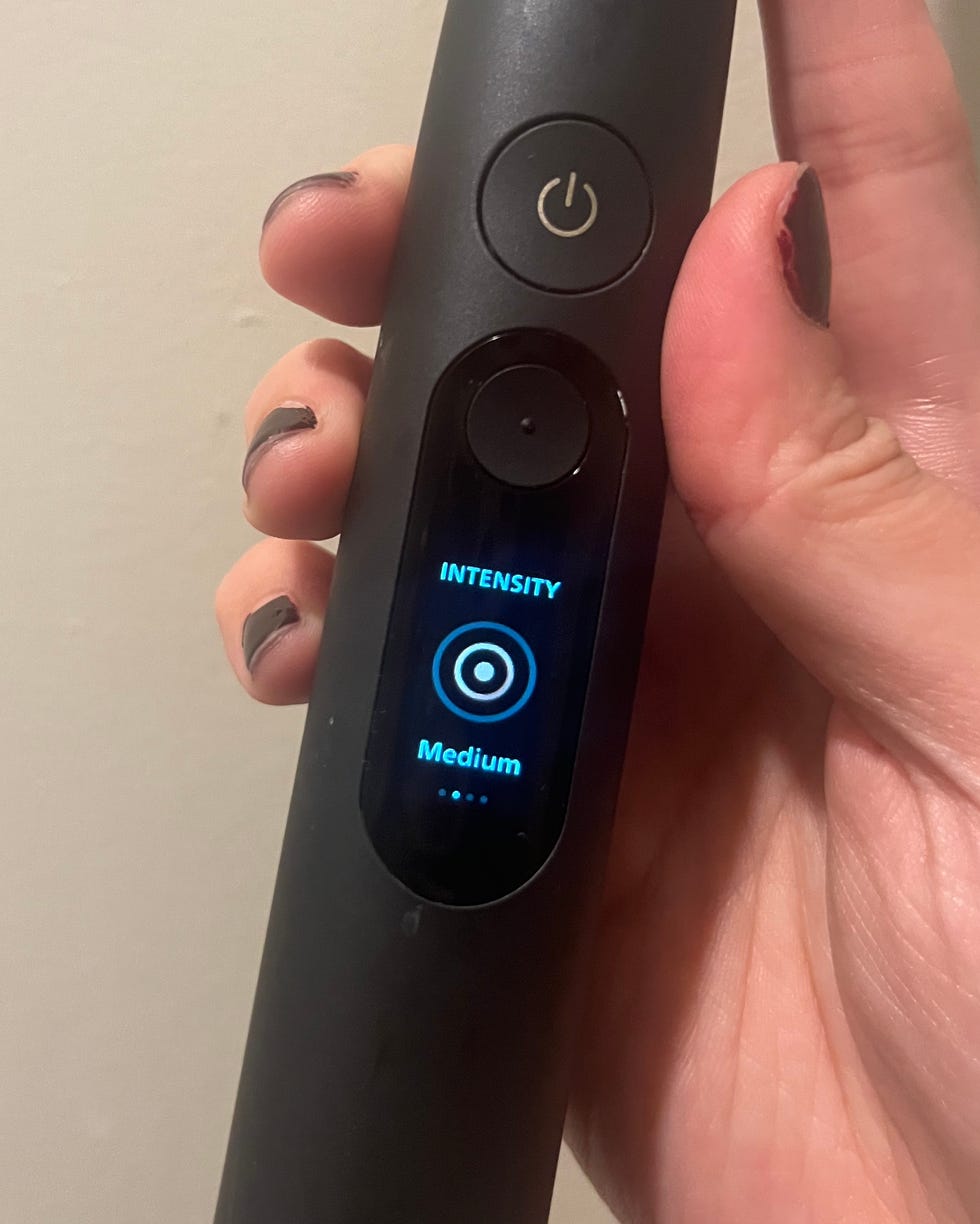
Selecting the “Medium” intensity level on the toothbrush display
Smart feedback and adaptive technology
The toothbrush also offers smart pressure feedback to guide you to brush your teeth with the optimal pressure—while automatically adjusting to your brushing style with SenseIQ Adaptive Intensity technology. This feature monitors the pressure, motion, and coverage of your brushing up to 100 times a second and reduces the intensity if you brush too hard to protect your teeth and gums.
I found the smart pressure feedback to be helpful in guiding my brushing. The toothbrush itself gives you this feedback with the light ring at the base of the handle: It glows green when you’re using the right amount of pressure, pulses purple with a gentle vibration if you’re pressing too hard, and slowly fades to purple when you’re not applying enough pressure.

Add Prevention as a preferred source in your Google search results.
Use your Google account to add this to your settings.


Personally, I found it more helpful to view the feedback on the Philips Sonicare app, which told me whether I was pressing too hard or scrubbing too fast in real time on a larger screen that was easier to read.

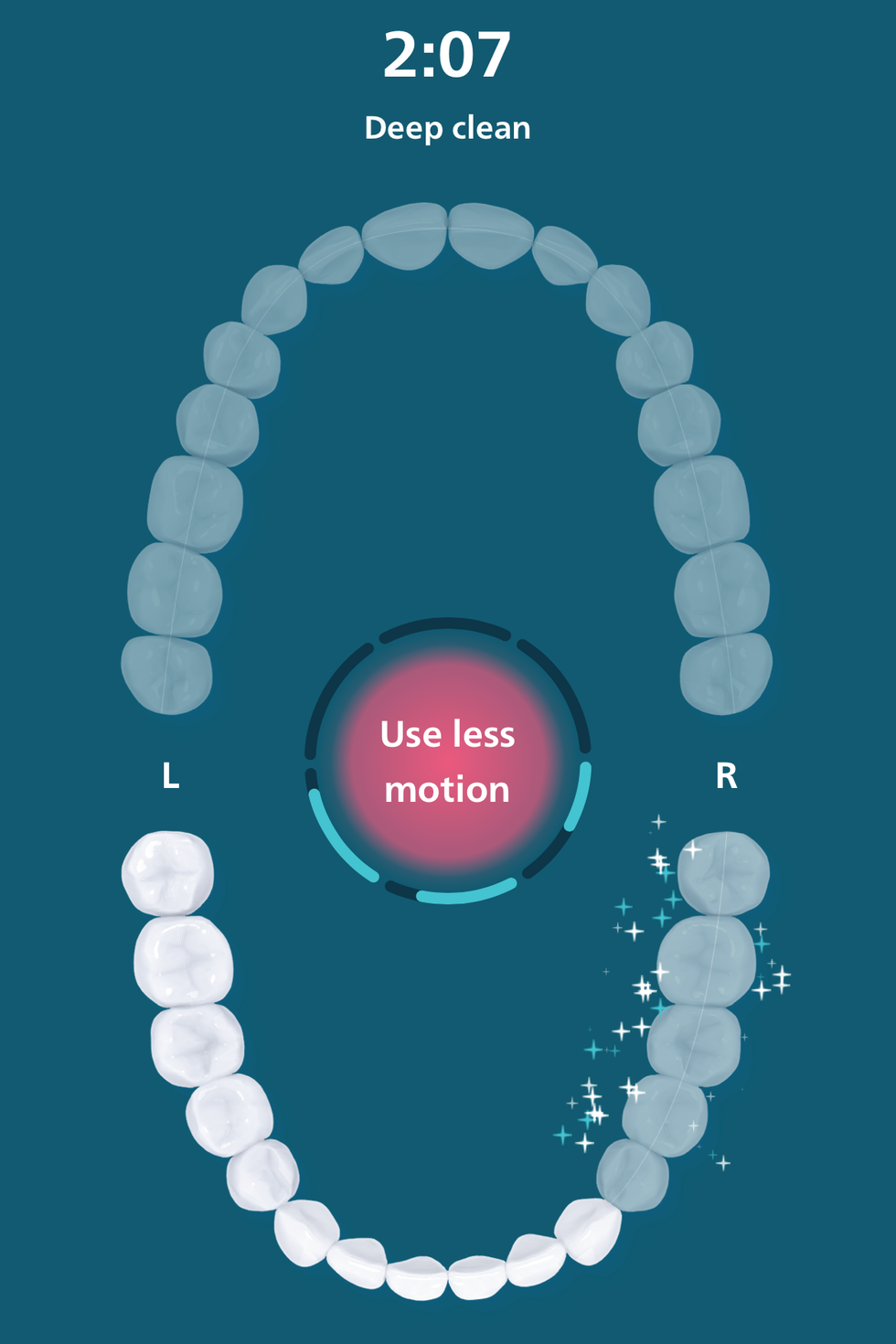
The Philips Sonicare app providing real-time feedback on the visual mouth map, displaying “Use less motion”
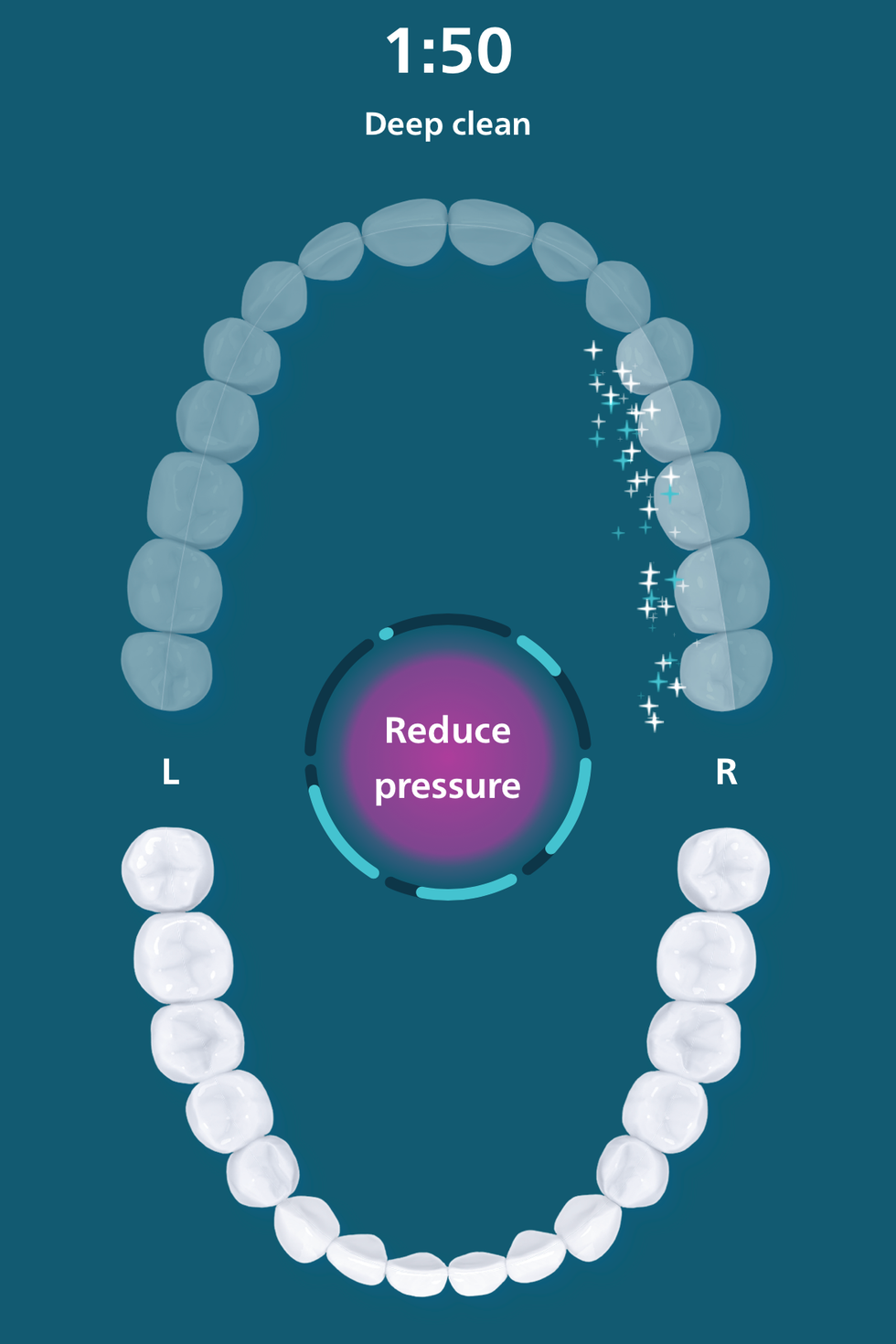
The Philips Sonicare app providing real-time feedback on the visual mouth map, displaying “Reduce pressure”
Instant feedback and app integration
For me, the most helpful and innovative feature of the Philips toothbrush was the instant coverage feedback and the visual mouth map feature. This technology uses built-in smart sensors and AI technology to track the position of the toothbrush handle inside your mouth as you move it, providing a visual guide to track your brushing coverage in real time to help you clean every part of your mouth thoroughly and evenly.
The toothbrush itself gives feedback via the light ring at the base of the handle. It glows yellow when a segment of your mouth still needs brushing, and glows blue to indicate that the area is clean and you can move on to the next segment (once all areas are thoroughly cleaned, the toothbrush also plays a sound).
The Philips Sonicare app provides more detailed feedback with a visual mouth map divided into 12 segments. The segments are gray before you start brushing, but then turn white as you brush to indicate that the section has been properly cleaned.
Once the timer runs out and the brushing session ends, the app displays the mouth map with highlighted areas indicating the spots you missed, along with feedback on scrubbing and pressure—upon which you can turn on your toothbrush again to touch up those specific areas. If you don’t want to use the app every time you brush, though, the display on the handle also shows a more simplified version of this mouth map (indicating which segments of your mouth you’ve successfully cleaned in blue, and which spots you’ve missed in yellow).
Overall, I found this real-time visual mouth map feature super helpful in guiding my brushing to be more thorough and effective. In fact, when using the toothbrush for the first time and seeing the results on the mouth map of all the spots I missed, I realized just how un-thorough my brushing had been in the past.
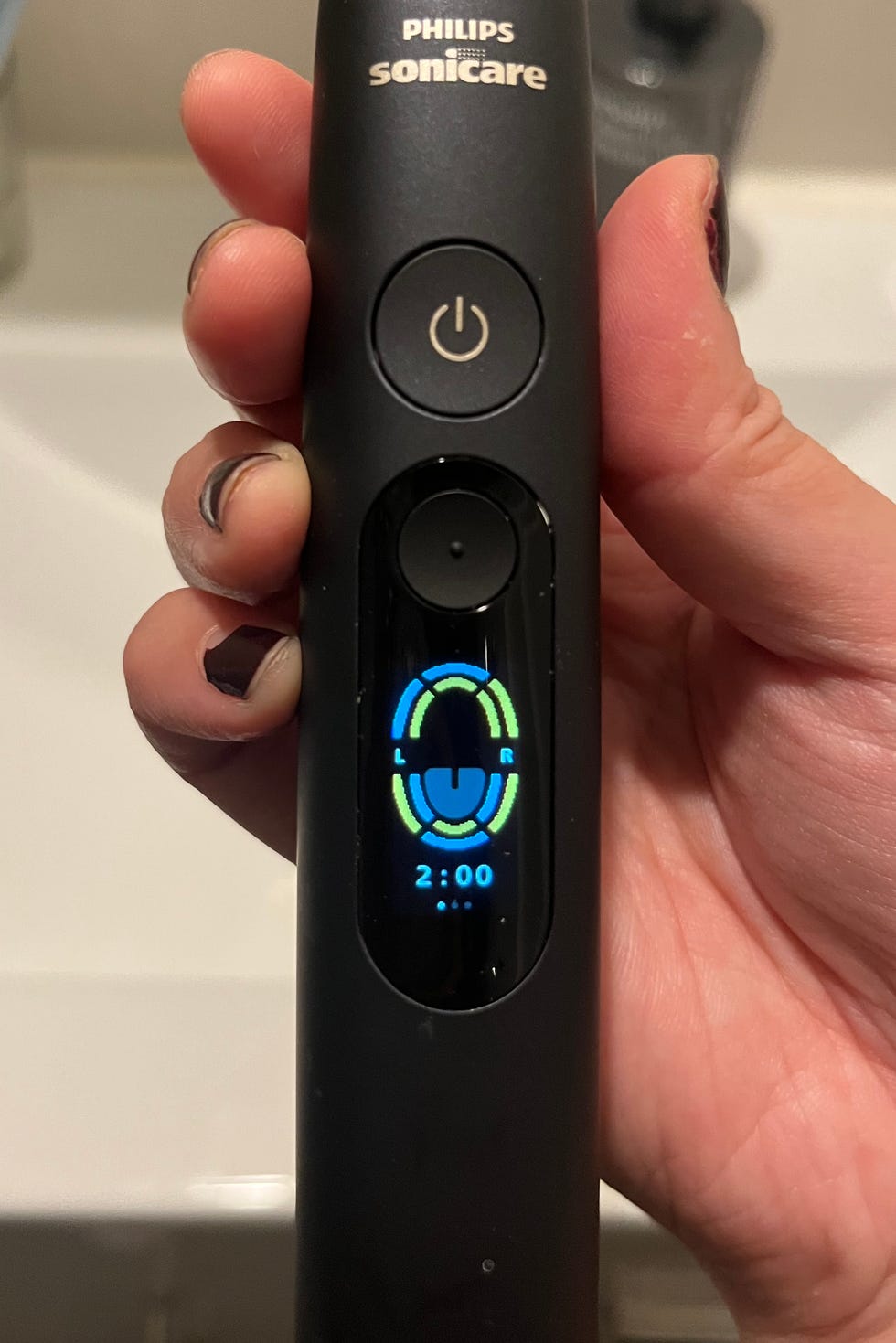
The visual mouth map displayed on the toothbrush handle
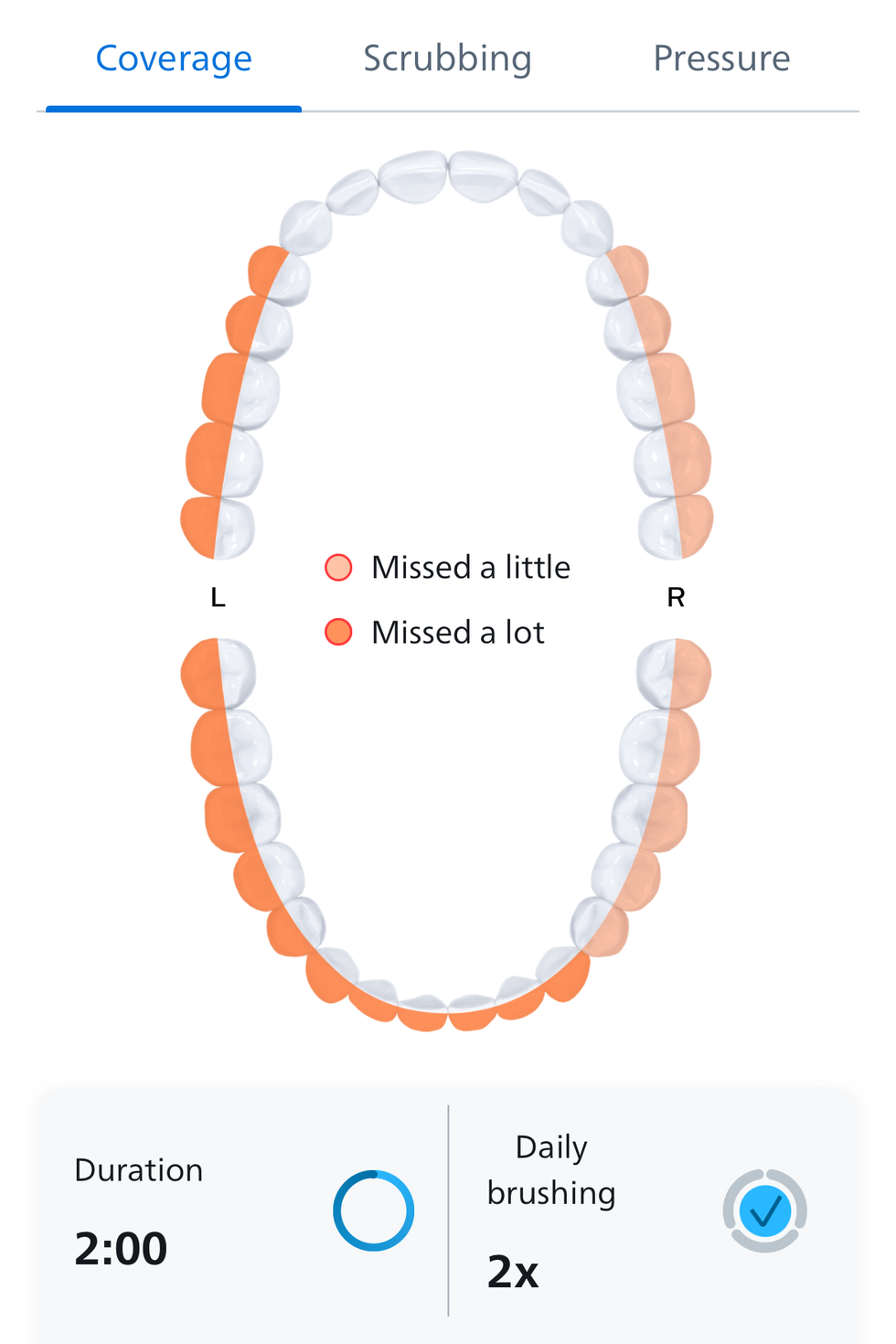
The visual mouth map displayed on the Philips Sonicare app
Other app features
The Philips Sonicare app also has other useful features, including a dental diary that tracks your daily brushing to ensure you’re brushing twice every day (you can also log and track your daily flossing, tongue cleaning, and mouth rinse). The app also displays trends such as your average coverage, brushing frequency, and brushing time, along with general tips and personalized recommendations based on your brushing habits. I found these features offered a helpful, bigger-picture view of my oral-care routine—for example, I’ve learned that the duration and frequency of my brushing fell a bit short of the usual recommended two minutes twice a day, which I’m now trying to address by making sure I brush more frequently and for longer.
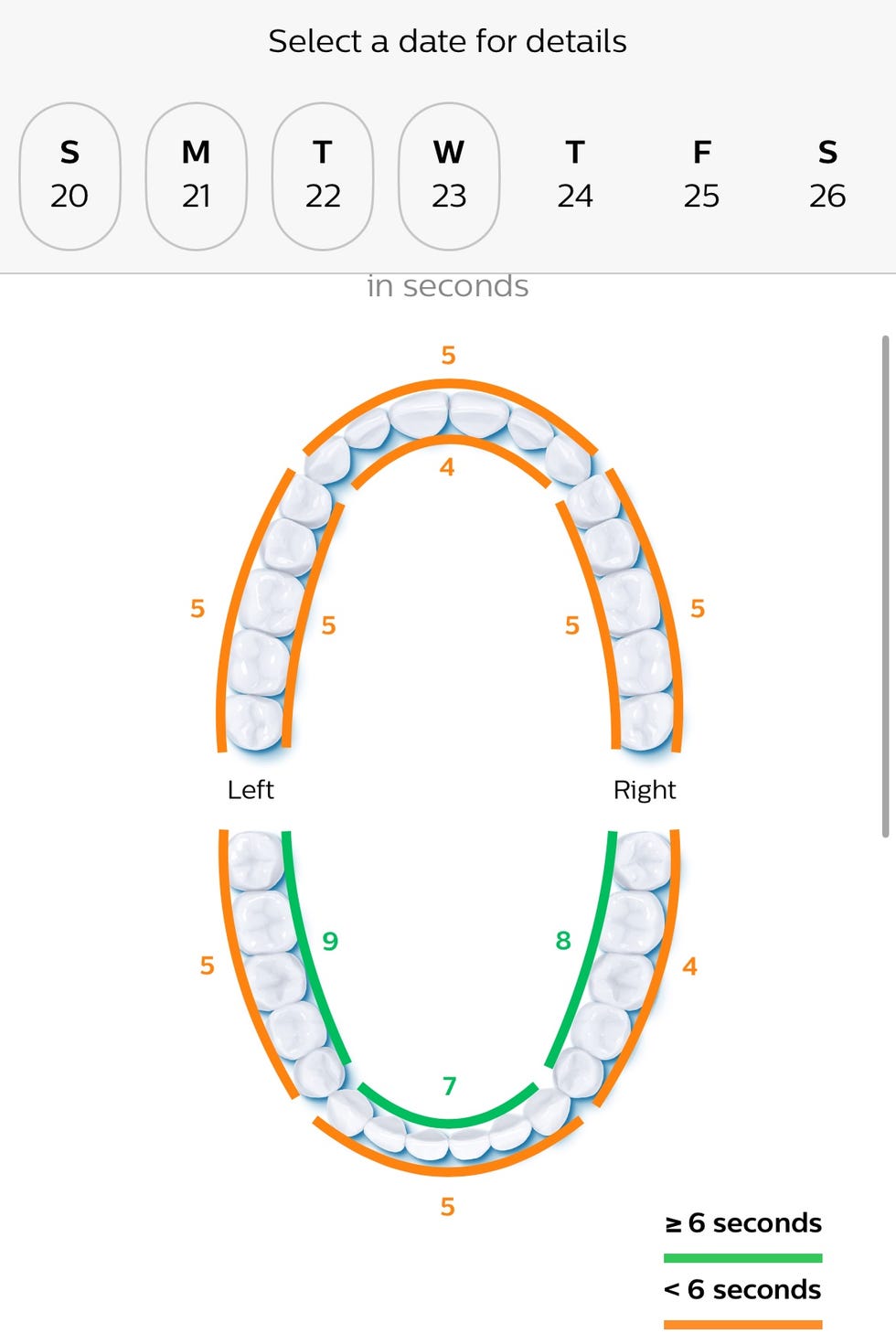
The Philips Sonicare app displaying average coverage data for the week
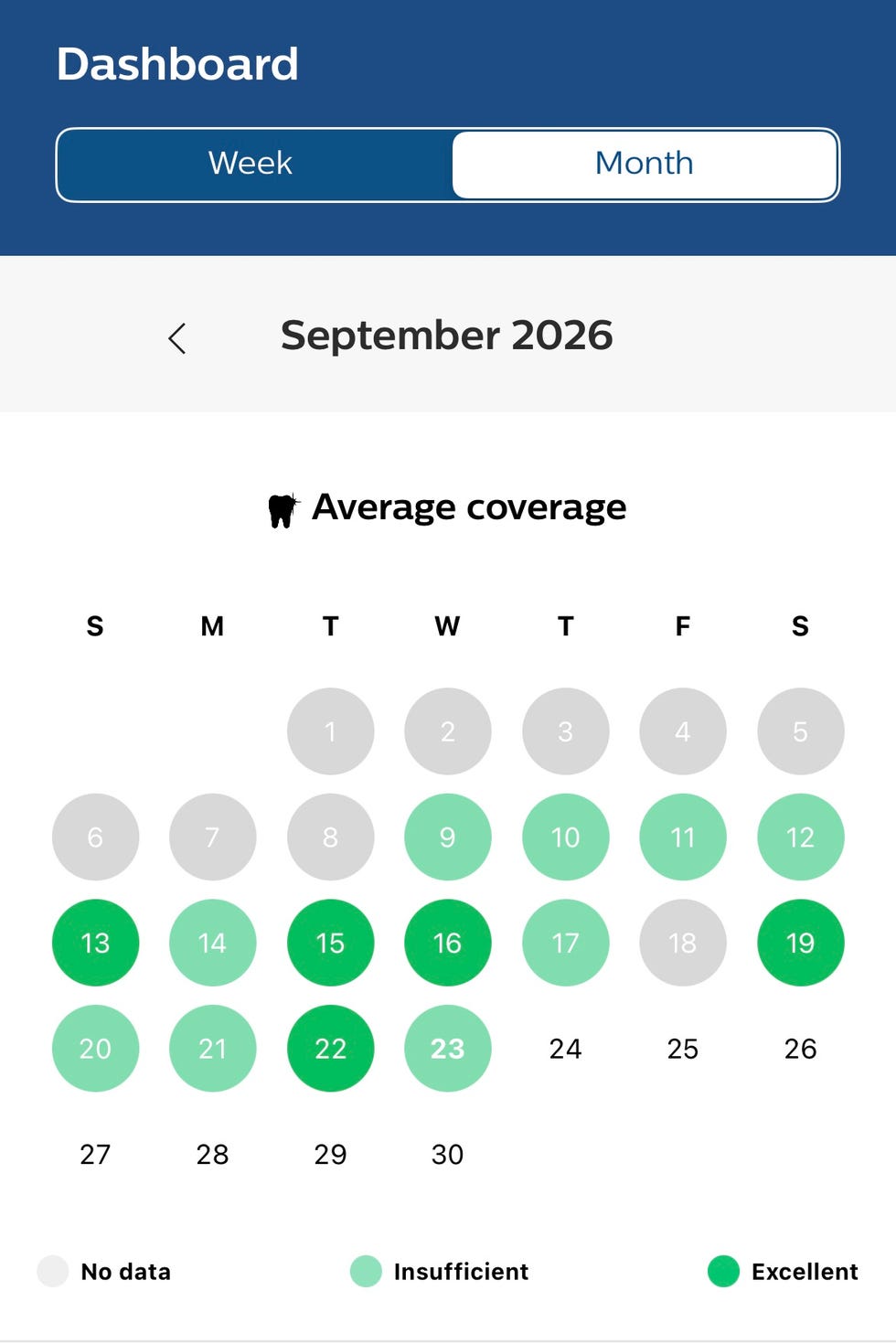
The Philips Sonicare app displaying average coverage data for the month
The bottom line
The Philips Sonicare DiamondClean 9900 Prestige is truly unlike any toothbrush I’ve tried before—and after testing it myself for weeks, I’m not surprised that it currently boasts the title of one of the most advanced and powerful toothbrushes on the market. Not only does this high-tech toothbrush always deliver an exceptional clean with a dentist-clean mouthfeel, I’ve found that its smart features—including a visual mouth map and real-time feedback on brushing pressure, motion, and coverage—have been truly useful in guiding (and improving!) my brushing technique.
In fact, since using this toothbrush, I’ve noticed that I’ve experienced less bleeding and sensitivity in my gums—which I believe is a result of learning to brush more thoroughly and effectively overall. The app features have also been especially helpful, as it’s offered valuable feedback on the spots I usually miss while brushing—in addition to other tips and insights that have helped me to stay more on top of my brushing habits.
Of course, all of these high-tech features mean that this toothbrush comes with a premium price tag—a whopping $380, to be exact. Do you absolutely need to spend that much on a toothbrush? In my honest opinion, no—other, more affordable electric toothbrushes will likely do the job. In fact, I think those seeking a simpler option will probably be happy with Philips Sonicare’s affordable models, like the 7300 Series ($170) or even the 4100 Series ($50).
However, if you’re willing to splurge on a more premium, high-tech toothbrush? I would say the Philips Sonicare DiamondClean 9900 Prestige is well worth the investment—especially if you’re planning to take advantage of its personalized insights and guidance to improve your brushing habits.
Shop the Philips Sonicare DiamondClean 9900 Prestige toothbrush
Read the full article here


