







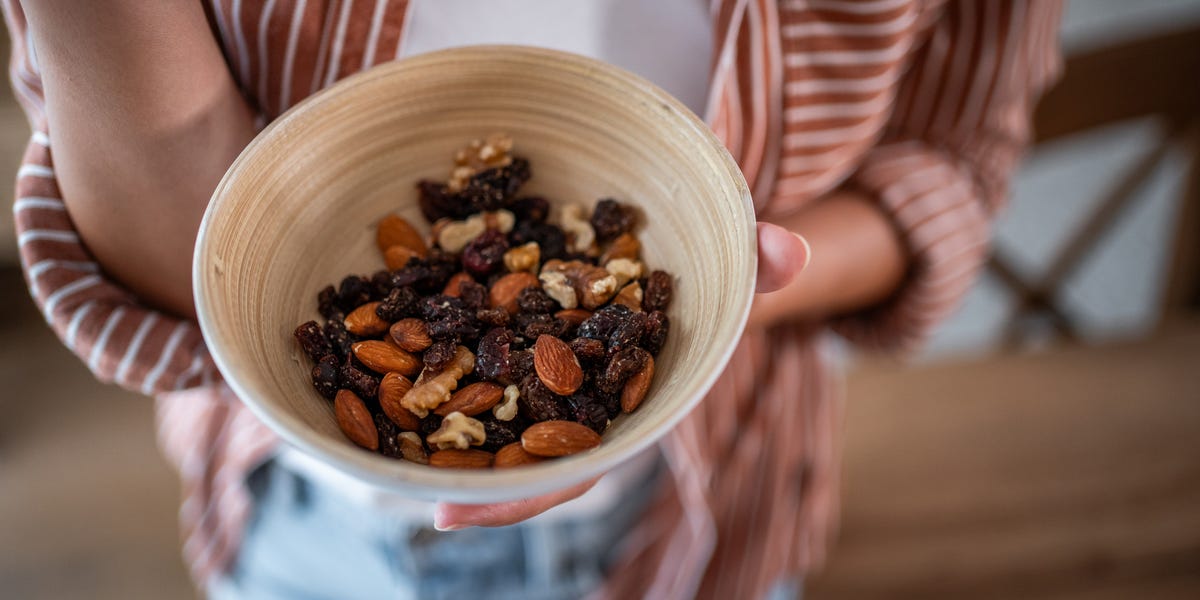
Certain nuts are considered superfoods—but one, in particular, is a longevity powerhouse: walnuts. In fact, walnuts’ anti-aging benefits make them a worthy addition to just about any eating plan.
Meet the experts: Melissa Jaeger. R.D., L.D., an in-house nutritionist for MyFitnessPal; and Joanna Gregg, M.S., R.D., food data curator at MyFitnessPal
These nutrient-packed nuts offer more than a boost to heart health and potential cancer-fighting properties (though those are impressive on their own). Research shows that walnuts stand out for their ability to support healthy aging.
What makes walnuts so healthy?
It’s not just their rich, nutty flavor that makes walnuts a standout choice—they’re packed with nutrients that support overall health. In addition to being the only tree nut that is an excellent source of alpha-linolenic acid (ALA) omega-3 fatty acids, walnuts are also a source of fiber, plant-based protein, antioxidants, and key micronutrients.
“A one-ounce serving of walnuts provides valuable nutrients such as protein, fiber, and magnesium,” Melissa Jaeger. R.D., L.D., an in-house nutritionist for MyFitnessPal. “Their heart health benefits are further highlighted by their certification with the American Heart Association’s Heart-Check mark, indicating that they meet criteria for heart-healthy food.”
What role do walnuts play in anti-aging?
According to a fellow in-house R.D. at MyFitnessPal, Joanna Gregg, all of these nutrients make walnuts an incredible resource in anti-aging from the inside out.
“Walnuts contain multiple components such as fatty acids, fiber, and essential vitamins and minerals that have antioxidant and anti-inflammatory effects in the body,” Gregg says. She points to multiple studies that show walnut consumption is linked to a reduced risk of certain diseases, including cardiovascular disease, depression, and diabetes, all “while protecting against age-related cognitive decline.”
Gregg explains that many of the benefits come from their ability to fight oxidative damage in the body and improve various health markers, due to the powerful antioxidants found in walnuts.
“As far as anti-aging goes, walnuts support heart and gut health, reduce inflammation, and promote a healthy weight, which all promote optimal health and longevity,” Gregg adds.
Data from the Nurses’ Health Study published in the Journal of Aging Research supports these findings and, in fact, suggests that walnuts are uniquely linked to healthy aging among the variety of nuts available. The researchers followed 33,931 women in their late 50s and early 60s, assessing their diets, physical health, memory, and chronic disease status.
Ultimately, the study found that women who consumed at least two servings of walnuts per week had 20% higher odds of being classified as “healthy agers” compared to those who did not eat walnuts. Healthy agers were defined as those with sound mental health, no major chronic diseases or memory issues, and no physical disabilities—a category that comprised about 16% of the participants. While initial analysis showed a link between total nut consumption and healthy aging, after adjusting for various factors, only walnuts maintained a significant association.
More health benefits of walnuts
There is a laundry list! Walnuts offer significant cardiovascular benefits. Antioxidants like phytosterols and polyphenols reduce oxidative stress, inflammation, and blood pressure, while ALA supports heart health and helps reduce the risk of heart disease and stroke. A 2023 review of research and government recommendations published in Nutrients showed that eating just 10 grams of walnuts per day (or about five walnut halves) was linked to a decreased risk of cardiovascular disease. And Jaeger notes that walnuts may be linked to decreased diastolic blood pressure. “Both blood pressure and cholesterol are key factors to manage when it comes to supporting your overall heart health,” she says.
One of the biggest benefits is their ability to lower cholesterol, specifically LDL (the bad cholesterol), according to Heart.org. A 2021 study in Circulation confirmed this after observing older adults who consumed two servings of walnuts every day for two years. “This recent trial confirms what earlier studies have found, namely, that adding walnuts to your diet appears to improve your cholesterol levels,” said obesity and nutritional epidemiologist at Harvard-affiliated Brigham and Women’s Hospital, Dr. Deirdre Tobias.
How many walnuts should I eat?
Incorporating walnuts into your daily diet is easier—and more beneficial—than you might think. “Eating a diet that includes one ounce of nuts daily can reduce your risk of heart disease,” The U.S. Food and Drug Administration (FDA) advises. For walnuts, that’s roughly a small handful or about 12-14 halves.
While the FDA doesn’t specify the best time of day to enjoy them, walnuts are versatile enough to fit into any meal or snack—whether sprinkled on oatmeal, blended into smoothies, or enjoyed on their own. The key is consistency, so aim for a daily serving to maximize their heart-healthy and nutrient-packed benefits.
What to consider when eating walnuts for longevity
According to Harvard Health, there’s not one, singular holy-grail food that can transform your diet. To achieve the results you’re looking for to live longer and healthier, you’ll need a well-rounded, healthy diet and lifestyle that includes regular exercise and no smoking.
There’s also the issue of fat. While nuts contain “healthy fats,” the Mayo Clinic points out that these fats can still add up. Even walnuts should be eaten in moderation. The clinic advises four to six servings of unsalted nuts a week for adults.
Jaeger recommends opting for raw, dry-roasted, or unsalted nuts to reduce added salt or sugar. “For a more satisfying snack, you can roast raw nuts at home, tossed in your favorite spices,” she suggests.
Read the full article here


