







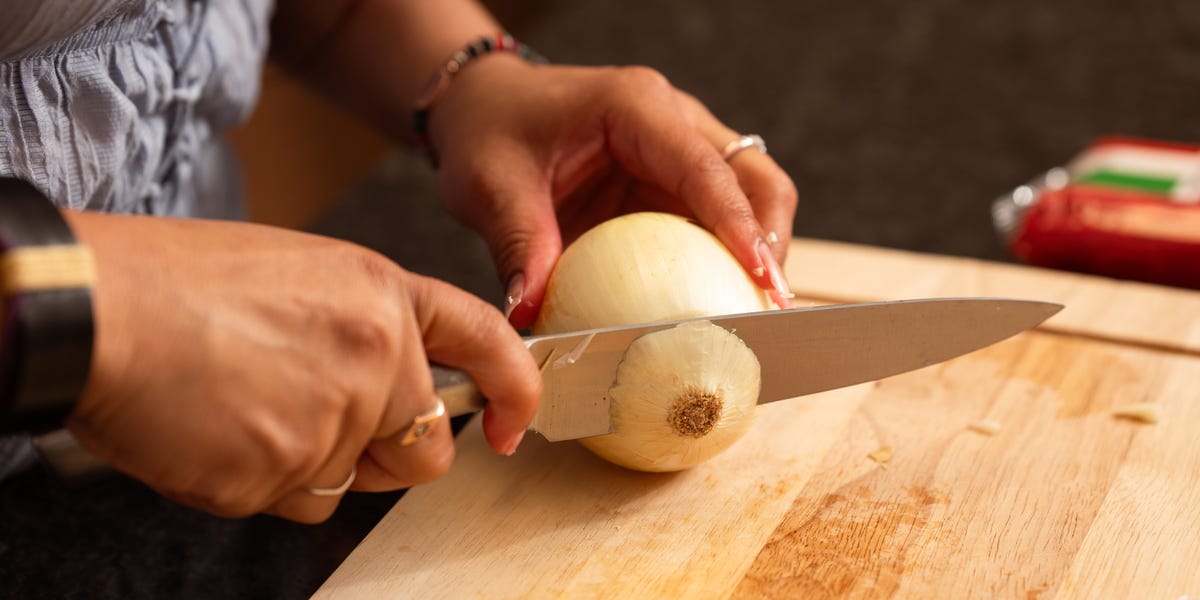
- New research suggests people genetically predisposed to liking onions have a lower risk of type 2 diabetes and high blood pressure.
- Experts say onions have health-boosting effects.
- Still, eating onions alone is unlikely to lower your risk of developing these conditions.
You’ve probably heard about the gene that can cause an aversion to cilantro. Now, a new study suggests that some are genetically predisposed to liking another common ingredient—and that it could signal some positive qualities about your health.
The study, published in BMC Medicine, found that having a genetic predisposition to liking onions was linked with a lower risk of developing type 2 diabetes or high blood pressure. For the study, researchers analyzed data from more than 160,000 people between the ages of 37 and 73 who participated in the UK Biobank, a long-running health study in the U.K. The database included participants’ genetic information—including gene variants linked to preferences for a range of foods, such as grapefruit, horseradish, wasabi, salt, and onions—as well as their food preferences.
After crunching the data, the researchers found that people with a particular variant of the OR2T6 smell receptor gene were more likely to prefer onions. From there, the researchers examined a range of health outcomes in those with the OR2T6 smell receptor gene, ultimately determining that having this smell receptor gene variant—and liking onions as a result—was linked to a lower risk of being diagnosed with high blood pressure and type 2 diabetes. (The study was not sponsored by a pro-onion organization, by the way.)
Meet the experts: Danielle Reed, Ph.D., study co-author and chief science officer of the Monell Chemical Senses Center; Daniel Liang-Dar Hwang, Ph.D., lead study author and genetic epidemiologist at the Institute for Molecular Bioscience at the University of Queensland; Richard Siegel, M.D., co-director of the Diabetes and Lipid Center at Tufts Medical Center and endocrinologist at Tufts Medicine Weight & Wellness Center–Stoneham; Jessica Cording, R.D., author of The Little Book of Game-Changers.
“One of the biggest challenges in nutrition research is figuring out whether a food actually affects health or whether it simply happens to be eaten by healthier people,” says Daniel Liang-Dar Hwang, Ph.D., lead study author and genetic epidemiologist at the Institute for Molecular Bioscience at the University of Queensland. “We wanted to develop a better way to answer that question. Because our sense of taste and smell plays a major role in the foods we choose to eat, we investigated whether genes that influence these senses could help us better understand the relationship between diet and health.”
So, why is liking onions linked to a lower risk of high blood pressure and type 2 diabetes? There’s no clear answer yet, but there are a few theories.
What’s behind the link?
There are likely a few things happening here. Onions are vegetables, and they have certain properties that make them healthy, points out Jessica Cording, R.D., author of The Little Book of Game-Changers.
“Onions have a lot of really important compounds, including flavonoids, quercetin, and fiber,” she says. “These are beneficial for cardiovascular health.” Onions also tend to be found in nutrient-dense meals, including dishes with a lot of vegetables. “They’re a big part of the Mediterranean diet, and often involved in healthier dishes,” Cording says, adding that eating healthier foods can help reduce the risk of developing type 2 diabetes.
It’s also possible that people who like onions also prefer other healthy plant-based foods, says Richard Siegel, M.D., co-director of the Diabetes and Lipid Center at Tufts Medical Center and endocrinologist at Tufts Medicine Weight & Wellness Center–Stoneham. “If they are more genetically likely to eat a plant-based, unprocessed diet, including onions, the foods may contain phytochemicals that may reduce the risk for high blood pressure and diabetes,” he says.
On the other hand, people who don’t enjoy them may miss out on these nutrients, says Danielle Reed, Ph.D., study co-author and chief science officer of the Monell Chemical Senses Center. “Not everyone can smell the flavor notes that make them yummy,” she says. “People who are blind to those flavors eat less onion and do not get the benefit.”
Will eating onions help to lower your blood pressure and risk of type 2 diabetes?
Experts aren’t yet ready to make that determination. “Our findings suggest that onion consumption may help lower blood pressure and reduce the risk of type 2 diabetes, but this study alone isn’t enough to recommend that people eat more onions specifically for these purposes,” Hwang says.
Cording agrees, pointing out that no single food can influence disease risk on its own. “I wouldn’t encourage people to think of onions as a treatment for high blood pressure or diabetes,” she says. “But I would think of them as a nutritious ingredient that can be part of an overall healthy eating pattern.”
What’s the takeaway?
The bottom line isn’t that everyone should eat onions, though they may have some benefits—and there’s no harm in trying to eat them more frequently, if you’re so inclined. “For people with high blood pressure, it is worth trying to increase the consumption of onions and see if it has beneficial effects,” Reed says. “We are all experiments of one when it comes to nutrition.”
Just don’t expect onions alone to turn things around, according to Dr. Siegel. He recommends staying active and following a healthy eating plan, like the Mediterranean or DASH diets, to support health. “You should never confuse association with causation, but if people want to eat onions, add them to anything you want,” Dr. Siegel says.
Cording agrees. “If you like onions, great,” she says. “But if you don’t like onions, you don’t have to force yourself to eat them. There are lots of vegetables that provide health benefits.”
Read the full article here


