







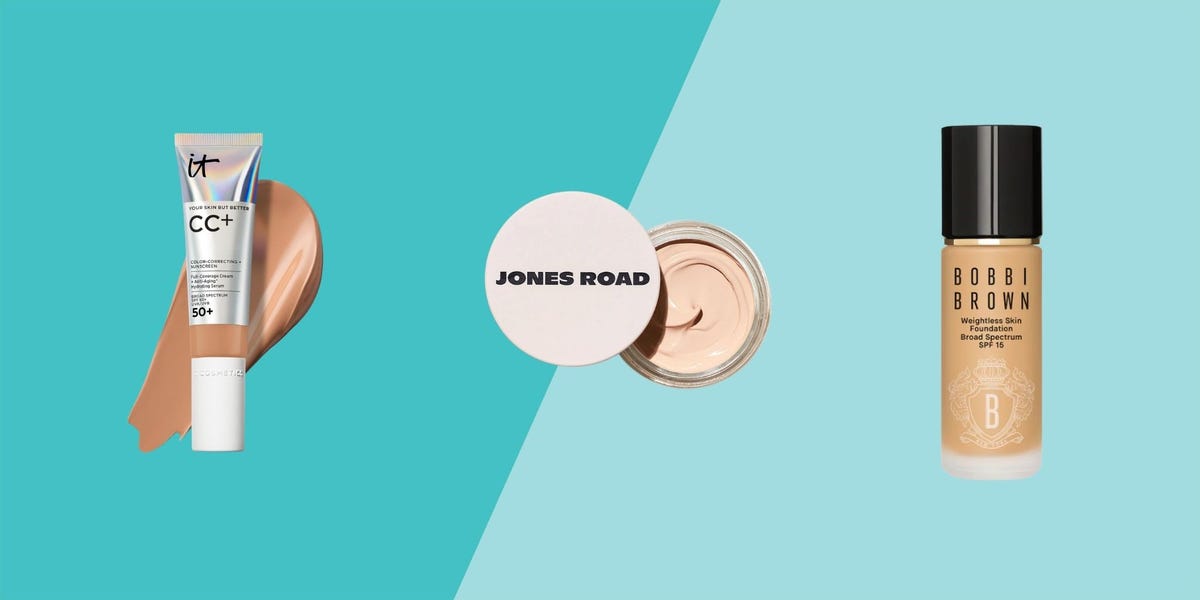
✔️Go for hydration. All of the experts agree that it’s best to opt for hydrating formulas. Why? Mature skin tends to be more dry as a result of reduced sebum production, explains Dr. Camp—meaning it can benefit from ingredients that hydrate and moisturize skin, such as hyaluronic acids, ceramides, squalane, and triglycerides.
✔️Choose a lightweight, dewy formula. “The best type of formulation for mature skin is lightweight, so it won’t sink into any creases, wrinkles, or fine lines,” says Gray. “Mature skin is thin as well, so the more lightweight the formulation, the more comfortable on the skin.” Additionally, opt for foundations with a dewy finish rather than matte, which can “help restore some moisture to the skin and help it appear plumper and more youthful,” explains Dr. Camp.
✔️Look for sun protection. “While using sunscreen is an essential part of any skincare routine, if a foundation has sunscreen in it, it can provide an added bonus,” Dr. Garshick notes. If you’re out and about, and the sun is shining, you need SPF—no matter your age or skin type.
✔️Consider your skin type. You’ll also want to look for formulas that suit your specific skin type. If you’re struggling with dull skin, for example, you may want to look for a brightening formula and/or a formula with vitamin C. For oily skin, oil-free formulas that blur imperfections work well. And those with dry skin and/or prominent fine lines should search for ultra-hydrating and dewy foundations.
Read the full article here


