







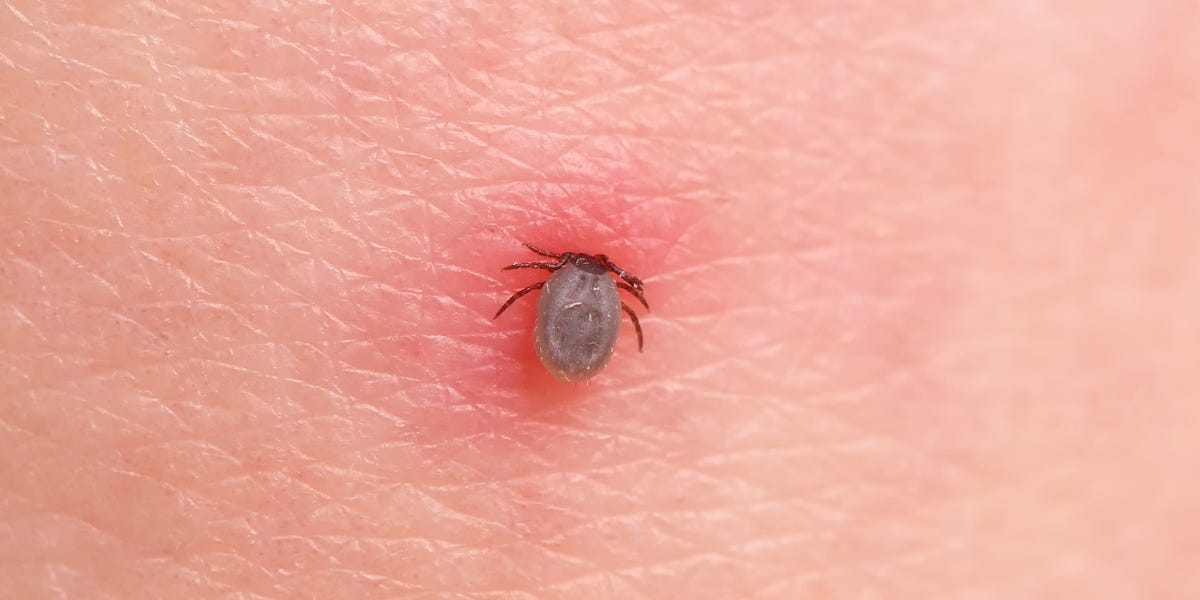
It can be jarring to get a tick bite, especially when the pest is still attached. But there is a right and wrong way to handle the situation, including when it comes to aftercare. The best way to treat a tick bite involves a few steps, along with monitoring yourself afterward.
Not sure if you actually have a tick bite? While the look and feel of a tick bite varies from person to person, you can develop a reaction to it like any other insect bite. Don’t be surprised if it turns into a small red bump or feels tender and itchy, especially right after the initial bite.
Meet the experts: Ife J. Rodney, M.D., founding director of Eternal Dermatology + Aesthetics in Fulton, MD; Gary Goldenberg, M.D., an assistant clinical professor of dermatology at the Icahn School of Medicine at Mount Sinai in New York City; Thomas Russo, M.D., a professor and chief of infectious diseases at the University at Buffalo in New York; Amesh A. Adalja, M.D., a senior scholar at the Johns Hopkins Center for Health Security.
And even though you can find a tick attached to any part of your body, they gravitate toward tucked-away areas that tend to be warm and moist, like the armpits, behind the knees, and around the groin.
Again, there are different steps involved in treating a tick bite. As you can imagine, it starts with removing the tick itself. Here’s how doctors recommend navigating the process.
How to remove a tick
Happen to find a tick on you? Before you can treat the bite, it’s important to understand how to properly remove a tick. The Centers for Disease Control and Prevention (CDC) has very specific directions:
- Remove the tick as soon as possible. The longer it stays attached, the bigger it gets as it feeds on your blood—and the greater the risk of disease transmission.
- Use fine-tipped tweezers to grasp the tick as close to the skin as you can.
- Pull upward with steady, even pressure. (Don’t twist or jerk the tick to avoid leaving mouthparts behind.)
- Dispose of the tick by flushing it down the toilet. If you want to bring the tick to your doctor to help ID it, put it in rubbing alcohol or place the tick in a sealed bag or container.
If the tick’s mouthparts break off, it’s best to leave them there vs. digging around in your skin to try to get them out, says Thomas Russo, M.D., a professor and chief of infectious diseases at the University at Buffalo in New York. “Some people talk about using nail polish, petroleum jelly, or burning the tick off—stay away from all of that,” Dr. Russo says. “Stick with the mechanical method.”
Something to consider, per Amesh A. Adalja, M.D., a senior scholar at the Johns Hopkins Center for Health Security: “There are organizations like TickSpotters at the University of Rhode Island to whom you can send a picture of your tick and get an answer on identification.” That can help you figure out what disease you could potentially be at risk of developing so that you can better-monitor yourself for symptoms going forward, he says.
How to treat a tick bite immediately after removal
Once the tick is removed, it’s best to clean the bite area with rubbing alcohol or soap and water, Dr. Russo says. “Clean your hands well, too,” he says. “You might have gotten your hands contaminated during the removal process.”
Once the area has dried, “it would help if you covered the tick bite with a light bandage to protect the area from dirt and bacteria,” says board-certified dermatologist Ife J. Rodney, M.D., founding director of Eternal Dermatology + Aesthetics in Fulton, MD.
How to continue to treat a tick bite
You shouldn’t panic if the bite ends up looking like a mosquito bite for a few days afterward. But if the bite becomes further inflamed or crusted, applying “an antibiotic cream may be helpful” toward lowering the risk of infection and tamping down lingering inflammation, says board-certified dermatologist Gary Goldenberg, M.D., an assistant clinical professor of dermatology at the Icahn School of Medicine at Mount Sinai in New York City.
How long can it take a tick bite to heal?
Everyone is different, but the bite can take up to two weeks to heal. You may notice it looks less noticeable after a few days, or it may go away entirely in less than a week— all of that is considered normal, Dr. Rodney says.
How long should you monitor yourself?
It’s important to monitor yourself for symptoms of tickborne illness, like Lyme disease, for the next 30 days, Dr. Russo says. Those can include but are not limited to:
- Rash extending beyond the bite
- Fever
- Fatigue
- Headache
- Muscle pain
- Joint swelling and pain
It’s also worth looking out for seemingly unrelated symptoms of tickborne illness, like a new allergic reaction to dairy and red meat. This can be a sign of alpha-gal syndrome, a serious and potentially fatal condition that’s introduced by the bite from a lone star tick, Dr. Russo says. “If you have a tick bite and you suddenly develop an intolerance to meat—particulary red meat—you can be tested for this syndrome,” he says.
When to see a doctor for a tick bite
There are two potential things you’ll want to look out for: a full-on infection of the actual tick bite and signs of tickborne illness.
An infected tick bite will cause discharge, swelling, and pain, Dr. Goldenberg says, and it may be growing in size. If you suspect that your tick bite is infected, you’ll want to contact your dermatologist or primary care doctor about treating the bite itself.
“If you get some flu-like symptoms such as body aches, fatigue, fever, and chills, this could be an indication that you may have been infected by the bacteria that causes Lyme disease [or another tickborne illness],” Dr. Rodney says, noting that this also warrants a trip to your doctor immediately. “Just be sure to tell providers, if you get sick, that you had a tick bite and remember how long it was attached, and what kind of tick it was,” Dr. Adalja says.
Luckily, most tickborne illnesses can be treated with a short course of antibiotics.
One more thing to consider, per Dr. Russo: If you suspect or know that the tick was in place for at least 48 hours and you live in an area where Lyme disease is common—mostly the northeast and around the Great Lakes—it’s a good idea to contact your doctor about taking prophylaxis against Lyme disease. (Meaning, you’ll take antibiotics to prevent Lyme disease, just to be safe.)
How to prevent tick bites in the future
Being bitten by a tick and dealing with the aftermath can be a journey. To lower the odds of going through it again, Dr. Russo recommends following these tick bite prevention strategies, especially when you’re going into the woods:
- Wear long sleeves and long pants.
- Tuck your pants into your socks.
- Remove your clothes when you get indoors and put them in the wash.
- Do a tick check of yourself afterward.
- Check your dog for ticks, if they were outdoors.
“An ounce of prevention can go a long way,” Dr. Russo says.
Read the full article here


