





We’ve all had the experience of hanging out at home—reading, watching TV, scrolling through social media—and then glancing out the window, surprised to find that it’s gotten pitch-black outside. Or being out at night—say, at a shopping plaza or a ball field—and, in the dazzling lights, forgetting that it’s evening.
We don’t even think about such experiences because we’re so used to them. And of course electric lights are great for allowing us to get stuff done after dark (and decorating our houses at this time of year to get into the holiday groove). But a growing body of research is finding that when we’re exposed to too much light at night, it can have serious ramifications for our health.
Light pollution is defined as any excessive or inappropriate use of electrical light that alters natural patterns of darkness. This doesn’t mean all light in the evening is bad—that’s prime reading time, and streetlights keep people safe. But too much light too close to bedtime (especially the wrong kind of light) can contaminate the air and our health like smog-fueling chemicals.
That’s because we’re not built for it. The human body evolved for millions of years—eons before the lightbulb was a thing—with strict demarcation between light and dark, says John Hanifin, Ph.D., director of the Light Research Program at Thomas Jefferson University. “Early humans had huge contrasts between bright light in the daytime and complete darkness at night, but today we live in a world of poorly lit days inside and a night home environment that’s very bright,” he says.
Though there are gaps in the research, especially with regard to how much badly timed and too-bright light is too much, the science on light pollution’s myriad risks is exploding.
Your body on light
The big reason light pollution is a problem involves the hormone melatonin. Once the sun goes down, the eyes’ retinal receptors and the pineal gland in the brain work together to increase its production. Melatonin is known as a sleep hormone because higher levels help us fall asleep, but it’s much more than that. “Melatonin attaches to receptors on every cell in the body, influencing numerous aspects of health,” says Eva Schernhammer, M.D., an adjunct professor of epidemiology at Harvard’s T.H. Chan School of Public Health. Changes to the amount of melatonin your cells receive, therefore, affect your health.
In recent decades we’ve become exposed to much more light than our ancestors (even our grandparents) ever were. Perhaps more important, the light both inside and outside our homes is now vastly different in what’s called “color temperature” from the glow that came from the campfires of our cave-dwelling forebears. It’s even different from the light from the incandescent bulbs of our childhoods (moves toward more energy-efficient bulbs began in 2007). Those lights reflected the warmer (red) end of the light spectrum, but lights today tend toward the colder (blue) side. “Watt for watt, blue lights suppress melatonin significantly more,” says Mario Motta, M.D., a retired cardiologist who was involved in assessing light pollution issues for the American Medical Association (AMA). The AMA was one of the first groups to recognize light pollution as a health issue.
The Dark Side
In recent years, scientists have linked higher amounts of light pollution, especially with the blue light most prevalent today, to a growing number of serious medical conditions. For instance, Japanese researchers measuring the amount of light in hundreds of people’s bedrooms as they slept found that exposure to greater amounts led to more diabetes diagnoses in later years. This suggests light is having an influence even when your eyes are closed. Similar studies in mice have documented that unnatural nighttime light may affect their ability to regulate glucose, though animal research may not translate directly to humans.
Excessive light exposure has been linked to cancer as well. International population-level studies have found that people in cities with the highest levels of light pollution have more breast and colorectal cancers. Another study, coauthored by Dr. Schernhammer, on thousands of nurses found that those who had lower levels of melatonin (indicating that they spent less time in darkness) had higher rates of breast cancer. And a study involving female twins found that those who were shift workers (meaning they spent a lot of time in artificial light when it was dark outside and slept during the day) got breast cancer at higher rates than their twin sisters did. Making sure you get uninterrupted nighttime darkness may be an underexplored way to reduce cancer risk, an article in the journal Sleep Medicine Reviews points out.
Sleep quality is a tentpole of overall health, as we all know: Getting sufficient sleep lowers the risk of cardiovascular disease as well as boosts the immune system, mood, and metabolism. Not only has more light been found to lead to fragmented sleep, but also light pollution may add to stroke risk: Scientists mapping light pollution in one Chinese city found that people living in the most illuminated areas had a 43% higher risk of cerebrovascular disease, such as one type of stroke, than those in the least-bright areas.
Of course there are safety reasons for lighting up the night, as anyone who’s nervously navigated a dark street on foot can attest, but too much light pollution can actually lead to car accidents. There are more crashes when roads are overly lit—the opposite of what one might expect. That’s because bright blue-light LED streetlights “cause more disability glare,” Dr. Motta says, making it harder to see objects or people in the road.
Hit the Dimmer Switch
Fortunately, not everyone who is exposed to extra light at night will find their health negatively affected. Different people can be exposed to the same light and experience different amounts of melatonin suppression, explains Hanifin. Plus, scientists are still working to understand what else (aside from light pollution) influences melatonin levels and how much light exposure increases health risks. Even so, it’s clear that being exposed to too much light is a net negative. Take these protective steps from morning until night:
- Be sure to get enough sunlight during the day to maximize the contrast between light and darkness, which helps regulate the sleep-wake cycle in a way that promotes nighttime melatonin production.
- Make the room where you sleep as dark as possible by blocking outside light. If your window faces streetlights, city lights, or even a neighbor’s porch light, install blackout curtains. (And swap out any bright blue LED bulbs outside your own home for something warmer.)
- To make sure you’re sleeping in the dark, don’t leave the TV on, and cover LED indicator lights on any electronic devices.
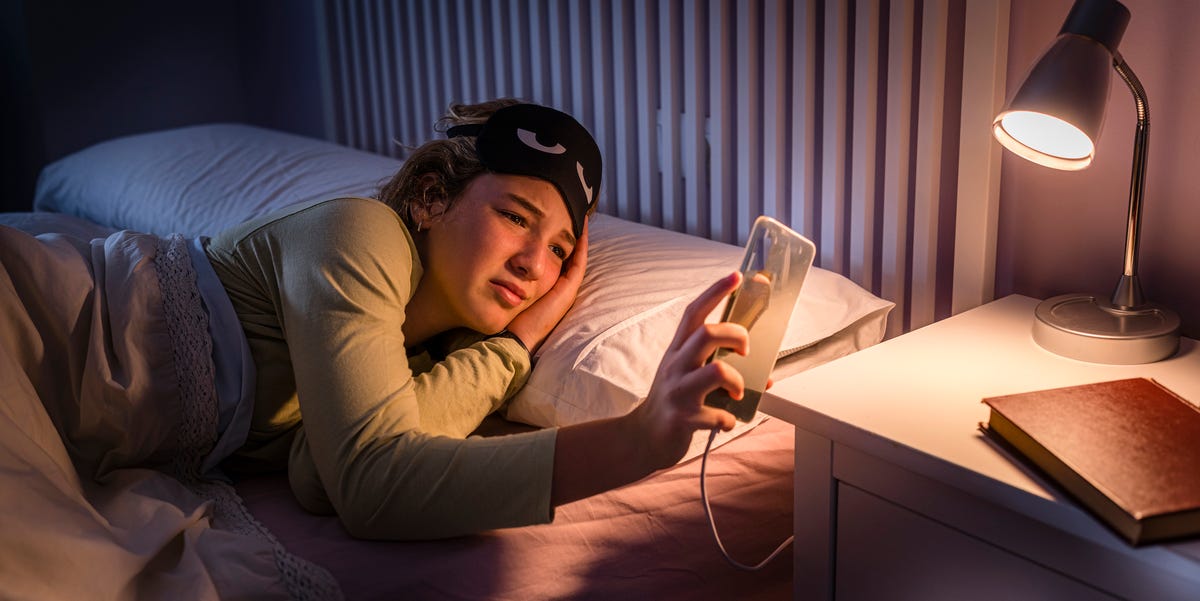
- In the hours before sleep, reduce blue light from screens—on cell phones, computers, and tablets—by turning on nighttime settings. (Do the same with house lights, if they have that option.) Even better: Put down all screens and read an old-fashioned book under warm, dim light.
- If you get up to use the bathroom during the night, don’t flip on the light, as that’s likely to disrupt melatonin. Put small warm-toned night-lights in the hall or bathroom, or use newer amber-hued baseboard lighting with motion sensors.
- Spread the word to friends and family about what changes they can make to help light the way to better health for everyone.
Help your community dim the lights
Many areas are following advice from the Illuminating Engineering Society to use bulbs that are less blue, in the appropriate wattage, in streetlights and signage, and shield them with small canopies that direct the rays downward. (For example, Pittsburgh is swapping in warmer lights that will dim after 11 p.m. for 37,000 streetlight bulbs.) If your town isn’t doing this, reach out to your elected representatives. Let there be light—but light that’s smart.
Read the full article here


