








Lupus is a complex autoimmune condition that can cause a surprisingly wide variety of symptoms. We tapped doctors to explain lupus symptoms that many people miss. The first thing to know is that there aren’t necessarily any “common” lupus symptoms.
“We always say lupus patients are like snowflakes: No two are alike,” says Susan Manzi, M.D., director of the Lupus Center of Excellence at Pittsburgh’s Allegheny Health Network and medical director of the Lupus Foundation of America.
Meet the Experts: Susan Manzi, M.D., director of the Lupus Center of Excellence at Pittsburgh’s Allegheny Health Network and medical director of the Lupus Foundation of America; Sheetal Desai, M.D., a rheumatologist with UCI Health; and Robert Goldfien, M.D., a rheumatologist with Marin Community Clinics.
What is lupus, exactly? According to the Mayo Clinic, it’s a condition in which the body’s immune system attacks its own tissues and organs. It can cause inflammation that affects many different parts of the body: joints, skin, kidneys, brain, heart, lungs, and blood cells.
Sheetal Desai, M.D., a rheumatologist with UCI Health explains that symptoms of lupus can be nonspecific, which can delay diagnosis. “About 90 percent of patients report persistent fatigue and a general sense of feeling unwell,” she says.
Because it’s such a complex disease with a wide variety of possible symptoms, people with lupus often assume they have a different ailment. “People come in, and they say, ‘You know, I think I must have Lyme disease,’ or ‘I think I must have arthritis,’ because they’re tired and their joints hurt,” says Robert Goldfien, M.D., a rheumatologist with Marin Community Clinics.
Below, doctors explain the symptoms of lupus that you should know.
1. You have a butterfly-shaped rash on your face.

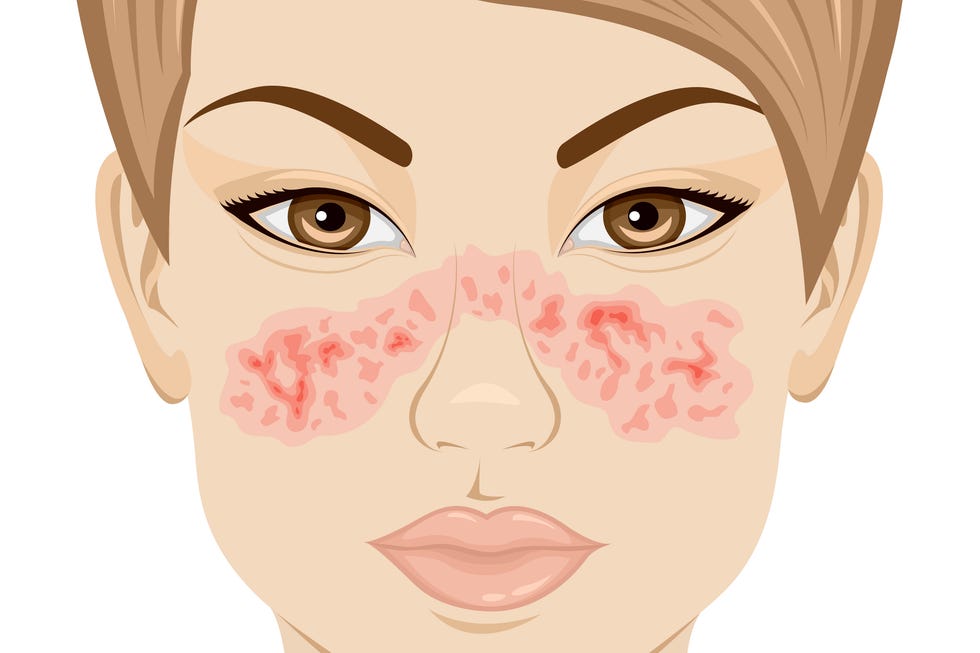
If lupus has a calling card, it’s a sunburn-like rash that stretches across the nose and cheeks, in a shape resembling a butterfly. Its unique appearance is “highly suggestive” of lupus, Dr. Goldfien says. About 30% of patients with lupus get this rash, researchers say.
2. You have a fever that just won’t go away.
Fever can be a sign of inflammation, and some patients may be feverish during a lupus flare-up. While having a fever isn’t unique to lupus, if you have a fever that you just can’t shake or it keeps returning, it’s best to see a doctor—especially if you’ve noticed any of the other signs of the disease.
3. Rashes or sores appear on your skin after going outside.
Very often, people with lupus are photosensitive, meaning their skin is very sensitive to ultraviolet light. Breakouts typically occur on sun-exposed areas of the body, including the face, neckline, and arms. UV light exposure can also set off lupus symptoms or trigger a flare-up of the disease.
Dr. Manzi cautions her college-aged lupus patients who hit the tropics for spring break to slather on the sunscreen before heading outdoors. “They get intense sun exposure, they get a rash, they come home, the rash doesn’t go away, and then boom, boom, boom, all these other things start happening.”
4. Sore and stiff joints are part of your everyday life.
Sometimes lupus is mistaken for rheumatoid arthritis (RA) because both diseases can cause joint pain and stiffness, often in the hands, wrists, and ankles. Joint symptoms are the main feature of RA but one of many, many signs of lupus, Dr. Manzi says.
“When you wake up in the morning, you feel like the Tin Man—very stiff, can’t get moving,” and after you’ve been sitting for a while, “the joints almost feel like they’ve got gel in them,” she says.
5. You experience swelling.
Swollen lymph nodes? Puffiness around your eyes? These can be a sign of lupus, too. “Some people will present with swelling in the legs, and the very first thing they’re getting is kidney failure,” Dr. Manzi says.
6. You’re losing your hair.
Hair loss with lupus can be patchy, leaving little bald spots on your head. Or, it can be diffuse, causing thinning all over the scalp. Sometimes a rash develops in a balding area.
7. Your finger or toes blanch and go numb.

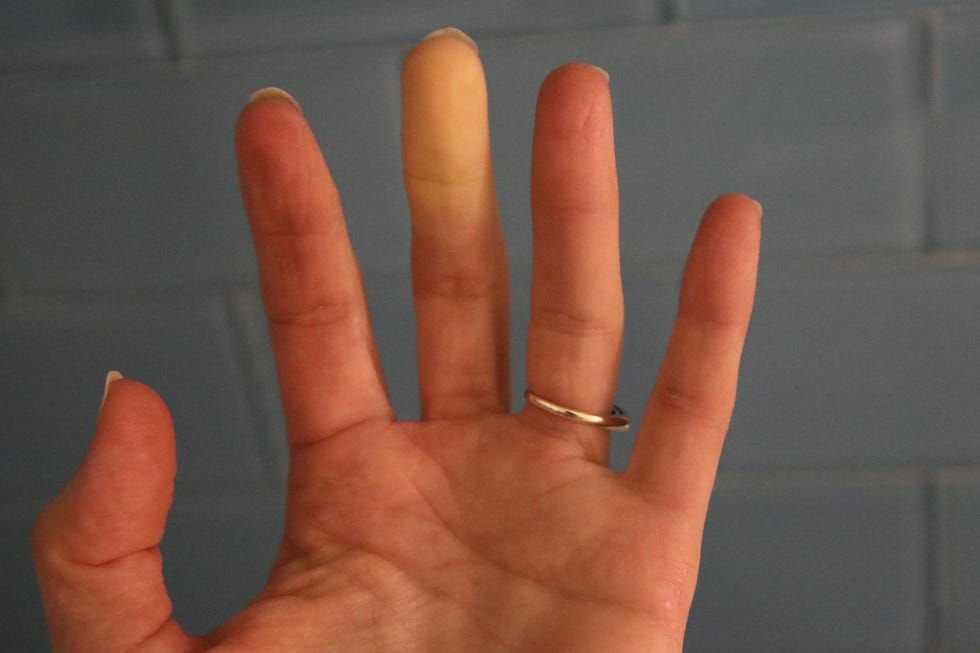
As many as a third of people with lupus experience Raynaud’s, a syndrome that affects the blood vessels, the National Resource Center on Lupus says. When you have Raynaud’s, the vessels that supply blood to your skin narrow, limiting blood circulation, especially when you’re cold or under stress. You’ll may have Raynaud’s if your fingers or toes (or both) go numb and turn blue or white.
8. You’re totally wiped out.
Profound fatigue is a common complaint of people with lupus. It is not the kind of exhaustion you get after exercising or playing a sport. It’s this “hit-a-wall, can’t-function kind of fatigue,” as Dr. Manzi describes it.
Fatigue isn’t specific to lupus but may provide another clue if someone has other lupus symptoms. “In a rheumatologist’s mind, that’s just one more confirmation that there’s inflammation going on,” Dr. Goldfien says.
9. You’re experiencing chest pain.
If it hurts to cough or breathe deeply, it could be pleurisy—inflammation of the lining of the lungs. It’s a common symptom of lupus. “If you cough and the lung tissue gets pushed out against the lining, it hurts because it’s inflamed,” Dr. Goldfien explains. “It tends to be a sharp pain.”
Lupus may also inflame the lining of your heart, which causes chest pain, too. This type of chest pain changes based on your position. “If you lie down on your back, it hurts,” he says, “and if you sit up and lean forward, it feels better.”
10. You have mouth sores.
“When I see someone who I think might have lupus, I ask them if they get sores in their mouth,” Dr. Goldfien says. Ulcers, like canker sores, on the roof of the mouth or tongue or even the nose, can last a few days to a month or more, according to the American College of Rheumatology.
11. Red dots are showing up on your skin.
Lupus can attack your platelets, blood cells that help your body form clots to stop bleeding, Dr. Manzi explains. And when you have low levels of platelets, you can develop tiny red dots called petechiae.
“People will notice little red blood spots on their legs because their blood vessels are leaking blood,” she says. They may also get nosebleeds or be bleeding from their gums when they brush their teeth. It suggests that “the platelets may be under attack,” Dr. Manzi says.
12. Your head hurts, and you can’t think straight.
It’s not all in your head: Lupus can attack the brain and nervous system. Up to 50% of people with lupus report problems with memory, concentration, and other cognitive issues dubbed “lupus fog,” says the National Resource Center on Lupus. People with lupus may be twice as likely to develop migraine-like headaches due to inflammation of the blood vessels. And when lupus attacks the nerves, they can experience numbness or tingling in the motor and sensory nerves.
“If a young woman in her 30s or 40s comes in with a stroke, and everyone’s thinking, ‘How could this happen?’ oftentimes that’ll be the onset of a diagnosis of lupus,” Dr. Manzi says.
Read the full article here


