

It’s still possible to come down with a virus or other infection, even when you do everything right. But while you’re laid up and trying to recover, it’s understandable to wonder about the best foods to eat when you feel sick.
While no food will magically make you feel better, some are better suited for this situation than others. But the right foods to eat when you’re under the weather largely depend on what you’re grappling with. The best foods for a stomach virus may be very different from the best foods to eat when you have a respiratory issue. Overall, it’s important to keep things simple, says dietitian Bonnie Taub-Dix, R.D.N., author of Read It Before You Eat It.
Meet the Experts: Ryan D. Andrews, R.D., C.S.C.S., author of A Guide to Plant-Based Eating; Alex Caspero, R.D.; Deborah Cohen, D.C.N., R.D.N., associate professor in the department of clinical and preventive nutrition sciences at Rutgers University; Jessica Cording, R.D., author of The Little Book of Game-Changers; Melissa Prest, D.C.N., R.D.N., national media spokesperson for the Academy of Nutrition and Dietetics and member of the Prevention Medical Review Board; Bonnie Taub-Dix, R.D.N., author of Read It Before You Eat It; Thomas Russo, M.D., professor and chief of infectious disease at the University at Buffalo in New York; William Schaffner, M.D., an infectious disease specialist and professor at the Vanderbilt University School of Medicine
So, how do doctors and nutritionists nourish themselves when they’re feeling under the weather? They turn to the following foods, which will also help you ride out this illness as comfortably as possible. Plus, read on to see what experts want you to avoid on your plate when you’re not feeling well.
Foods to eat when you’re sick
The best foods to eat when you’re sick largely depends on what you’re sick with. As a result, the foods that may make you feel better when you’re grappling with a cold or the flu can be very different from when you have a digestive issue.
The best foods to eat when you’re sick with a respiratory virus.
Technically, you can eat anything during this time. However, certain foods provide nutrients that can help support your health while you’re dealing with respiratory symptoms.
1. Baked potato
An easy-to-digest carbohydrate, baked potatoes (whether white or sweet) are a great base for an under-the-weather meal. “Most people don’t realize that potatoes provide vitamin C, an important nutrient for healing, and fiber, a gut-supporting nutrient that can be hard to get your fill of when you’re putting your salads on hold,” says Taub-Dix. If you have the appetite, add some protein to your potato by topping it with cottage cheese or Greek yogurt.
2. Honey
Whether in your tea, mixed into oatmeal or yogurt, or straight out of the spoon, honey may be a helpful food when you have a cough or sore throat. Research suggests that honey many help manage a cough’s severity and frequency, although the data on this is mixed.
3. Smoothies
To up her liquid intake—and sneak in some fruits and veggies without having to chew them—Taub-Dix blends up a smoothie. Her usual smoothie starts with an almond milk base, plus frozen spinach and banana, and a scoop of almond butter for protein.
Alex Caspero, R.D.., also turns to smoothies when she doesn’t feel so hot. “My go-to combination is one cup of pomegranate juice, 6 ounces of yogurt, and 1 cup of strawberries,” she says. Pomegranate juice contains more antioxidants—which protect cells from damage—than red wine, grape juice, or green tea, she explains. Plus, the yogurt adds protein and fat, transforming the blend into a meal when you don’t really feel like eating.
4. Citrus fruits
Citrus fruits like lime, lemon, and oranges are rich in vitamin C, a powerhouse antioxidant. While the idea that vitamin C will prevent a cold is a myth, research suggests that it may help decrease a cold’s severity by up to 15%.
5. Nuts and seeds
When he’s sick but has the appetite to munch, Ryan D. Andrews, R.D., C.S.C.S., author of A Guide to Plant-Based Eating, turns to nuts and seeds. “Nuts and seeds are rich in vitamin E and zinc, two nutrients that are necessary for optimal immune function,” he says. Pine nuts, cashews, hemp seeds, almonds, walnuts, and pumpkin seeds are all great choices.
The best foods to eat when you have a digestive illness.
The best foods to eat when you’re dealing with nausea, vomiting, or diarrhea are those that are mild and gentle on your stomach. Consider these if you’re dealing with a GI illness and feel like you can eat a little.
1. Toast
Toast or white bread is a bland food that is unlikely to irritate your stomach any further, according to Thomas Russo, M.D., professor and chief of infectious disease at the University at Buffalo in New York. If you’ve been vomiting but feel like you can tolerate some food, he recommends taking it slow with this.
2. Applesauce
Part of the BRAT (bananas, rice, applesauce, toast) diet, applesauce is gentle on your stomach and mild overall. Consider options that are just ground up apples vs. those that contain added flavoring like cinnamon. “Whatever you put in your stomach, make it easy to digest,” says William Schaffner, M.D., an infectious disease specialist and professor at the Vanderbilt University School of Medicine.
3. Oatmeal
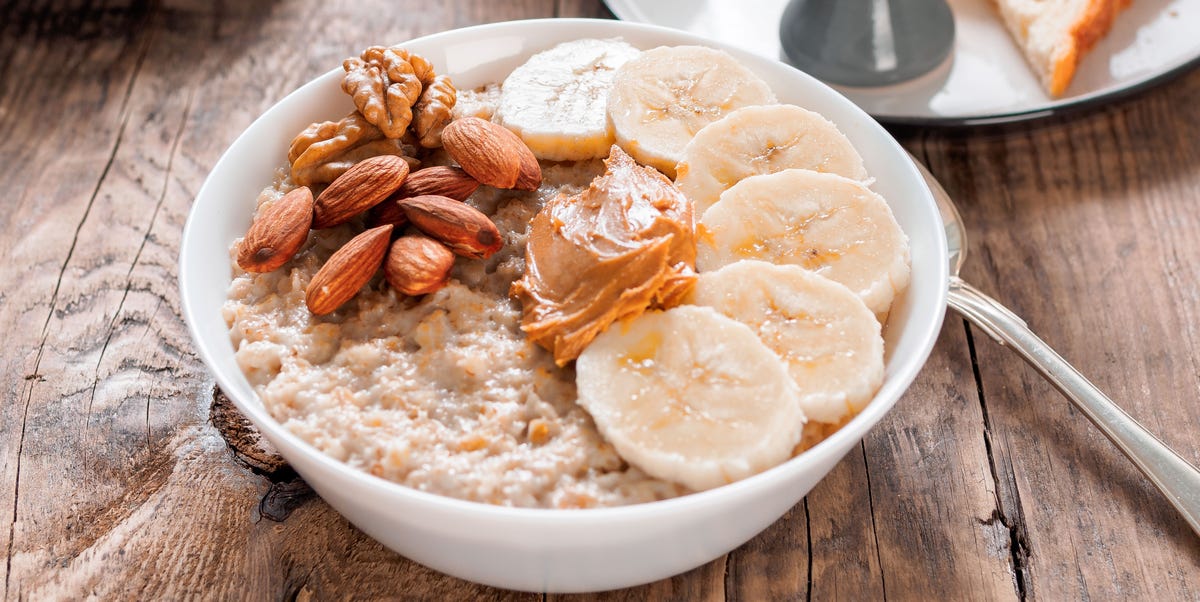
Flavored oatmeals may be tough on your stomach, but the plain version of this simple food should be relatively easy to tolerate, according to Jessica Cording, R.D., author of The Little Book of Game-Changers. “Oatmeal is easy, and usually gentle on the stomach,” she says.
4. Green tea
“Tea is an absolute must when I’m not feeling well,” says Taub-Dix. “Nothing provides as much comfort as a steamy mug.” Soothing quality aside, tea also helps you get in all of the fluids you need—especially if you have a fever or any stomach upset, she says.
Plus, “green tea, in particular, contains all sorts of beneficial compounds,” Andrews says. Researchsuggests that one in particular called quercetin, may help tamp down on inflammation. Since you need quality sleep when you’re feeling under the weather, be careful to avoid caffeinated tea before bedtime.
5. Ginger
Ginger has been used for centuries to ease nausea, and multiplestudies suggest it can be helpful for a variety of causes of nausea. You can sip on ginger tea to get the effects or suck on a lozenge.
6. Bone broth
Bone broth goes down easy and delivers plenty of nutrients in the process, Cording says. “It’s easy to digest and has more protein than chicken broth,” she says. It also can help you stay hydrated—a crucial factor if you’re having trouble keeping food down, have diarrhea, or keep getting sweaty due to a fever.
7. Egg Whites
Scrambled egg whites are a good way to get in some protein but are usually gentle on your stomach. “It’s a good option if you can’t tolerate heavier things,” Cording says. Pair it with whole wheat toast if you feel like you can handle it.
Do you have to eat something when you’re sick?
Foods shouldn’t be your top priority when you’re not feeling well, but staying well-hydrated should, Dr. Russo says. If you’re dealing with an upset stomach, he recommends taking small sips of water to avoid overloading your GI tract at once. Sports drinks can also help give you electrolytes to increase your energy levels, he says.
But Dr. Schaffner says that you should be just fine if you only have liquids for a day or two, if your stomach can’t tolerate it.
Foods to avoid when you’re sick
Above all, it’s important to push the fluids when you’re sick, says Deborah Cohen, D.C.N., R.D.N., associate professor in the department of clinical and preventive nutrition sciences at Rutgers University. But there are certain foods and drinks you should steer clear of, depending on your symptoms.
It’s hard to stay hydrated when you’re not feeling well so skip drinks that contain a lot of caffeine like energy drinks or alcohol which can actually cause some dehydration, says Melissa Prest, D.C.N., R.D.N., national media spokesperson for the Academy of Nutrition and Dietetics and member of the Prevention Medical Review Board. “Some people find it easier to tolerate a hot beverage like tea when not feeling well and that is OK in smaller amounts or try an herbal tea without the caffeine,” she says.
If your illness is taking a toll on your tummy, foods that are higher in fat may be difficult to digest and add to any GI symptoms you are experiencing, notes Prest. Spicy foods may also be irritating and cause stomach upset, she adds. “Go with a more bland diet until you’re feeling better,” Prest suggests.
Knowing what foods to avoid when you are sick specific to the symptoms you are experiencing can help you feel better. Here are some common under-the-weather symptoms and what foods to keep out of your diet until you feel better, per Prest:
- Body aches: Avoid beverages that dehydrate you, particularly alcohol and caffeine, which can worsen body aches. Processed foods may also increase inflammation and make your achy joints feel even worse.
- Diarrhea: Avoid sugarless candy, gum, and other products containing sorbitol or other sugar alcohol, which can trigger or worsen diarrhea in some people. Caffeine, full-fat dairy products, and fried foods can also worsen nausea and increase diarrhea if you are having stomach upset.
- Headaches and migraines: Avoid aged cheeses that contain tyramine, as these may increase your blood pressure, which can trigger migraines. You may also want to avoid foods containing MSG, as your body metabolizes the flavor enhancer to glutamate—a chemical messenger in your brain that can worsen headaches. Other foods to avoid are large amounts of caffeine, artificial sweeteners, and alcohol.
- Runny nose: Avoid dairy products, which may thicken your phlegm and trigger mucus production. Spicy foods and sugar can also worsen a runny nose or cause a new one.
- Sore throat: Avoid hard, scratchy foods like granola, nuts, and potato chips, which can irritate your already sensitive throat.
How to settle your stomach
If food isn’t your No.1 priority when you’re not feeling well, Cording says that’s OK. If you’re having trouble keeping food down, here are some tips to help settle your stomach to feel better faster:
- Sip water slowly and frequently
- Take small bites and chew slowly
- Eat small meals more frequently throughout the day
- Finish your last meal at least two hours before going to bed
And if you really don’t feel like eating at all, Cording suggests keeping it simple and don’t force it if you feel like you cannot even look at food. “You just want to focus on hydration.”
Keep this in mind, too, per Cohen: “Often, when sick and dehydrated, our thirst mechanisms may not function properly so dehydration can get worse quickly.” Meaning, you may need to remind yourself to drink consistently, even if you don’t feel thirsty.
Can certain foods speed up recovery from illness?
When you’re feeling under the weather, you want to get better ASAP. And while it’s understandable to wonder if there is anything you can eat to get better faster, “there really are no specific types of food that speed recovery,” Cohen says.
Still, foods high in protein, zinc, vitamin C, and other antioxidants are great for providing the fuel your immune system needs to fight infections, says Prest. “A good bowl of soup, like chicken soup, provides nourishing nutrients that are both hydrating and comforting when you’re not feeling well,” she suggests.
When should you see a doctor if you feel too sick to eat?
If you are unable to stop vomiting and cannot keep any food or beverages down for more than a few hours, give your doctor’s office a call and ask for further instructions, says Prest. “Track your symptoms and monitor your temperature as this will help your doctor make a decision about how best to treat you,” she says.
Read the full article here