







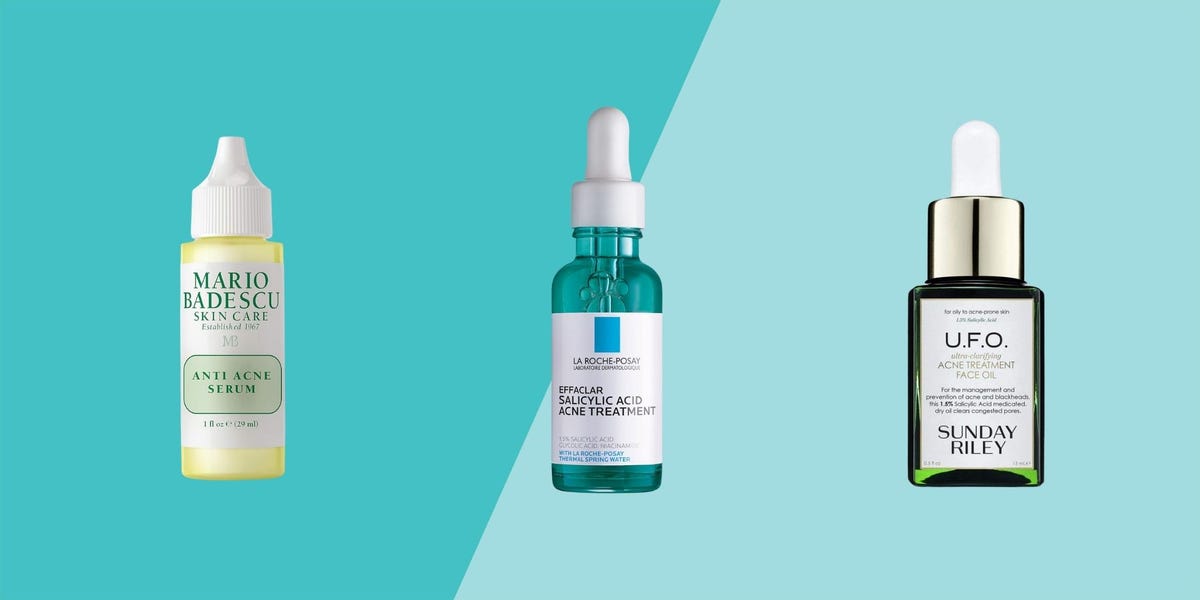
✔️ Know your actives: There are many different active ingredients that, when formulated into a serum, could potentially aid in managing acne. But it’s important to know what they are and how they work before you buy:
Retinol, a vitamin A derivative, isn’t just an anti-ager. Because it increases skin cell turnover, Dr. Gohara says it’s also “a tried and true acne treatment.” But its powerful nature makes it potentially irritating. Recommended use is once a day (every other, if you are just starting), at night. Many times, acne patients prefer to try a retinol prescribed by their dermatologist first.
Hydroxy acids are alpha hydroxy acids (AHA) such as glycolic and lactic and beta hydroxy acids (BHA) such as salicylic acid that exfoliate the skin’s top layer and unclog the pores, respectively. If overused, they can dry out the skin. Recommended use is typically once a day, in the evening.
Niacinamide, a form of vitamin B3, is anti-inflammatory and will “work on pustules, tenderness, and redness,” says Ava Shamban, M.D., a board-certified dermatologist in California. It also helps balance the skin’s oil production. As a less irritating ingredient, it can be used morning and night.
Vitamin C is an antioxidant that helps even skin tone and fade acne scarring. Recommended use is daily in the morning followed by sunscreen, per Dr. Gohara.
Hyaluronic acid hydrates skin that is dried out or irritated by excessive treatment and can be used as needed.
✔️ Watch for oils: “Cardinal rule one is to avoid the oil-based serums if you’re acne-prone,” says Dr. Markowitz. Non-comedogenic is another buzzword to look for to ensure a product was designed to not clog pores.
✔️ Choose the right cocktails: Many serums on the market contain a mix of the ingredients above. For example, you might find a salicylic acid serum that also contains hyaluronic acid. That’s good, because as salicylic exfoliates, hyaluronic acid hydrates and repairs.
Read the full article here


