

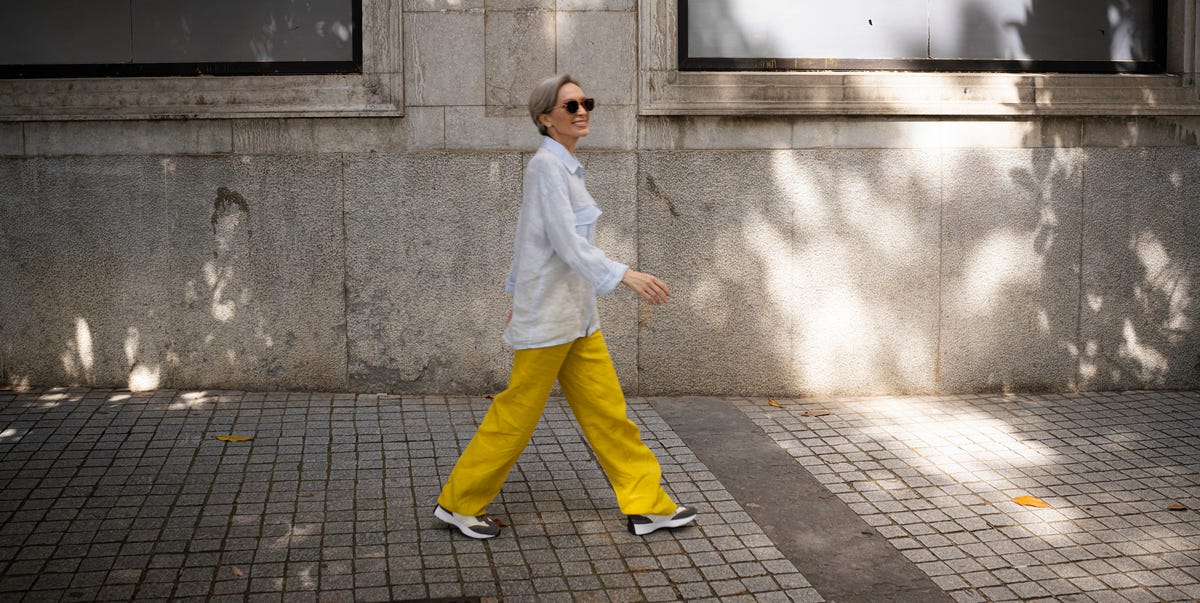
- Walking for a certain number of minutes at a brisk pace may extend your lifespan, according to one study.
- Scientists estimate that if everyone walked for 160 minutes every day, they could increase their life expectancy by up to 11 years, depending on how active they were before.
- The benefits lie in the ways that walking can improve your cardiovascular, metabolic, and mental health.
From a sunnier mood and less stress to a healthier heart and stronger bones, the benefits of walking are plentiful. Now, researchers have uncovered another potential benefit of taking a daily stroll: Walking adds years to life, provided that you’re walking for enough minutes and at a brisk enough pace.
Meet the experts: Adedapo Iluyomade, M.D., a preventive cardiologist with Baptist Health Miami Cardiac & Vascular Institute; Alisha Goodrum, M.D., an internal medicine physician with PlushCare.
A study published in the British Journal of Sports Medicine analyzed data from the National Health and Nutritional Examination Survey (NHANES), looking at U.S. adults 40 and older. Participants wore activity monitors for at least four days. Researchers then created a mathematical model to predict how different levels of physical activity could influence how long they lived.
By comparing the most active participants to the least, researchers found that the more physically active participants tended to have the highest life expectancy. More specifically, they found that 25% of the most active people in the study walked 160 minutes daily at 3 mph (which would be considered an average-to-brisk walking speed, depending on your age). Based on this, researchers estimated that if all people boosted their activity to this level, they could increase their life expectancy from 78.6 to 84 years—an increase of over five years.
However, being in the lowest 25% of activity was associated with a decrease in life expectancy of around six years. Still, if these less-active individuals logged an additional 111 minutes of walking each day, they could conceivably experience even greater benefits, living nearly 11 years longer.
This study reinforces what we’ve known for a while: Staying active, even with something as simple as walking, may significantly increase life expectancy, said Adedapo Iluyomade, M.D., a preventive cardiologist with Baptist Health Miami Cardiac & Vascular Institute. “For those who are currently least active, adding just one hour of walking a day can result in measurable gains in longevity—potentially adding hours [of life] for every hour walked.”
Walking is one of the most accessible forms of physical activity with far-reaching benefits, Dr. Ilyuomade continued. “It improves cardiovascular health, lowers blood pressure, and helps maintain a healthy weight. It also supports mental well-being, reducing stress and boosting mood.” Regular walking even reduces the risk of chronic diseases like type 2 diabetes, heart disease, and some cancers, he added.
This study promotes the importance of an active lifestyle over a sedentary one, said Alisha Goodrum, M.D., an internal medicine physician with PlushCare. “Although socioeconomic conditions and baseline health conditions impact activity levels, walking is a no-cost physical activity that benefits everyone.”
The bottom line
The key takeaway from this research is that even small, consistent increases in physical activity—like walking—can have a profound impact on health and longevity, said Dr. Iluyomade. “These findings highlight how accessible and impactful walking can be, especially for those who feel daunted by the idea of intense exercise.” It’s a powerful reminder that investing time in movement today can add meaningful time to our lives tomorrow and farther down the road, he noted.
You can add more walking into your day by making little changes, said Dr. Goodrum. “This can include parking your car further away from the entrance of a store or using the stairs instead of the elevator. You can also take multiple shorter walks in the day instead of making time for a longer exercise.” To increase your daily walking even more, consider turning it into a social activity. In place of meeting a friend or loved one for coffee or a meal, consider taking a walk around the park instead.
Walking is for everyone, regardless of fitness level or age, said Dr. Iluyomade. “Start where you are—whether that’s a five-minute stroll or a longer hike. Over time, you’ll not only see physical benefits but also notice how walking enhances your mental clarity and energy.” The key is consistency: Every step counts toward a healthier, longer life, he explained.
Read the full article here