

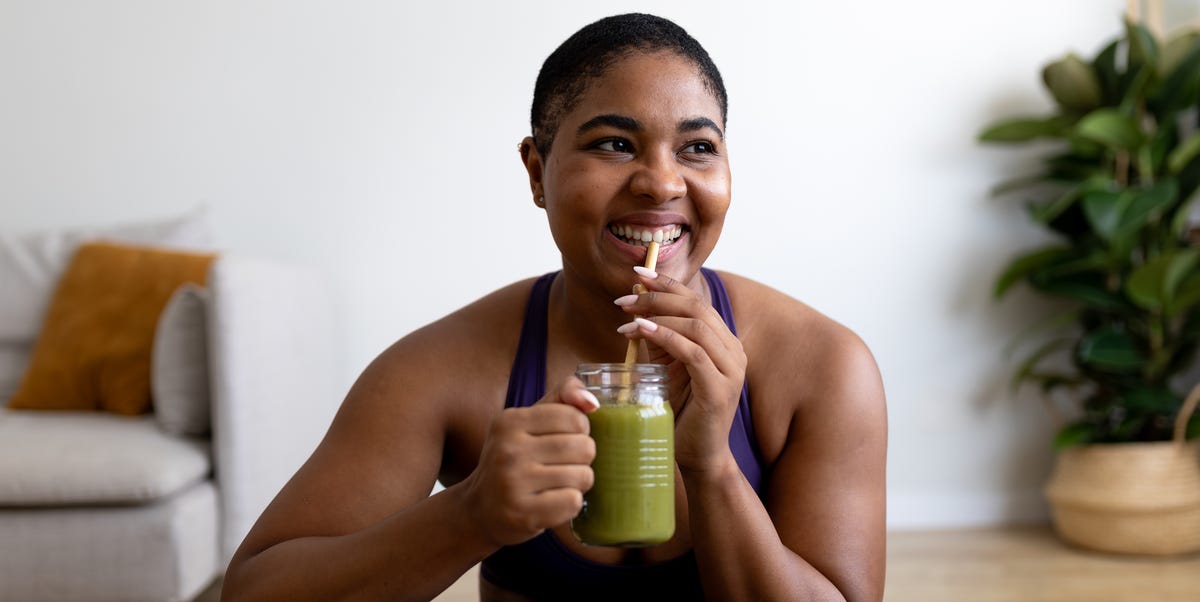
There are plenty of reasons that juices and smoothies are so popular. They’re tasty, convenient to take on the go, and an easy way to sneak more nutritious fruits and vegetables into your diet. But when it comes to juicing vs. smoothies, is one better for you than the other?
Meet the experts: Emer Delaney, R.D., P.T., a registered dietitian and founder of My Private Dietitian; Samantha Peterson, M.S., R.D.N., a functional medicine dietitian and founder of Simply Wellness.
Here, dietitians explain the differences between juices and smoothies, including which is better for your gut health, plus the perks you may get and how to find a place for each in a healthy diet.
Juice vs. smoothie: What’s the difference?
The biggest difference between a smoothie and a fruit/vegetable juice is the fiber content, says Emer Delaney, R.D., P.T., a registered dietitian and founder of My Private Dietitian. “Fruit/veggie juices are predominantly just juice that’s extracted from the food, whereas smoothies are a blend of the whole fruit/veggie, juice, and pulp together,” she explains. In other words, a smoothie contains all the fiber of the whole food, while a juice contains none of it—which is a big deal when you’re looking at the possible health benefits of each sip.
“Fiber plays a major role in digestion, blood sugar balance, gut health, and feeling full for longer,” says Samantha Peterson, M.S., R.D.N., a functional medicine dietitian and founder of Simply Wellness. “When you remove it (as with juice), you’re essentially drinking a more concentrated source of vitamins, minerals, and phytonutrients, but without the buffering effect fiber provides.”
Possible benefits of drinking juice
Fiber aside, there are some potential benefits you can get from drinking juices made from fruits and vegetables. “Juices can be a fast, efficient way to deliver micronutrients and plant-fighting compounds, especially for people who struggle with digestion, appetite, or chewing whole foods. They’re easy to absorb and can feel energizing,” says Peterson. While you won’t get any of the fiber, juices do contain the vitamins, minerals, and antioxidants from the fruits and veggies you pick (especially if you’re making your own juice at home), and may help you get those beneficial nutrients on days when you’re struggling to eat enough whole produce.
How to include juice in your healthy diet
“Pressed juices can absolutely be part of a healthy, everyday eating pattern when used intentionally,” says Peterson. To maximize the possible benefits, she suggests choosing or making vegetable-forward juices that lean on ingredients like greens, cucumber, celery, lemon, or ginger and steering clear of juices that are mostly fruit. “There is a relatively high level of fructose in fruit juices, which can cause dental caries and contribute to excess calorie intake, leading to weight gain,” Delaney says. “Juices are also absorbed very quickly due to the lack of fiber and can make it difficult to manage blood sugar if you have type 1 or type 2 diabetes.”
To combat this effect, Peterson suggests pairing your juice with food as opposed to using it as a meal replacement. “This will help slow blood sugar spikes and improve overall nutrient utilization and absorption compared to drinking juice on its own,” she says.
Possible benefits of smoothies
While fresh juices may serve as a nutrient boost, smoothies can play a more substantial role in your diet, thanks to both the fiber and the ability to add other ingredients to the sip. “Smoothies tend to be more metabolically supportive because fiber slows digestion, helps prevent blood sugar spikes, and keeps you full longer,” says Peterson. “When blended with a protein source and healthy fats, smoothies can function as a balanced meal rather than just a nutrient boost.”
There’s also the fact that smoothies are physically thicker, which means they take longer to drink and feel more satisfying. “In terms of blood glucose [management], smoothies tend to be the better option because they do contain fiber and they are absorbed more slowly by your body,” Delaney adds. Plus, as is the case with juices, smoothies are an easy way to sneak more servings of good-for-you fruits and vegetables into your day.
How to include smoothies in your healthy diet
A healthy, balanced smoothie can serve as a convenient and nourishing meal replacement—but the healthy and balanced parts are key. “Smoothies can be easy to overdo if they’re heavy on fruit and light on protein or fat,” says Peterson. She recommends building your smoothie with a protein source, such as protein powder, Greek yogurt, or cottage cheese, two to four fiber-rich fruits and vegetables, and at least one healthy fat, such as nut butter or avocado. This will not only help keep you full, but curb blood sugar spikes.
Is there such a thing as a “healthy” juice cleanse?
In recent years, juicing in particular has been associated with cleanses, during which you might only drink fruit and vegetable juices (or maybe some smoothies) for one or more days in order to “detox” the body. Now, science points to cleanses being rather ineffective and potentially even harmful. “The body is super sophisticated and cleanses for us,” Delaney explains. “The liver, kidneys, gut, skin, and lungs naturally remove any and all toxins that we ingest.” What’s more, there is very little research on the safety of liquid cleanses for humans, per UCLA Health. They can also be dangerous for people who are malnourished, have diabetes, have a history of disordered eating, or are pregnant or breastfeeding.
Still, there are healthy decisions you can make if you’re looking for a way to refresh the body and support your natural detoxification processes that will leave you feeling better, not depleted. “A healthier ‘reset’ might look like regular meals with protein, fiber, and healthy fats, one daily smoothie for nourishment, optional vegetable-based juices as a nutrient boost, plenty of water, consistent and adequate sleep, movement that promotes sweating, and reduced alcohol or ultra-processed foods,” says Peterson.
Juicing vs. smoothies: Is one better for you than the other?
“For most people, smoothies are the better everyday choice because they support blood sugar balance, gut health, and sustained energy,” Peterson says. “They’re also practical, making them easy to take on the go and simple to prep ahead of time in freezer-friendly smoothie bags, which makes consistency much more achievable.” Still, small, vegetable-forward juices may deliver vitamins and minerals that your diet may be lacking. “I often recommend juices short-term during periods of high stress, low appetite, digestive flare-ups, or when someone needs a gentle, low-effort way to increase vegetable intake,” says Peterson. If you’re using them mindfully, both can be part of a healthy diet.
Read the full article here