

We’ve known for a while that excess salt consumption comes with side effects like an increased risk of high blood pressure and cardiovascular disease. But in recent years, researchers have begun looking at the ways that high salt intake can impact overall health and longevity. One study in particular found a link between salt and short life expectancy, while others are highlighting different ways that excess salt can be harmful.
Meet the expert: Rigved V. Tadwalkar, M.D., a cardiologist from Pacific Heart Institute.
Here, find out what the research says about salt and longevity, along with other ways consuming too much salt can hurt your health. Plus, who needs to be extra vigilant in watching their salt intake.
The perils of excess salt: What the research says
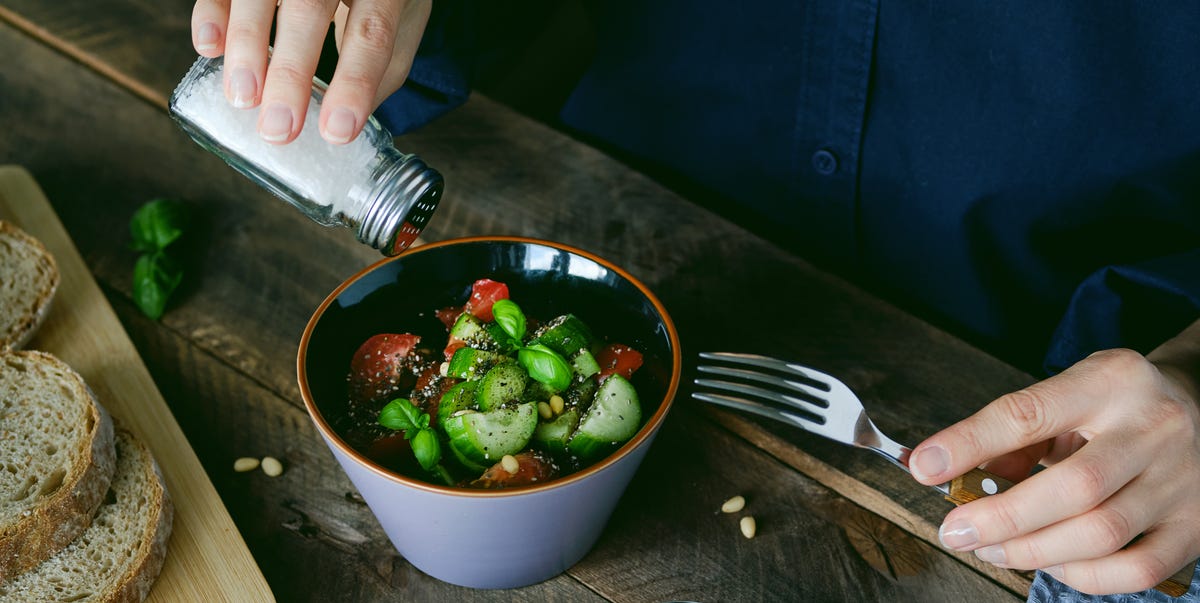
In terms of the link between salt and life expectancy, a study published in the European Heart Journal found that adding salt to a meal after it was already prepared (a.k.a. using the salt shaker at the table) decreased life expectancy in women by 1.5 years and by 2.28 years in men. The researchers looked at UK Biobank data from 501, 379 participants who completed a questionnaire on the frequency of adding salt to foods on average. Researchers also collected urine samples to further examine the effects sodium has on the body. Ultimately, the findings suggest that adding salt to prepared foods more frequently is associated with early death.
“What this study has done that’s interesting is that they’ve looked at the addition of salt in conjunction with preexisting salt that is already accompanied with the foods people are usually eating,” said Rigved V. Tadwalkar, M.D., a cardiologist from Pacific Heart Institute. Because the study looked at the addition of salt to meals, and not the salt that’s already in prepared foods, it paints a clearer picture in showing that an increase in salt beyond what is already in our food is detrimental to our health.
While this study found a link between salt and overall longevity, others published since have looked at more specific ways that salt can lead to chronic health conditions and other problems associated with aging. Research in Mayo Clinic Proceedings found that frequently adding salt to food was associated with as much as a 39% higher risk of developing type 2 diabetes. Moreover, an animal study in Scientific Reports showed that a low-salt diet can significantly reduce blood pressure and improve long-term memory in older females, which is a key concern for many as they age.
But, before you toss your table salt out for good, the life expectancy study did find that high intakes of potassium-rich foods, like vegetables and fruits, may reduce the effects of adding salt to foods and the consequences it may have on mortality.
“In a lot of ways, dietary potassium counteracts the effects of sodium,” said Dr. Tadwalkar. There are a lot of great potassium-rich foods that can curtail the disease or mortality risks that are associated with sodium. Fruits and vegetables make up most of them, but specifically bananas, potatoes, zucchini, pumpkin, leafy greens, broccoli, lentils, beans, and fish all are great sources of potassium that can thwart the effects of sodium on your heart health.
Who needs to watch their sodium intake?
“Most people should look out for their heart health, regardless of their baseline condition,” said Dr. Tadwalkar. “There’s basically a sodium epidemic in this country, along with most western diets, so very few people are immune to the effects of sodium. This is partially the reason why there is a known epidemic of cardiovascular disease, because we have many hidden sources of sodium in foods where we might not think there’s much sodium but there’s actually more because of the packaging and the preparation.”
Those with prior history of heart disease and those who have risk factors for heart disease, such as high blood pressure, high cholesterol, and diabetes, these are individuals that need to be even more conscious of their sodium intake, beyond the general population. Those with a family history of cardiovascular issues should be extra careful as well.
Bread, pizza, poultry, salad dressing, and canned and frozen meals are just a few common examples of foods that are high in sodium that you may not realize. According to Dr. Tadwalkar, “it turns out that a lot of health foods end up having a lot of sodium too, in an attempt to make the food more palatable.”
Is it possible to eat too little salt?
The American Heart Association (AHA) recommends aiming for 1,500 milligrams (mg) or less of sodium per day, with the highest recommendation being no more than 2,300 mg per day (about one teaspoon of table sat). While sodium does play an essential role in the body—it controls blood pressure and blood volume and helps your muscles and nerves function properly, according to the National Library of Medicine—the AHA says it’s very difficult to consume too little salt. The exceptions to this rule include people who regularly sweat a lot, such as competitive athletes, people who are exposed to major heat, like firefighters, and people with certain health conditions who have been directed by their doctor to consume a specific amount of salt or sodium per day.
For generally healthy people, aiming somewhere between 500 mg per day (how much the body needs for proper function) and 2,300 mg per day is a smart choice. To do this, the AHA recommends comparing labels on packaged and prepared foods and condiments and choosing the ones with the lowest amount of sodium and using tasty herbs and spices to flavor your food in place of salt.
Read the full article here