

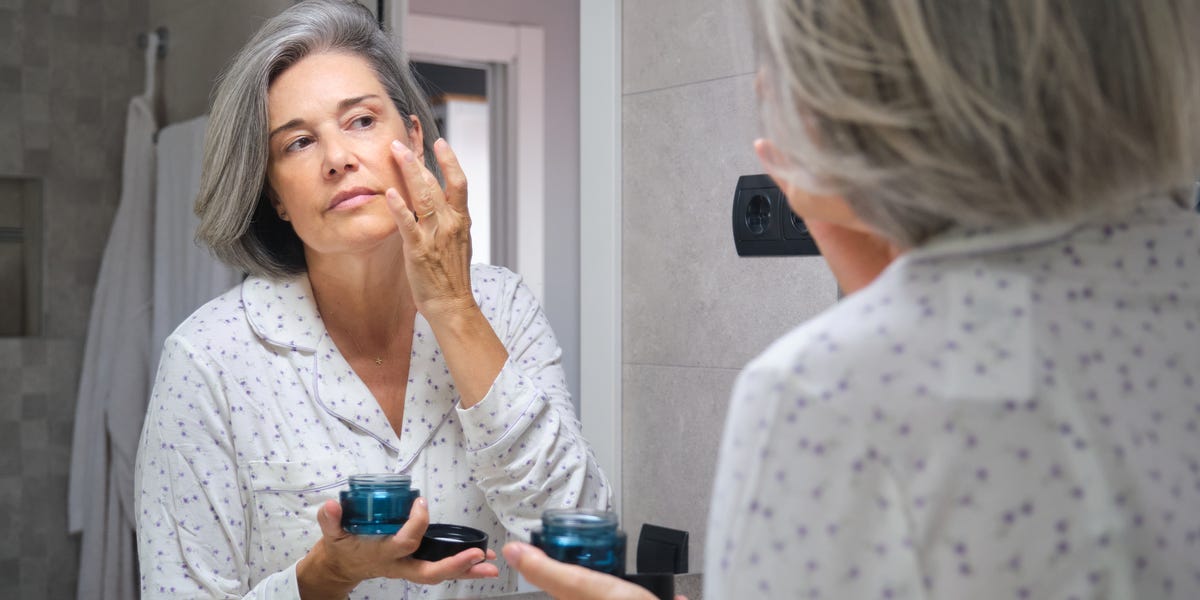
Dry skin is no fun, especially when it’s accompanied by itching, flaking, or peeling. A complexion devoid of moisture can feel like a constant battle, whether it draws more attention to wrinkles and fine lines, causes your makeup to appear cakey, or is just plain uncomfortable. If slathering on a moisturizer for dry skin isn’t giving you relief, there’s still hope with these treatments for the dry, itchy skin on your face.
Meet the experts: Rajani Katta, M.D., board-certified dermatologist and author of Glow: The Dermatologist’s Guide to a Whole Foods Younger Skin Diet; Angela Lamb, M.D., director of the Westside Mount Sinai Dermatology Faculty Practice
Wintertime can worsen dry skin for many people, according to Rajani Katta, M.D., board-certified dermatologist and author of Glow: The Dermatologist’s Guide to a Whole Foods Younger Skin Diet, thanks to the lower humidity, frigid temps, and harsh wind. But if the flakiness persists year-round, there could be other skin disorders or underlying medical conditions at play.
Luckily, you don’t have to suffer in silence. No matter what’s causing the moisture to be sucked out of your pores, these dermatologist-recommended treatments for dry, itchy skin on your face can help you heal your complexion. The answer may be as simple as adjusting your skincare routine for dry skin or making some small lifestyle tweaks. Ahead, experts break down the common causes of your skin irritation and what to do about it.
What causes dry, itchy skin on your face?
Weather changes
If the winter cold or summertime air conditioning wreaks havoc on your complexion, you’re not alone. “When the air is dry and cold, more water evaporates on the surface of your skin. This leads to flaking because the top layer of the skin gets dried out,” says Angela Lamb, M.D., director of the Westside Mount Sinai Dermatology Faculty Practice, especially if your skin tends to be on the dry side already.
The summer months may also lead to irritation thanks to sunburn, saltwater, and air conditioning stripping your pores of moisture. “Skin cells are made up of proteins that get dried out when they are not hydrated. Think about a dried flower or a dried piece of fruit,” she adds.
Eczema, a.k.a. atopic dermatitis
Eczema refers to a cluster of skin diseases that result in dry, flaky patches that may also feel itchy, turn red, and swell up. Medically known as atopic dermatitis, it’s incredibly common: More than 31 million people deal with some form of eczema in the United States, according to the National Eczema Association. Eczema can impact various parts of the body, but it tends to flare up around the eyes and nose on the face.
Researchers aren’t entirely sure what causes eczema, but they suspect a variety of factors—like genetics, temperature changes, stress, bacteria and yeast, and hormonal changes—may play a role. Using gentle, moisturizing products may help treat eczema on the face, but talking to your dermatologist is key to ensuring you follow a treatment plan that doesn’t exacerbate your symptoms.
Contact dermatitis
“I frequently see allergic reactions to skincare or hair care products, and these can result in scaly, red, itchy patches,” Dr. Katta says. This reaction is a form of eczema known as allergic contact dermatitis. These flare-ups happen when the skin becomes sensitive to a certain substance and is exposed to it more than once. It usually takes two to three days before the allergic rash begins to form.
Irritant dermatitis is another form of contact dermatitis that is becoming more common, says Dr. Katta. This skin disorder results in a more immediate reaction (think: that stiff, tight feeling after you wash your face) and is caused by products such as scrubs, exfoliating cleansers, masks, and acne medications that contain ingredients that may be too strong for your skin type.
A common trigger for both? Fragrance—including natural (essential oils, for example) and synthetic (good ol’ perfume) varieties. Cosmetics, sunscreens, medications, and even your soap or detergent can be culprits.
Seborrheic dermatitis
Seborrheic dermatitis is another form of eczema characterized by red, itchy, flaking skin in or between your eyebrows, in the folds next to your nose, or on your scalp (hello, dandruff!). Experts believe it is linked to an irritating yeast found in the oils on the skin, which causes an immune system reaction.
“Although your skin might appear to be dry, the flaking is actually due to inflammation, and it’s often seen in people with oily skin,” says Dr. Katta. Flare-ups become more common during cold, dry months.
Psoriasis
Psoriasis and eczema often look similar, but they aren’t the same. Psoriasis is an autoimmune disease, meaning it’s not caused by irritants. What’s more, it often results in patches of skin that look scaly and raised. It does not tend to be as weather-dependent, but if you have chronically dry, flaky, rashy skin, see your doc for a proper diagnosis, says Dr. Lamb.
Bacterial or fungal infections
Beneficial fungi and bacteria live naturally on the skin and inside the body, but sometimes harmful germs invade and cause an infection. These skin infections— like a staph infection—may look a lot like eczema, according to the American Academy of Dermatology, resulting in dry, red, and flaky patches on the skin that sometimes itch. If your typical dryness is also accompanied by painful sores, pus-filled blisters, redness that seems to spread, or crusty spots, see your doctor. A fever and flu-like symptoms may also develop.
How to treat dry, itchy skin on your face
To get rid of dry, flaky skin, you have to nail down the source. If your flakes are mild and seem to stem from weather changes or inherent dryness, try the following dermatologist-approved tips to smooth, hydrate, and heal your complexion.
1. Opt for a gentle cleanser.
“If your skin is very dry, I recommend using a gentle, hydrating cleanser,” says Dr. Katta. “There are also soap-free cleansers available that cleanse without drying out the skin.”
Look for fragrance-free, creamy formulas that tend to feel more like a silky moisturizer when you’re washing your face. Ingredients like hyaluronic acid, glycerin, and ceramides will offer an extra dose of hydration as you cleanse.
2. Use a moisturizing cream.
Finding a heavy-duty moisturizer for dry skin may help repair your skin barrier and lock in much-needed moisture. Dr. Katta recommends applying a thicker cream (ideally while your skin is slightly damp after cleansing) rather than a lotion if you have dry, flaky skin. Lotions have a higher water content and will not seal in hydration as well, he says.
Avoid products that contain alcohol (which will only dry your skin further) and look for moisturizing and soothing ingredients like hyaluronic acid, ceramides, aloe vera, shea butter, urea, oatmeal, and squalene.
3. Gently exfoliate.
If you’re experiencing red and scaly flakes due to dry, sensitive skin, less is more! Exfoliating can be an effective way of sloughing off dead skin cells that lead to flaking, but you want to be careful. The key is to be gentle with your skin, says Dr. Lamb, otherwise you may cause further dryness and irritation.
Instead of using harsh scrubs, opt for a microfiber towel (gently buff in circular motions) to exfoliate after cleansing. Stick to exfoliating no more than once per week (especially if you are sensitive), and always follow with moisturizer. In general, Dr. Katta recommends avoiding the following products until your symptoms improve:
- Chemical exfoliants, such as salicylic, glycolic, or other alpha-hydroxy acids, will dry out the skin in most cases.
- Face scrubs that contain charcoal, sugar, beads, or other rough ingredients can further disrupt the skin barrier if it is already dry and flaky.
- Harsh cleansers that are typically marketed for oily skin are more likely to contain drying ingredients.
4. Incorporate salicylic acid, but only if necessary.
If you are dealing with seborrheic dermatitis, blackheads, or acne, Dr. Katta recommends using a stronger cleanser that contains salicylic acid, which gently works to break up skin cells and unclog pores. Go for a 1% or 2% formula and follow with a basic, fragrance-free moisturizer.
5. Use acne medications sparingly.
Classic acne-fighters like benzoyl peroxide, salicylic acid, and retinoid products (like adapalene) may be super-effective in treating stubborn pimples, but they may also strip the skin of oil and cause dryness or peeling.
Everyone’s skin is different, so you may have to experiment until you find an effective routine that doesn’t cause irritation. In general, aim to use your acne treatment products every other day—but if you notice dry skin on your face, cut back to once every three days, and make sure you use one of these hydrating moisturizers for acne-prone skin after application. Be sure to consult your dermatologist before doing any of the above.
6. Crank up the humidifier.
Blasting the heat during winter really dries out the air—and your skin. Turning on a humidifier, especially when you sleep, helps bring moisture back into the air, and thus, your complexion.
“This is my number one recommendation when it comes to dry, flaky skin. I prefer a cool mist humidifier, and one that has a large enough chamber to last throughout the night,” says Dr. Lamb.
7. Mind your shower times and temps.
Long, hot showers won’t do your dry skin any favors. They may feel good, but super-hot water may damage the skin barrier, leading to dryness and flaking. “For patients with dry skin, I recommend lukewarm temperatures and limiting showers to no more than 10 to 15 minutes,” says Dr. Katta.
When to see a doctor for dry, itchy skin
If you try out these treatments and your skin doesn’t improve or gets worse, it’s best to see your dermatologist to ensure a proper diagnosis. From there, they can help determine the best treatment options, which may include prescription medications.

Emily Shiffer has worked as a writer for over 10 years, covering everything from health and wellness to entertainment and celebrities. She previously was on staff at SUCCESS, Men’s Health, and Prevention magazines. Her freelance writing has been featured in Women’s Health, Runner’s World, PEOPLE, and more. Emily is a graduate of Northwestern University, where she majored in magazine journalism at the Medill School of Journalism and minored in musicology. Currently residing in Charleston, South Carolina, Emily enjoys instructing barre, surfing, and long walks on the beach with her miniature Dachshund, Gertrude.
Read the full article here