

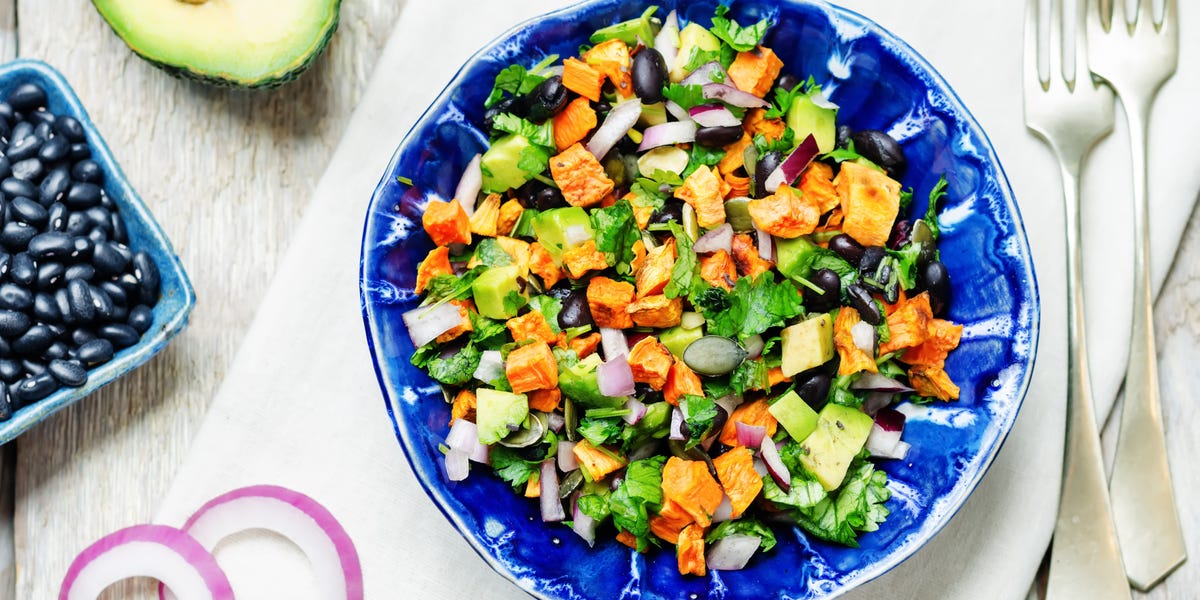
Potassium plays many important roles in your body, but many people don’t get enough of it in their diet, according to the National Institutes of Health. Bananas are often the first thing people think of when they’re thinking of foods that contain potassium, but nutrition experts say that there are plenty of high-potassium foods that contain even more of this nutrient. Surprisingly, foods like sweet potatoes, avocados, black beans, and even your favorite tomato sauce contain more potassium per serving than a banana.
Meet the Experts: Amy Lee, M.D., chief medical officer of Lindora L.L.C. and Pear Sports L.L.C.; Brittany Modell, R.D., intuitive eating counselor and body image coach; Jackie Newgent, R.D.N., C.D.N., chef, nutritionist, and author of The Plant-Based Diabetes Cookbook; Melissa Prest, D.C.N., R.D.N., national media spokesperson for the Academy of Nutrition and Dietetics and member of the Prevention Medical Review Board; Mia Syn, M.S., R.D.N..
Like most nutrients, potassium plays an important role in your body. It helps your nerves and muscles communicate with one another, moves other nutrients into your cells, and keeps your sodium levels regulated. Low levels of potassium can increase the risk of developing high blood pressure, kidney stones, and high blood sugar, according to the NIH.
According to Amy Lee, M.D. , chief medical officer of Lindora L.L.C. and Pear Sports L.L.C., a food should contain over 200 mg of potassium per serving to be considered high in potassium. Keep reading to find dozens of foods that meet this requirement.
Foods high in potassium
Sweet Potatoes
A medium baked sweet potato has 542 mg (12% DV) of potassium. These tubers are also rich in vitamin A for your eyes, vitamin C for your skin, and gut-filling fiber. Plus, sweet potatoes contain compounds called anthocyanins, which have anti-inflammatory effects.
White Potatoes
A single medium baked potato has 867 mg of potassium, says Mia Syn, M.S., R.D.N.. You’ve probably been conditioned to fear these spuds, but when prepared the right way (baked or boiled instead of deep fried), they’re low in calories, fat, and sodium. Plus, white potatoes offer a healthy dose of vitamin C and magnesium, too. Let your spud cool before you eat it and you’ll get a dose of gut-friendly resistant starch.
Tomato Sauce
This traditional pasta topper is a secret source of potassium, with 910 mg in each cup, per the USDA. Tomatoes are also rich in lycopene, a disease-fighting plant pigment that gives certain fruits and vegetables their signature red hue. Look for a low-sugar tomato sauce sold in BPA-free packaging.
Watermelon
Nosh on two refreshing watermelon wedges, and you’ll get 641 mg (14% DV) of potassium. Watermelon is also a great source of lycopene, as well as vitamins A, C, and B6. Plus, more than 90% of the fruit is water, so you’ll feel full after snacking for very little calories. And if you’d rather sip the stuff? Cold-pressed watermelon juice is a great alternative.
Frozen Spinach
Add 1 cup of frozen spinach to your next stir-fry or pasta dish and you’ll get a respectable 574 mg (11% DV) of potassium, per the USDA. Spinach is also rich in magnesium, vitamin A, and calcium. Bonus: It’s budget-friendly and usually much cheaper than fresh veggies.
Beets
A cup of cooked, sliced beets delivers 518 mg (11% DV) of potassium, per the USDA. The sweet root vegetable is super versatile, though, and can be used in everything from salads to juices to soups.
And there’s a reason athletes are all about beetroot juice lately: In a 2017 review, researchers concluded that drinking the stuff 90 minutes before your workout could boost performance. (Just don’t freak out if it turns your pee pink or red afterward. It’s totally normal, we promise.)
Black Beans
Chances are you’re already buying canned black beans for a boost in fiber and protein—two nutrients that keep you feeling full longer. However, they’re also a great source of potassium. Eat 1 cup and you’ll get 611 mg of the mineral, says Syn. Black beans also offer some calcium, magnesium, and folate.
White Beans
White beans might be the best source of potassium in the grocery store: A single cup has a whopping 1,000 mg, Syn says. That’s a full quarter of what you need every day. That same 1-cup serving also packs an impressive 17 grams of protein and 11 grams of fiber.
Canned Salmon
Canned salmon is a lazy cook’s dream. Pop open one 5-ounce can and you’ll get 442 mg (10% DV) of potassium. What’s more, salmon is rich in omega-3 fatty acids, which are essential fats for your eye, heart, and brain health that your body can’t make on its own. Salmon is also high in B vitamins, which aid in the production of red blood cells and convert the food you eat into energy. On top of that, salmon is a great source of lean protein—perfect for those trying to lose weight or build muscle.
Edamame
Whole soybeans are one of the world’s greatest sources of plant-based protein, but that’s not the only trick up their sleeve: 1 cup also supplies 676 mg (14% DV) of potassium. Eat them as a snack, toss ’em in a salad, or serve them up as a side dish.
Butternut Squash
One cup of this slightly sweet fall favorite packs 582 mg (12% DV) of potassium. You’ll also get a hefty dose of vitamin A, along with some vitamin C, magnesium, folate, and calcium.
Swiss Chard
One cup of cooked chard has a whopping 961 mg (20% DV) of potassium, per the USDA. These hearty greens also pack calcium, iron, and vitamins A, C, and K.
Yogurt
Regular plain low-fat yogurt (not the Greek stuff) has an impressive 573 mg (12% DV) of potassium per cup, the USDA says. Plus, it packs nearly half your daily calcium needs. Look for one that contains live active cultures to get a nice dose of gut-friendly probiotics, too.
Avocado
One avocado provides a whopping 728 mg of potassium, Syn says. Moreover, they are a great source of healthy fats and fiber. Avocados lend a nice creaminess to recipes. You can enjoy them over toast, in a delicious pasta sauce, or as part of a flavorful salad dressing.
Coconut Water
Store-bought coconut water packs a powerful punch of potassium, delivering about 507 mg per 8 fluid ounces, Syn says. It makes a great alternative to sugary sports drinks and a delicious base for post-workout smoothies. Just be sure to buy an unsweetened version to avoid added sugar.
Dried Apricots
Dried apricots supply 755 mg of potassium per half-cup, per the USDA, giving you a big nutritional bang for your buck. Remember to choose unsweetened versions at the grocery store to avoid loading up on extra sugar. We like to chop dried apricots and incorporate them into homemade granola bars and trail mixes.
Medjool Dates
Syn says just three medjools amount to 510 mg of potassium. That’s a super easy (and quick) source of the nutrient—and dates are super versatile. Blend them into a smoothie for sweetness, stuff them with peanut butter for a snack, or chop and fold them into a baked good.
Lentils
An underrated source of plant-based protein, 1 cup of cooked lentils contains 731 mg of potassium, Syn says. They’re also a great source of iron and can help protect against heart disease and diabetes, research shows.
Acorn Squash
Butternut squash is good, but acorn squash deserves a spot on your fall menu rotation, too. The stout veggie is easily roasted in the oven, and has 486 mg of potassium per 1 cup, Syn says.
Raisins
Whether snacked on, tossed into trail mix, or thrown on a salad, like dates, raisins can offer a quick and easy potassium fix. A half-cup of them (not packed) contains 600 mg, per the USDA.
Broccoli
It should come as no surprise that broccoli earned a spot on a list of nutrient-packed foods. It has all the good stuff, including potassium—458 mg per 1 cup, to be exact. That’s why Syn recommends it. It can help you meet your fiber requirements, too.
Pinto Beans
You may not frequently reach for this legume, but you totally should, considering 1 cup of them has 746 mg of potassium, Syn says. They’re delicious when stirred into a soup or served up as a side to a hearty roast dinner.
Pumpkin
Pumpkins, like butternut and acorn squash, are easily roasted and served with dinner—blitzed into a flavorful puree or pasta sauce. According to the USDA, 1 cup of boiled, mashed pumpkin with salt delivers 564 mg of potassium. Don’t forget: You can eat the seeds, too!
Tomato Paste
Because tomato paste is super concentrated, its potassium levels are, too. A 100 g serving of it packs 1010 mg of potassium, per the USDA. That’s obviously far more than most recipes would call for, but it’s definitely worth adding an extra squirt or spoonful to the next dish you make.
Carrots
One cup of chopped carrot has 410 mg of potassium, Syn says, which is slightly less than a medium banana has, but more than a small one. So, if your bunch is overripe and you’re in need of a mid-day snack, carrots will provide a similar nutritional boost. Everyone knows this vegetable supports eye health, too—that’s because they’re rich in protective antioxidants.
Adzuki Beans
A cup of cooked adzuki beans, boiled with salt, contains 1220 mg of potassium, per the USDA, which is why Brittany Modell, R.D., intuitive eating counselor and body image coach, says they’re a superb add to your potassium-rich foods rotation. They’re also great in chili and soups!
Passion Fruit Juice
Perhaps this is a slightly unconventional pick, but passion fruit juice could be the touch of spice your smoothie routine needs—and 1 cup has 687 mg of potassium, per the USDA. There’s also the perk of feeling transported to a beach vacation when you drink it.
Pomegranates
A whole pomegranate boasts 666 mg of potassium, per the USDA, which almost makes it worth the fuss of de-seeding one. Sprinkle the bright red jewels over a salad or eat them by the spoonful for a satisfyingly sweet crunch.
Black-Eyed Peas
Dr. Lee recommends getting your potassium in with black-eyed peas—1 cup has 475 mg, she says. And, contrary to their name, they’re actually in the bean and legume family, and should be treated as such when it comes to cooking.
Brussels Sprouts
Blanched and stinky doesn’t have to be Brussels sprouts’ only preparation. They’re great roasted, broiled, and sautéed, and 1 cup has 494 mg of potassium, per the USDA. They’re also high in vitamin K and vitamin C, which support iron absorption and bone health.
Bok Choy
The Chinese cabbage makes a great simple salad and ramen topper, and it serves up a whopping 630 mg of potassium per 1 cup, Dr. Lee says. Added fiber and antioxidants make it an easy add to the shopping list.
Papaya
One cup of smashed papaya contains 591 mg of potassium, Dr. Lee says, as well as a good dose of antioxidants in the form of vitamin A, vitamin C, and vitamin E. Use it to satisfy your sweet tooth, freshen up a summer salad, or switch up your go-to smoothie.
Water Chestnuts
They don’t have a ton of flavor, but water chestnuts provide a satisfying crunch to any dish including noodles, salads, and stir-fries. A half cup contains 362 mg of potassium, per Dr. Lee.
Tomatoes
If you prefer savory over sweet, grabbing a tomato instead of a banana to fuel up on potassium is your best bet. A large, ripe red one has 431 mg, Syn says. It’s as easy as a slice or dice and a light sprinkle of salt.
Kidney Beans
Not to be confused with adzuki beans, kidney beans are a great source of potassium at 1400 mg per 100 grams, says Dr. Lee. They’re also rich in magnesium, fiber, and calcium.
Zucchini
One medium zucchini has 512 mg of potassium, according to the USDA. It’s also high in antioxidants like vitamin C, as well as fiber, which supports good digestion. You can use it as a pasta substitute or roast it with your favorite seasonings.
How much potassium do you need?
The Adequate Intake (AI) of potassium for adults is 3,400 mg for men and 2,600 mg for women (not pregnant or lactating), says Jackie Newgent, R.D.N., C.D.N., chef, nutritionist, and author of The Plant-Based Diabetes Cookbook. “Though based on the Daily Value (DV), most men and women should aim for about 4,700 mg of potassium daily.”
Most people do not meet the daily requirement, says Melissa Prest, D.C.N., R.D.N., national media spokesperson for the Academy of Nutrition and Dietetics and member of the Prevention Medical Review Board, because they are not eating enough fruits, vegetables, and plant proteins like lentils.
Signs of potassium deficiency
Some common signs of low blood potassium are muscle weakness, low blood pressure, and frequent urination, says Prest. “Low blood potassium is more likely when you have chronic diarrhea, have long-term use of laxatives, are taking diuretics, or have a rare medical condition.”
Newgent adds that additional signs of low potassium may include constipation, fatigue, abnormal heart rhythm, and kidney stone formation. “Since many signs of potassium deficiency are similar to other conditions, it’s wise to consult your healthcare provider to determine the root cause of any of these symptoms,” she advises.
Signs you don’t need more potassium
If you are healthy and get adequate potassium, you are likely to have normal blood pressure, regular bowel movements, regular heart rhythm, and the ability to exercise without excess fatigue, says Newgent.
However, some health conditions like chronic kidney disease, heart failure, and certain blood pressure medications can increase your potassium level and your provider may tell you to monitor potassium-rich foods, says Prest. “While you will likely not be able to feel when you have high blood potassium, a change in your heart rhythm is a key sign that something is wrong.”
Read the full article here