

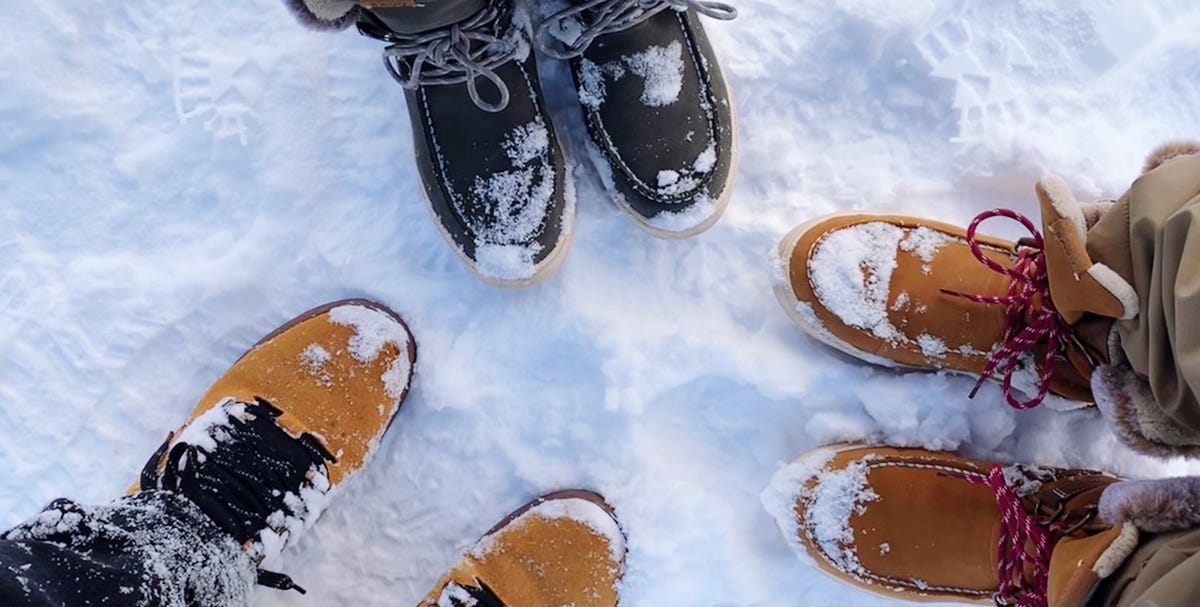
According to Fishkin, these are the primary considerations to take into account when choosing the best winter walking shoes:
✔️Weather protection. It’s important to look for shoes that offer water-resistance, water-repellence, or waterproofing to help keep your feet warm and dry in wet, slushy, and snowy weather conditions. Consider the conditions you’re more likely to use the shoes in, and look for insulation ratings that are intended for the same temperatures, particularly if you’ll be spending a lot of time outside.
✔️Breathability. It’s important that winter walking shoes are also breathable (in addition to water-resistant), especially if you’ll be using them for more strenuous hikes and walks. This will allow any internal moisture or heat to escape, preventing your feet from becoming sweaty and wet inside the shoe.
✔️Traction. Rubber soles with extra traction are particularly important for winter walking shoes. When walking on wet surfaces, snow, and ice, you need the additional traction to remain on your feet.
✔️Price. Winter walking shoes with additional features and support can cost a pretty penny. That said, you don’t have to spend several hundred dollars if you don’t need the most high tech options. Pay attention to price, and make sure the shoes you select have the features you specifically need. You may need to spend more for shoes that will take you through more extreme walking conditions.
Read the full article here