

While fiber is often best known for helping prevent constipation, its benefits go far beyond digestion—and these fiber-rich foods can help you get more of it in your day.
Fiber helps lower LDL cholesterol, reducing the risk of heart disease. It also helps reduce the risk of other diseases like colorectal cancer. Plus, it keeps your blood sugar levels from spiking and makes you feel full longer, which can help you lose weight.
To better understand why fiber matters, we spoke with Amy Lee M.D., nutritionist and Chief Medical Officer at Lindora Clinic, about the role it plays in a healthy diet and why most of us should be getting more of it. Dr. Lee says that adults in the U.S. are consuming less than the recommended amount of dietary fiber. Studies have shown that this may be due in part to common misconceptions, including the belief that all whole-grain foods are good sources of fiber and that high-fiber foods are expensive, unpalatable, or difficult to prepare. “This is why we see a lot of medical conditions related to a low-fiber diet. Conditions such as diverticulae or colon polyps are a couple of the most common,” adds Dr. Lee.
Fiber is important because “it has health benefits such as lowering your inflammation from the body (foods/preservatives/additives) as well as keeping our bowel movements regular,” Dr. Lee adds.
There’s no shortage of tasty ways to get more fiber into your diet—and it goes well beyond fiber supplements.
How much fiber do you need?
The current recommendation is 19-38 grams of dietary fiber daily, depending on age and sex, says Dr. Lee. But we know our current US adults are consuming way below the recommended amount, more likely 7-12 grams.
According to Dr. Lee, the average adult should be eating close to 40 grams if not more.
What are some things to keep in mind when adding fiber to your diet?
One of the most important things to keep in mind when adding more fiber to your diet is to increase your intake gradually. While fiber offers a wide range of health benefits, adding too much too quickly can leave you feeling gassy, bloated, or otherwise uncomfortable as your digestive system adjusts. Reading nutrition labels can be a helpful way to understand how much fiber you’re getting from packaged foods, and whole foods like fruits, vegetables, beans, nuts, seeds, and whole grains can help round out your intake. It’s also important to drink plenty of water, since fiber and hydration work hand in hand to support healthy digestion. Rather than trying to overhaul your diet overnight, a slow and steady approach can make it easier to reach your fiber goals comfortably.
Your top sources of fiber, doctor-recommended
1. Avocado
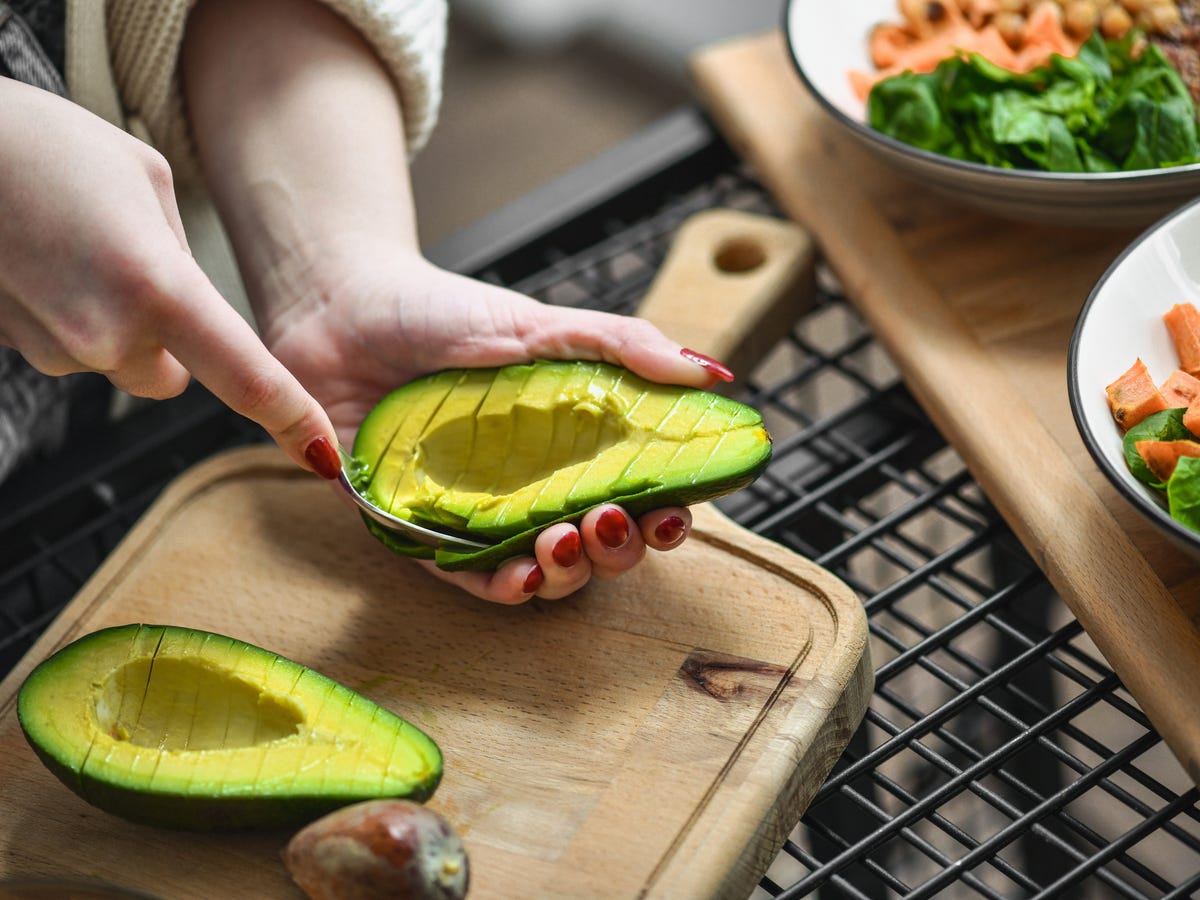
The avocado is quite a special fruit. Instead of being high in carbs, it’s loaded with healthy fats. Getting fiber is just another bonus reason to order some avocado toast or guac and chips when you’re out!
Amount of fiber: 3 grams per 1/3-cup serving.
2. Raspberries
All berries are good for you, but raspberries and blackberries both pack the most fiber. Fresh berries can be expensive, but frozen options are usually more affordable. Try blending these in your next healthy smoothie, like this Berry, Chia, and Mint Smoothie, for that extra dose of fiber.
Amount of fiber: 8 grams per one-cup serving.
3. Dark chocolate
Dark chocolate is one of those delicious mysteries that never has to be a guilty pleasure! A higher percentage of cocoa content in dark chocolate contains a higher concentration of fiber, as well as antioxidants and nutrients, compared to chocolate with a lower cocoa percentage. So, as long as you make sure that you are choosing a dark chocolate with a cocoa content higher than 70%, you can count this sweet treat towards your daily fiber count.
Amount of fiber: 3 grams per 1-ounce serving of dark chocolate with 70-80% cacao solids.
4. Lentils
Lentils are very inexpensive at the grocery store, and they’re packed full of protein and fiber. Mix in lentils with your favorite grain bowl or make a lentil soup to get your digestive system in full swing.
Amount of fiber: ~8 grams per 1/2-cup serving of cooked lentils.
5. Almonds
Almonds are in just about every trail mix or nut assortment you’ve ever had, yet they never disappoint. These popular tree nuts are full of healthy fats and magnesium, as well as fiber.
Amount of fiber: 3.5 grams per 1-ounce serving.
6. Chickpeas
These little legumes are loaded with nutrients, including minerals and protein. Chickpeas form the base of hummus, one of the easiest spreads to make yourself. You can slather it on salads, veggies, pita chips, and more.
Amount of Fiber: 5.8 grams per 1/2-cup serving.
7. Oats
Oats are one of the healthiest grains in existence. Full of vitamins, minerals, and antioxidants, overnight oats are popular now for a reason! Oats are also the go-to base for all your favorite kinds of granola.
Amount of fiber: 4.2 grams per 1/2-cup serving.
8. Pear
Pears are naturally sweet, satisfyingly juicy, and easy to enjoy as a snack or add to meals. They also provide fiber, especially in the skin. Whether sliced fresh, added to salads, or paired with cheese or yogurt, pears are a simple way to make everyday eating feel a little more delicious.
Amount of fiber: 5.52 grams per one medium pear.
9. Chia seeds
Chia seeds pack a lot of nutrition into a very small serving, including fiber, healthy fats, and plant-based protein. They’re also incredibly versatile and easy to add to oatmeal, yogurt, smoothies, or pudding without much effort. On top of that, they help create a satisfying texture and can make meals feel more filling.
Amount of fiber: 9 grams per 2-tablespoon serving.
Who should think twice before adding fiber to their diets?
According to Dr. Lee, you should consult your doctor before increasing your fiber intake if you have a history of irritable bowel syndrome because “there are some foods with a good amount of fiber that could worsen your symptoms”. Also, people who have a history of diverticula(e) have to watch out for certain fiber as it could get trapped and cause further problems.
Read the full article here