

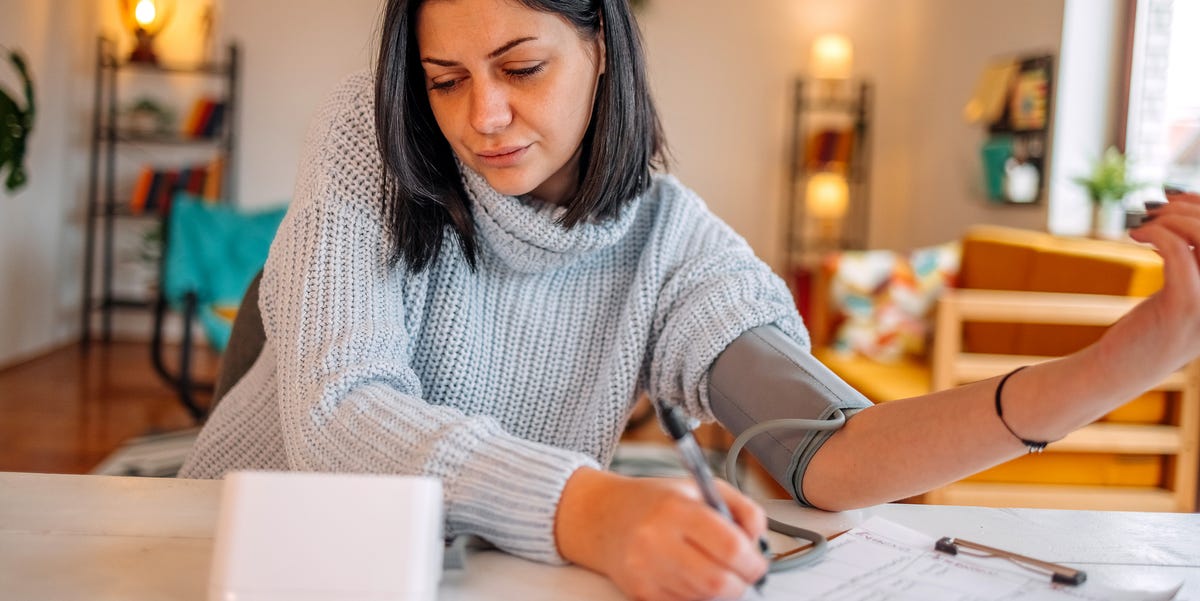
Regardless of whether you have struggled with elevated or high blood pressure, your blood pressure reading likely isn’t the same at every doctor’s appointment. In fact, it probably won’t even stay consistent if you take it multiple times in one day. If you’ve ever wondered about why this happens and why your blood pressure is higher in the morning, we went out to find the answer.
Meet the experts: Kevin Kheder, M.D., an interventional cardiologist at Hoag’s Jeffrey M. Carlton Heart & Vascular Institute in Newport Beach, CA; Cheng-Han Chen, M.D., an interventional cardiologist and medical director of the Structural Heart Program at MemorialCare Saddleback Medical Center in Laguna Hills, CA.
“Blood pressure naturally fluctuates throughout the day,” says Kevin Kheder, M.D., an interventional cardiologist at Hoag’s Jeffrey M. Carlton Heart & Vascular Institute in Newport Beach, CA. “Physical activity, stress, pain, caffeine, meals, medications, hydration, sleep quality, and even talking during a blood pressure reading can all influence the numbers.”
Here, cardiologists explain why blood pressure peaks earlier in the day, plus when to check your blood pressure for the most accurate reading if you need to monitor it for your health.
Why is blood pressure higher in the morning?
“Blood pressure rises and falls throughout the day as part of your body’s internal clock, or circadian rhythm,” explains Cheng-Han Chen, M.D., an interventional cardiologist and medical director of the Structural Heart Program at MemorialCare Saddleback Medical Center in Laguna Hills, CA. “Typically, blood pressure is lowest during sleep, starts to rise in the early morning, peaks midday, and then gradually declines in the evening.”
These changes in blood pressure are driven by hormones, says Dr. Kheder. “In the morning, your body naturally releases hormones such as cortisol and adrenaline before you wake up,” he explains. “These hormones help prepare you for the day by increasing heart rate and causing blood vessels to constrict slightly, which leads to a normal morning rise in blood pressure. For some people, especially those with hypertension, this morning surge may be more pronounced.”

Add Prevention as a preferred source in your Google search results.
Use your Google account to add this to your settings.

Again, these blood pressure fluctuations are totally healthy and normal—but there are some irregular blood pressure patterns to be aware of, especially if you’re creeping towards a hypertension diagnosis. Per the Mayo Clinic, if you have high blood pressure during the night (when it should be lowest), high blood pressure early in the morning (when it should be gradually rising), or less than a 10% drop in blood pressure overnight, these are concerning patterns that warrant a talk with your doctor. The same goes for labile hypertension, which is a sudden, brief blood pressure spike with no clear trigger that happens at any time.
The best time to check your blood pressure
So if your blood pressure rises over the course of the morning, does that mean that you shouldn’t check it before noon? Not necessarily. “Consistency is more important than the exact time,” says Dr. Kheder. In fact, since there are so many factors that influence blood pressure, both Dr. Kheder and Dr. Chen recommend checking it first thing in the morning before you eat or take any medications (if you want to or have been advised to take it twice a day, check it again in the evening).
“Before taking a reading, sit quietly for five minutes, keep your feet flat on the floor, and support your arm at heart level,” suggests Dr. Kheder. If it’s not first thing in the morning, he adds, make sure to avoid caffeine, smoking, or exercise for at least 30 minutes before taking a reading.
The bottom line
Yes, your blood pressure is slightly higher in the morning than it is in the evening, but this is totally natural and expected. When it comes to heart health, consistently remaining in a healthy range is the most important thing. And if your blood pressure is higher than it typically is for a morning or two, there’s no need to panic. “We don’t diagnose high blood pressure based on a single reading,” Dr. Kheder says. It’s the patterns within the context of your overall health that are the strongest clue that something may need addressing.
Read the full article here