







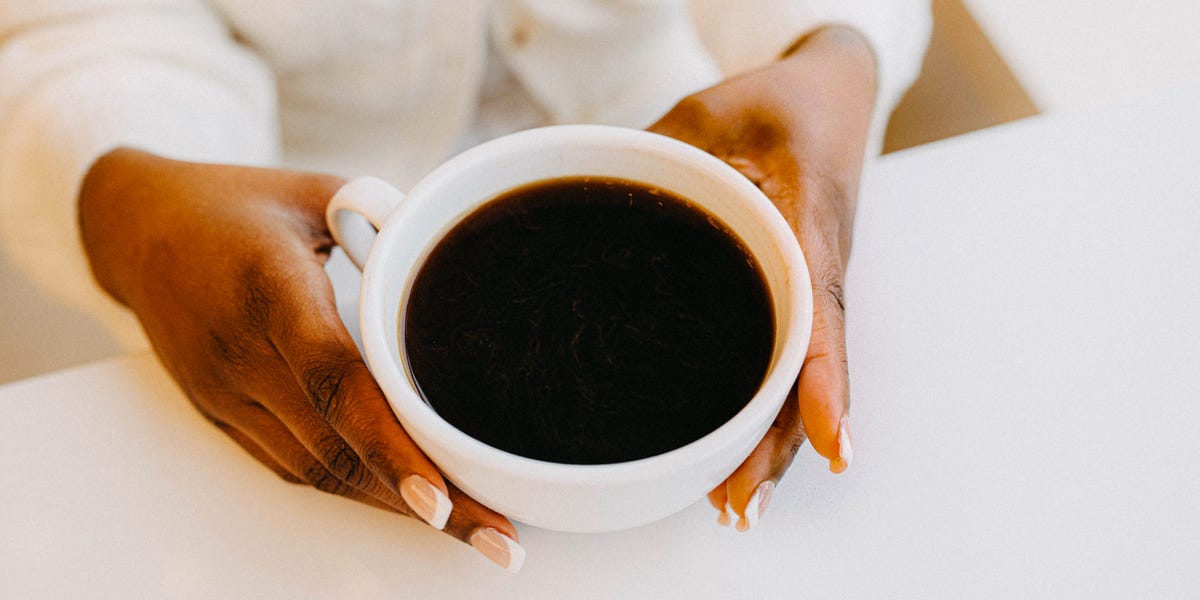
- Habitual coffee drinking may be linked to better metabolic health.
- In a recent study, scientists found that coffee drinkers tended to have less fat and more muscle.
- Dietitians explain what that means for your morning ritual.
For many of us, sipping on a hot cup of coffee is an essential morning ritual that helps us start our day feeling energized. But it turns out that your daily cup of joe may be providing more than a much-needed jolt of caffeine: It could be giving your metabolic health a boost too, new research reveals.
Meet the experts: Melissa Prest, D.C.N., R.D.N., spokesperson for the Academy of Nutrition and Dietetics; Keri Gans, M.S., R.D.N., C.D.N., registered dietitian and author of The Small Change Diet
The takeaway comes from a recent study published in the European Journal of Nutrition, which aimed to investigate how the popular morning beverage affects certain metabolic health markers. Of the 2,264 participants the researchers analyzed, they found that those who regularly drank three to four cups of coffee a day tended to have a leaner body composition, showing less fat mass and greater muscle mass, despite having similar BMIs to the other participants who drank less or no coffee (note that Prevention no longer uses BMI as an indicator of health).
Before you start brewing another pot, what does that actually mean for your morning routine? Ahead, dietitians break it down.
Why are the findings significant?
The results of the study may shine a light on how coffee affects health markers that aren’t always easy to see. “They suggest that habitual coffee consumption may be associated with a more favorable body composition—not simply a lower number on the scale,” explains Melissa Prest, D.C.N., R.D.N., spokesperson for the Academy of Nutrition and Dietetics. “In this study, people who drank more coffee tended to have less total and visceral fat and greater skeletal muscle mass, even though their BMI was similar. That distinction is important because BMI doesn’t tell us how much of someone’s weight comes from fat versus muscle or where that fat is distributed.”
The visceral fat marker, specifically, reveals the extent to which coffee drinking could affect your overall health, even if it doesn’t change your numerical weight or BMI. “Visceral fat, which accumulates around internal organs, is particularly associated with cardiometabolic health risks,” Prest explains.
The exact mechanism explaining why coffee may be influencing these body composition markers is less clear. But the key takeaway is that your daily cup of coffee could be doing more than helping you feel more awake. “Coffee is a complex beverage, not simply a delivery system for caffeine,” Prest points out. “Coffee contains numerous biologically active compounds, including chlorogenic acids and other polyphenols, and researchers are still working to understand which components may be responsible for some of the associations seen with health outcomes.”
Does drinking coffee regularly have other benefits?
The positive metabolic health associations aren’t the only reason to enjoy a cup. Most obviously, “coffee contains bioactive compounds, including polyphenols, and caffeine can help with alertness and energy,” explains Keri Gans, M.S., R.D.N., C.D.N., registered dietitian and author of The Small Change Diet. But the beverage may be linked with other health benefits, too.
“There is a substantial body of research associating moderate coffee consumption with a variety of health benefits, including lower risks of type 2 diabetes and some cardiovascular outcomes,” Prest says. The bioactive compounds in coffee may also have antioxidant and anti-inflammatory benefits. “The study authors note associations between coffee consumption and cardiometabolic outcomes, cancer risk, and mortality in the broader literature,” she adds.
If you’re someone who incorporates caffeine into their regular diet, all of those potential health benefits may be a reason to opt for coffee as opposed to other sources. That said, it won’t be for everyone. “People who experience jitters, anxiety, heart palpitations, or disrupted sleep may want to limit caffeine,” Gans says. Prest adds that certain medications and conditions may also cause a negative response to caffeine.

Add Prevention as a preferred source in your Google search results.
Use your Google account to add this to your settings.


But if caffeine itself is the problem, Prest notes that decaf coffee lovers may still reap some of the perks. “Importantly, these benefits aren’t necessarily all attributable to caffeine,” she says. “Some studies have found similar associations with decaffeinated coffee, suggesting that compounds other than caffeine may contribute.”
How you drink your coffee also matters, so it’s important to consider the brewing method. “Unfiltered coffee, such as French press or boiled coffee, contains compounds called diterpenes that can raise LDL cholesterol in some people,” Prest says. “Filtered coffee removes many of these compounds.”
How much coffee is safe to drink in a day?
The results of the study linked three to four cups of coffee a day with a more favorable body composition, but is it actually safe to drink that much? “For most healthy adults, the FDA cites 400 milligrams of caffeine per day as an amount not generally associated with adverse effects, though individual tolerance varies,” Gans says. “That’s roughly two to four cups of coffee, depending on size and brewing method.” (During pregnancy, though, the recommendation is generally to stay below 200 milligrams per day, she notes.)
While 400 milligrams of caffeine is considered safe, it’s still important to listen to your own body. “I’d emphasize that 400 milligrams is a ceiling, not a target,” Prest explains. “Individual tolerance varies. Someone may feel perfectly fine with 200 milligrams, while another person may experience anxiety or sleep problems at a much lower amount.”
So, three to four cups of coffee a day may or may not work for you depending on your tolerance. But that’s also assuming you’re getting your caffeine intake exclusively from coffee. “Remember that caffeine from coffee isn’t the only caffeine that counts,” Prest points out. “Tea, energy drinks, soda, chocolate, pre-workout products, and some medications can contribute to your daily total.”
What does this mean for you?
The findings are good news for coffee drinkers. “For someone who already enjoys coffee, this study provides some reassurance that moderate coffee consumption can fit comfortably into an overall healthy lifestyle,” Prest says.
But while habitual coffee drinking may be beneficial, Gans warns that “coffee shouldn’t be viewed as a strategy for building muscle or losing body fat.” Prest agrees. “There are much more established strategies for improving body composition: regular resistance training, adequate protein, a nutrient-dense eating pattern, sufficient sleep, and regular physical activity,” she explains.
If you do drink coffee and want to reap the most benefits, Prest also suggests being mindful of how you prepare it. “A plain or lightly sweetened coffee is very different nutritionally from a large specialty coffee loaded with added sugar, syrups, and cream,” she says. “And timing matters. If caffeine interferes with your sleep, drinking more coffee for its potential health benefits could ultimately be counterproductive.”
The bottom line
The findings of the study add to a growing body of evidence about the effects of coffee drinking on our overall health, but there’s more to consider. “This study looked at people at a single point in time, so it can show an association but can’t prove that coffee caused differences in muscle or body fat,” Gans points out. “Coffee intake was also self-reported, and the researchers didn’t have detailed information about cup size, brewing methods, or what people added to their coffee.”
Prest also notes that while the researchers adjusted for factors like BMI, smoking, physical activity, alcohol intake, and education, there could have been other lifestyle or dietary differences that contributed to the final result. Still, there’s reason to be optimistic that your morning cup of coffee may be giving you a boost in more ways than one.
Read the full article here


