






Jigsaw puzzles, along with sudokus, crosswords, and word games such as Wordle, are more popular than ever—and some puzzlers may not realize that their favorite hobby could also help keep their brain sharp. But is one type of puzzle better than the other when it comes to their brainy benefits?
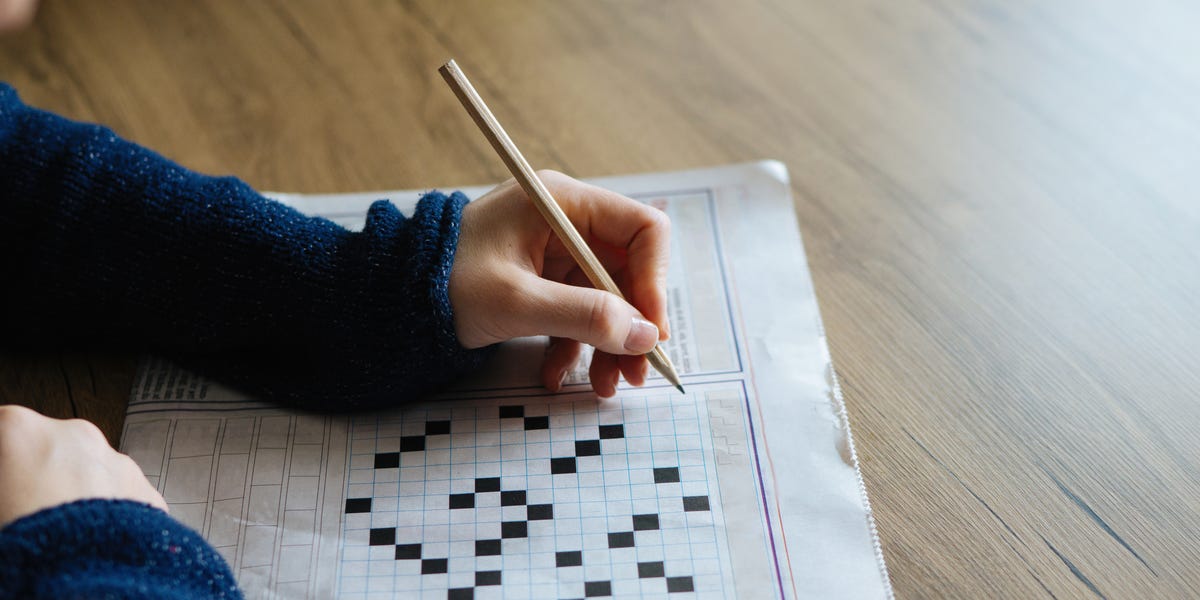
Any puzzle that challenges your brain supports cognitive health, which is especially crucial to cater to as you get older to help prevent things like dementia, which interferes with healthy aging. But there is one type of puzzle that engages multiple cognitive processes all at once, making it a particularly powerful pastime: crossword puzzles.
“Crossword puzzles are not only mentally challenging, but they help keep your thinking flexible,” says Elise Caccappolo, Ph.D., director of the Neuropsychology Service and professor of neuropsychology at Columbia University Irving Medical Center in New York.
Here’s how crosswords can help boost brain health and support healthy aging, plus how other popular puzzles can help keep you sharp.
How Puzzles Can Boost Brain Health
Crossword Puzzles
So what’s behind the brain-supporting benefits? Caccappolo points out that to complete a crossword, you need to search your mental dictionary to find the word that fits the clue, which is the same process as trying to remember the name of that neighbor you always run into at the grocery store (not as easy as it sounds to anyone over 50!).
For a more complicated clue, Caccappolo says, your brain has to work even harder to sort through several possible answers, selecting the one that best fits the clue, the number of letters, and the down or across answers that cross that word, which is part of verbal fluency.

Add Prevention as a preferred source in your Google search results.
Use your Google account to add this to your settings.


And since so many crossword puzzle clues are based on trivia, including song lyrics, geography, movie casts, and book titles, you also have to call on your semantic memory, flipping back through the knowledge that you have accumulated over your lifetime.
Finally, something crossword puzzles do rather uniquely is engage your visuospatial processing, says Caccappolo, which plays a role in our cognitive function and is something that can naturally slow as you get older. “When you’re reading a book, you process language from left to right,” she explains. “But when you’re working on a crossword grid, you have to read up and down as well,” and this works out your brain in a different way.
Sudoku and Logic Puzzles
If you get frustrated with crosswords but love sudokus, here’s happy news: those can benefit your brain, too! Studies show that the logic puzzles where you fill in boxes with the digits 1 through 9 so they don’t repeat in any row, column, or section have their own brain benefits and activate an area of the brain involved in executive functioning (the skills that help us plan, organize, focus our attention, remember information, and problem-solve).
Bottom Line
When it comes to reaping those cognitive wins, what’s more important than the type of puzzle is the fact that you do that puzzle regularly, says Caccappolo—she recommends that her patients try puzzles because it’s an enjoyable, stress-relieving hobby that fits into a brain-healthy lifestyle.
Getting regular exercise, eating a healthy, varied diet, managing chronic health conditions, and maintaining a social circle (isolation is associated with increased dementia risk) are all crucial to keeping your brain sharp as you age.
So grab a cup of tea, a sharpened pencil, and solve some clues!
Read the full article here


