



Spring is in the air—and so is pollen. For nearly one in three U.S. adults with seasonal allergies, this time of year can feel less like a fresh start and more like a sneeze-filled slog. “When your body views relatively harmless substances like pollen and other allergens as intruders, much as it does germs and bacteria, your immune system springs into action creating histamines, or chemicals to fight them—and this is what triggers those hallmark allergy symptoms,” explains Annessa Chumbley, R.D., registered dietitian.
Meet the experts: Annessa Chumbley, R.D., a registered dietitian.
Managing allergies often starts with the basics: taking your medications as prescribed and using tools like air purifiers that are certified by the Asthma and Allergy Foundation of America are smart moves to get relief. But there’s more you can do to support your body during allergy season. Lifestyle choices, including what you eat, may help ease symptoms. Certain foods are packed with nutrients that may reduce inflammation, stabilize histamine release, and even help your immune system respond more effectively. Although research on the role of diet in allergy relief is still evolving, certain foods show promise in reducing symptoms. Here’s a closer look at some of these potential allergy-fighting options, and how they might help. While they won’t be a substitute for medication and eating them won’t ‘cure’ your allergies, they can still support your overall health—and might even make allergy season a little more manageable.
Foods that fight allergies
Turmeric
“The star of turmeric is curcumin, a compound with anti-inflammatory properties that may help reduce inflammation in nasal passages as well as inhibit the release of histamines,” says Chumbley. Whether you use the powder or the fresh version when cooking, try to pair turmeric with a pinch of black pepper, which helps optimize absorption.
Oranges
“Vitamin C always proves itself a super hero, in this case by acting as a natural antihistamine to quell stuffiness or brighten red eyes—yes, just like those over-the-counter anti-allergy meds,” explains Chumbley. “It also helps break down histamine that’s already been released, so it has less of an effect on you and your symptoms.” Citrus and bell peppers are excellent sources of it.
Red Onion
Quercetin is an antioxidant that can help prevent the release of histamine, which in turn may help lessen allergy symptoms, particularly nasal-related ones. It’s found in abundance in red onions as well as in red cabbage, berries, grapes, and apples, Chumbley says.
Sardines
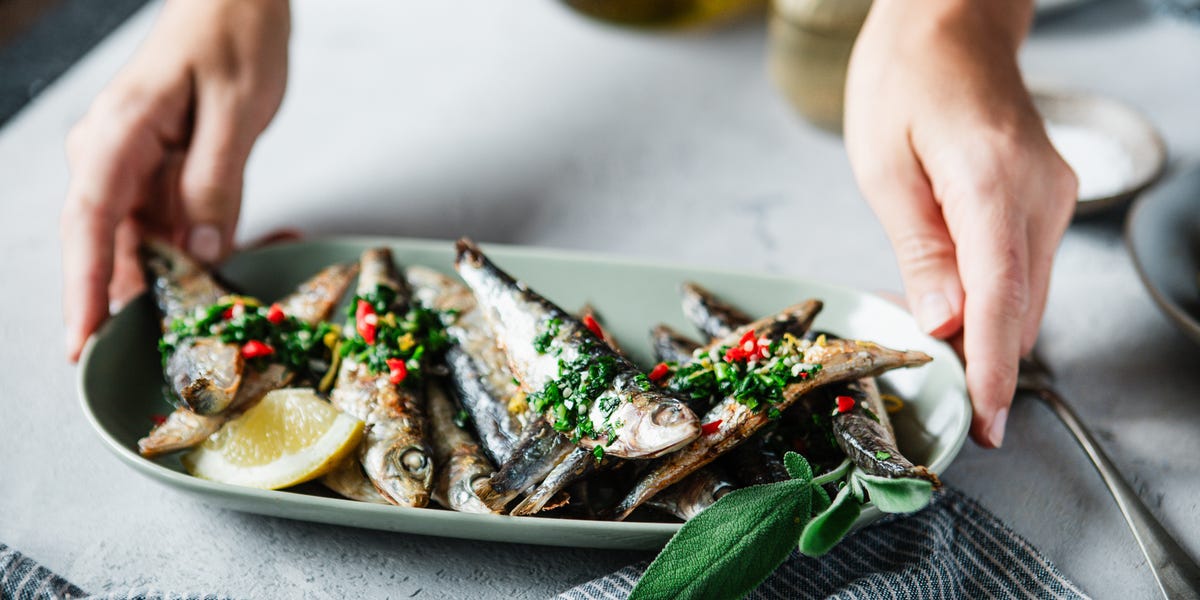
These tinned fish are a source of anti-inflammatory omega-3’s, which “help stabilize cell membranes so they’re less likely to release histamines when an allergen comes calling,” says Chumbley. “Think of cell membranes as a gateway that determines what gets in and what goes out—so supporting the health of these membranes is very important.”
While promising, more studies are needed to confirm the direct impact of these foods on allergies. Always speak with your healthcare provider to learn the best methods to manage your allergy symptoms.
Relieve allergy woes with these tasty recipes
Creamy Orange Turmeric Smoothie
Active: 10 min
Total: 10 min
Serves 1
In blender, puree 1 cup frozen mango chunks, 2 tsp grated peeled fresh turmeric, and 1/2 tsp orange zest plus 1/2 cup orange juice until smooth, about 1 min. Holding tall glass at an angle, pour in mixture, keeping mixture to 1 side of glass. Slowly pour 1/2 cup plain unsweetened kefir on top, then swirl with straw and serve.
Per serving: About 254 cal, 4.5 g fat (2.5 g sat), 15 mg chol, 64 mg sodium, 52 g carb, 4 g fiber, 44.5 g sugar (0 g added sugar), 6 g pro
Sardine Pasta With Burst Tomatoes
Active: 30 min
Total: 30 min
Serves 4
Cook 8 oz mezzi rigatoni per pkg. directions. Reserve 1 cup pasta cooking water; drain pasta and return to pot. Grate 1 tsp lemon zest and set aside; squeeze 2 Tbsp lemon juice over pasta and toss to combine. While pasta cooks, heat 1 Tbsp olive oil in large skillet on medium. Add 1 medium red onion (chopped) and 1/4 tsp each kosher salt and pepper and cook, covered, stirring occasionally, 8 min. Stir in 2 cloves garlic (finely chopped) and 1/4 tsp red pepper flakes and cook, stirring, 1 min. Add 1 pint grape tomatoes (halved) and 1 bunch scallions (thinly sliced; reserve 1/4 cup dark scallion greens for topping) and cook, stirring occasionally, until onion and scallions are tender and tomatoes begin to break down, 8 to 10 min. Add pasta to skillet along with reserved lemon zest and 1/4 cup pasta cooking water and toss to combine, adding more cooking water if pasta seems dry. Remove from heat and gently fold in two 4.25- to 4.5-oz cans skinless, boneless sardines packed in olive oil (drained). Serve topped with reserved scallion greens and cracked black pepper if desired.
Per serving: About 410 cal, 13.5 g fat (4 g sat), 24 mg chol, 322 mg sodium, 54 g carb, 5 g fiber, 5 g sugar (0 g added sugar), 23 g pro
Read the full article here


