






It seems like protein has really stolen the nutritional spotlight for the last year or so. Suddenly, protein coffee, protein popcorn, and even protein candy options are popping up everywhere. While protein definitely deserves its credit, some applause is well overdue for fiber, another part of the nutritional team. While avocados are often a go-to pick for people looking to incorporate more fiber into their daily diet, there are a surprising number of foods with more fiber than an avocado that are worth cooking up when you’re looking for more variety.
Meet the experts: Allyson Balzuweit, M.P.H., R.D.N., L.D., registered dietitian and nutrition consultant; Namrita Brooke, Ph.D., R.D.N., sports dietitian and exercise physiologist; Michele Waide, R.D.N., L.D.N., registered dietitian and member of The Academy of Nutrition & Dietetics
You may be wondering why you need to eat more fiber anyway. Just like protein, the nutrient has a long list of benefits. Getting enough fiber in your diet is crucial to maintaining a healthy digestive process, managing blood sugar levels, and minimizing cholesterol buildup. Fiber also increases satiety, which can keep you feeling fuller for longer. Studies also suggest that eating more fiber can reduce your risk of colorectal cancers and cardiovascular disease.
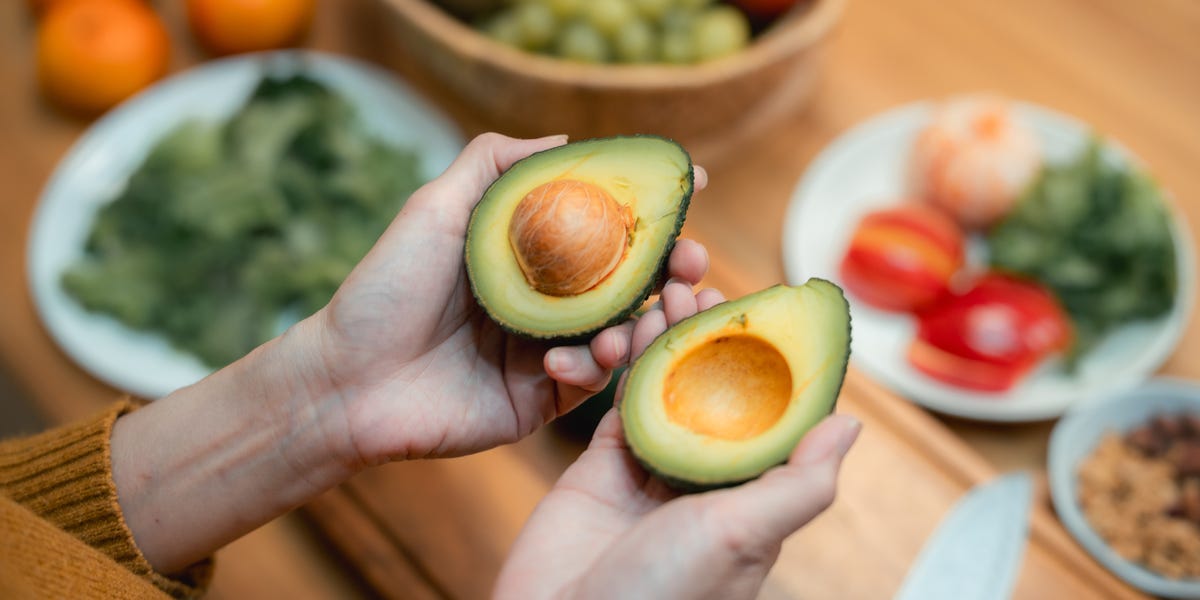
There’s no doubt that avocados are a powerhouse food. They’re a great source of healthy fats, vitamins, and minerals, plus they have anti-inflammatory properties. And of course, mashing one into a delicious dip or slicing it onto a sandwich can deliver up to 10 grams of fiber. But whether you aren’t a fan of avocados or you’re just ready to switch it up, there are plenty of delicious options that have even more fiber.
Ahead, dietitians share some of the top foods with more fiber than an avocado, plus their tips on how to incorporate the nutrient into your menu safely.
Tasty foods with more fiber than an avocado
Chia seeds
Chia seeds are a true superfood. Just two tablespoons pack the same fiber content as an entire avocado, along with omega-3 fatty acids, protein, and antioxidants. But there’s a catch. While it may seem easy to pop a few dry spoonfuls into your mouth and meet your daily quota, this can actually backfire. Chia seeds need to be consumed in conjunction with liquid; otherwise, they may stay stuck in your GI tract, explains Allyson Balzuweit, M.P.H., R.D.N., L.D., a registered dietitian and nutrition consultant. Instead, she suggests soaking chia seeds in water, milk, or even yogurt. This allows the tiny seeds to absorb liquid, creating a clear, gooey, gel-like coating that makes them more easily digestible.
Lentils
Lentils are a cornerstone of South Asian and Middle Eastern diets, and for good reason. These tiny, disk-like legumes are extremely nutritionally well-rounded. In addition to providing over 15 grams of fiber—around half of your recommended daily intake—in just one cup, lentils contain anti-inflammatory and antimicrobial properties.
Lentils come in a wide variety of colors, each offering a slightly different taste and nutritional profile. But no matter which type you prefer, they’re an “excellent source of protein, carbs, and fiber in the same food,” according to Namrita Brooke, Ph.D., R.D.N., a sports dietitian and exercise physiologist. They’re also an affordable, shelf-stable option to have on hand.
Beans
Black beans, cannellini beans, navy beans, kidney beans: pick a bean and it’s almost certainly packed with fiber and other crucial dietary nutrients. Research shows that eating just one cup of beans provides around 13 grams of fiber and can lower your risk of cardiovascular disease. Like lentils, this category of fiber-filled food is so diverse that there’s sure to be something for everyone.

Add Prevention as a preferred source in your Google search results.
Use your Google account to add this to your settings.


Whether they’re added to a pasta or salad, served as a classic side dish, or are blended into a dip, they pack a hefty nutritional punch. And if beans just aren’t for you, Brooke suggests finding creative ways to take advantage of their generally mild taste. “You can use white beans in smoothies; you can’t even taste them,” she says. “You can also use black beans in brownies.”
Raspberries
While almost all berries are a great source of dietary fiber, raspberries take the cake (and can be a delicious addition to the top of one). In addition to being loaded with 8 grams of fiber per cup, according to the USDA, this sweet summer berry is also packed with antioxidants and anti-inflammatory polyphenols. Michele Waide, R.D.N., L.D.N., a registered dietitian and member of The Academy of Nutrition & Dietetics, adds that raspberries are a particularly good choice for diabetic or prediabetic people as they’re low in calories and “tend to have a lower glycemic effect,” meaning they won’t spike your blood sugar as much.
Peas
These round starchy vegetables may be small, but they also can add a huge amount of fiber to your diet (a little over 8 grams per cup, according to the USDA). Split peas and green peas in particular are “a great thing to include, whether it’s in salads or a side of vegetables with your dinner,” says Brooke.
Chickpeas
You may know them as chickpeas, garbanzo beans, ceci beans, or even chana. But dietitians know that no matter what you call them, these savory beige legumes are a great source of fiber that can improve your gut microbiome. With around 12 grams of fiber per cup and a high content of plant-based protein, chickpeas “keep you satiated” and “give you a balance of carbohydrates,” according to Waide. This makes them a helpful tool in weight management, as the combination of fiber and protein slows your digestion and keeps you feeling full for longer.
How much fiber should you eat in a day?
Despite its benefits, most people don’t get enough fiber in their diets. One study says that while the recommended daily fiber intake is between 25 and 30 grams, most Americans only get around 17 grams.
While reaching a healthy level is important, it’s worth noting that your body may take a little while to adjust to this increase. “When you increase fiber intake, you may have some bloating, flatulence, or other things,” Brooke explains. But she says that “your gut does adapt to that intake” eventually, so try not to get discouraged by temporary discomfort; just give it a few weeks.
Balzuweit adds that increasing your hydration levels as you increase your fiber intake can help. “[Fiber] needs to be consumed in conjunction with any kind of liquid; otherwise, it’s just going to stay stuck in your GI tract,” she says. “You need the fluid to absorb the fiber so you can keep moving things through.”
Read the full article here


