







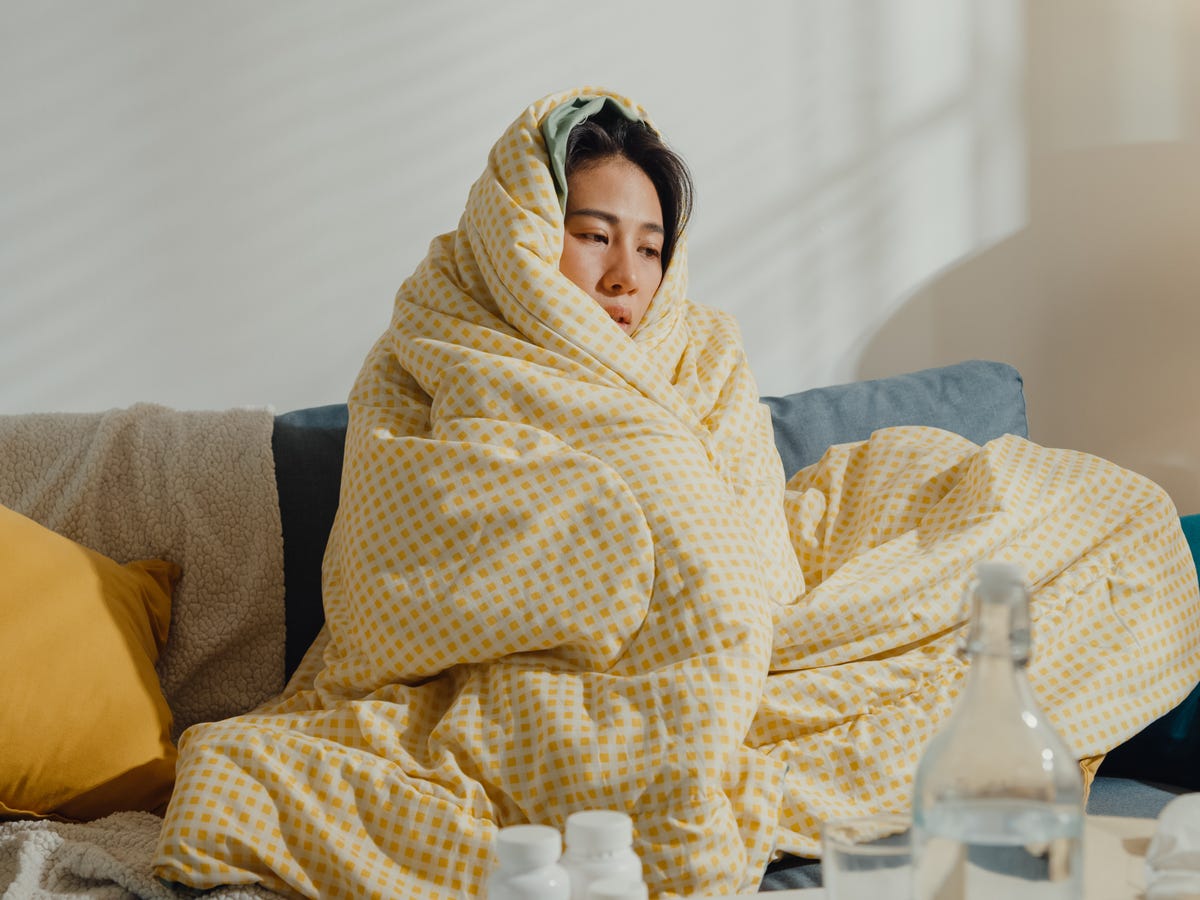
Full-body chills are a sensation that many people associate with unpleasant illnesses like a cold, the flu, or COVID. In many cases, chills are accompanied by a fever, meaning a temperature of 100.4 degrees or above when measured orally. If you’re experiencing the shaky feeling without an accompanying fever, it can be puzzling. Below, doctors explain the common causes of chills without a fever.
“Most frequently, chills are associated with a drop in temperature or a situation where someone is shocked or anxious,” says Connor O’Sullivan, M.D., a family medicine physician with Wellstar Health System. “Other chronic conditions can cause chills, such as anemia, hypothyroidism, or hypoglycemia. Hormonal changes like those associated with menopause can also cause chills. Chills can also be side effects of medications or signs of more serious health concerns,” he says.
Meet the Experts: Connor O’Sullivan, M.D., a family medicine physician with Wellstar Health System; David Cutler, M.D., family medicine physician and chairman at Santa Monica Family Physicians; Mike Sevilla, M.D., family medicine physician at Salem Family Care and member of the Ohio Academy of Family Physicians.
Below, experts explain what chills are and why you might be experiencing chills with no fever.
What are chills?
Chills are caused by the body trying to regulate its own core temperature, says Mike Sevilla, M.D., family physician at Salem Family Care and member of the Ohio Academy of Family Physicians. “Your body responds by causing your muscles to contract and relax, to try to warm up your body… some people call this reaction shivering.”
“Chills, or shivering, is involuntary, so you can’t control it,” adds David Cutler, M.D., family medicine physician and chairman at Santa Monica Family Physicians. Chills are also an important mechanism for maintaining normal body temperature when it drops too low, which happens quite often without a fever, Dr. Cutler adds.
According to Cleveland Clinic, when you have chills, you may:
- Shiver or tremble
- Shake
- Have chattering teeth (your jaw feels like it’s rattling, sometimes with your teeth bumping together)
- Have goosebumps (small rash-like bumps on the skin), also known as gooseflesh or goose pimples
- Have pale skin
- Feel cold
Sometimes you might get cold chills from being exposed to low temperatures. Shivering can also be a sign that your body is fighting off an illness, infection, or another health problem.
Why do I have chills but no fever?
If you’re shivering but the thermometer says your body temp is normal, one of these usual suspects could be behind your chills sans fever:
Cold temperatures
The simplest cause of chills and shivering is being out in cold temperatures, says Dr. Sevilla. Also, wearing wet clothing and/or being in windy conditions, makes the body feel cold more quickly, he adds. “If the body’s core temperature drops too low, this can cause a life-threatening condition called hypothermia.”
This is why it’s especially important to bundle up and keep warm in the colder winter months. So before you go outside, be sure to put on your winter coat, winter hat, and winter gloves to stay nice and toasty!
Infection
According to the National Library of Medicine, chills may present at the start of an infection—bacterial or viral—and not necessarily alongside a fever. They can also be predictors of an oncoming fever during an infection.
Bacterial infections are typically treated with antibiotics. As far as COVID and the flu, you can best protect yourself by staying up to date with vaccinations, and yes, it is safe to get both shots together.
Hypothyroidism
Having an under-active thyroid can cause people to be more sensitive to the cold, and may cause chills symptoms, says Dr. Sevilla.
When thyroid hormone levels are too low, the body’s cells can’t get enough thyroid hormone and the body’s processes start slowing down. As the body slows, you may notice that you feel colder, you tire more easily, your skin is getting drier, you’re becoming forgetful and depressed, and you’ve started getting constipated. Because the symptoms are so variable and nonspecific, the only way to know for sure whether you have hypothyroidism is with a simple blood test, according to the American Thyroid Association.
Low blood sugar
People with types of diabetes having a low blood sugar reaction may experience chill-type symptoms, says Dr. Sevilla. This low blood sugar reaction is called hypoglycemia. If you have diabetes and are experiencing chills, check your blood sugar to be sure that this is the cause of your shivers. With that said, if you see that your blood sugar is dropping below a safe threshold you have set with your doctor, you should immediately seek emergency medical attention to restore blood glucose levels.
Other symptoms of low blood sugar may include:
- A fast or unsteady heartbeat
- Confusion
- Feeling dizzy
- Hunger
- Tiredness
Anxiety or strong emotion
A reaction of fear or anxiety may cause an involuntary chill-type reaction. “Many people can relate to a certain movie or certain song which can send you those positive or negative chills feelings,” says Dr. Sevilla.
Research has shown that anxiety and stress, in particular, can cause a rise in “normal” body temperature (anything above 98.6 degrees) even when there is no underlying illness or infection. This is known as a psychogenic fever.
Dehydration
According to the Cleveland Clinic, a sign of severe dehydration is heat intolerance, which can come with chills. Other symptoms may include headache, fatigue, dry mouth, and muscle cramps.
Medication side effects
Certain medications, including those used in cancer treatment and for surgery anesthesia, have been known to cause chills as a side effect.
Hormonal changes
You’ve probably heard of “hot flashes” as a menopause symptom, but “cold flashes” can also happen, according to the Cleveland Clinic. A cold flash can happen before or during menopause. According to experts, hormonal shifts can make your brain’s internal thermostat more sensitive, which leads to hot and cold flashes.
Home remedies for chills with no fever
For people anticipating colder temperatures, Dr. Sevilla reminds his patients to dress in layers of clothing to keep heat closer to the body. “Wearing layers of clothing allows you to adjust your clothes depending on how cold or warm that you feel,” he says.
For people concerned about potential medical causes of chills, over-the-counter medicines like acetaminophen or ibuprofen may help, says Dr. Sevilla. “However, to get to the root cause of what could be causing the chill symptoms, I recommend that patients be evaluated by their family physician,” he adds.
If you think you are experiencing chills due to dehydration, make sure to drink plenty of water and electrolytes. If symptoms don’t improve, see a doctor.
What’s most important to figure out when you’re shivering without a fever is whether or not you’re experiencing a mild temporary reaction that’s easily remedied, or if you’re dealing with a serious underlying problem, says Dr. Cutler. “Many times, the answer is not immediately apparent and it requires a thorough medical evaluation to sort out,” he adds.
“For example,” Dr. Cutler explains, “you may have a mild cold with a little fever. When your temperature drops from sweating or Tylenol, you feel a chill. But you are also nervous about being ill, and that can result in chills. And you haven’t eaten all day so your blood sugar drops, and this aggravates chills. But all of these can be treated easily at home with fluids, food, and more Tylenol.”
But at other times, there might be a serious underlying infection, even without a particularly high fever. “Figuring out the exact cause and cure for these chills may require a careful medical evaluation, blood testing, and prescription medication,” Dr. Cutler adds.
When to see a doctor
“The key to finding the right cure for chills is in knowing the underlying cause… You can’t just assume it’s the flu because it is flu season,” says Dr. Cutler. “Chills can indicate a serious condition requiring urgent medical evaluation,” he notes.
“In addition, if patients are having chills with symptoms like chest pain, abdominal pain, difficulty breathing, or any other unusual symptoms, patients should seek medical attention immediately,” Dr. Sevilla adds.
Especially in the present age of COVID and the seasonal flu, it is easy for patients to assume that symptoms of chills could be something related to some kind of infection, and hope that the chills go away on their own, says Dr. Sevilla. “What I advise all of my patients is do not ignore what your body is telling you and talk with your family physician,” he stresses. “What you’re feeling could be a symptom of an underlying medical problem that needs appropriate testing, diagnosis, and treatment.” If you have any questions about your health, check in with your family physician and get it taken care of.
Dr. O’Sullivan also notes that it’s important to pay attention to other changes in your body. “You should see a doctor when chills occur constantly or are associated with symptoms like weight loss, sleep changes, chest pain, racing heart rate, lightheadedness, severe fatigue or unexplained swelling,” he says. “These can be signs of emergent conditions or potentially serious conditions like cancer.”
Read the full article here


