







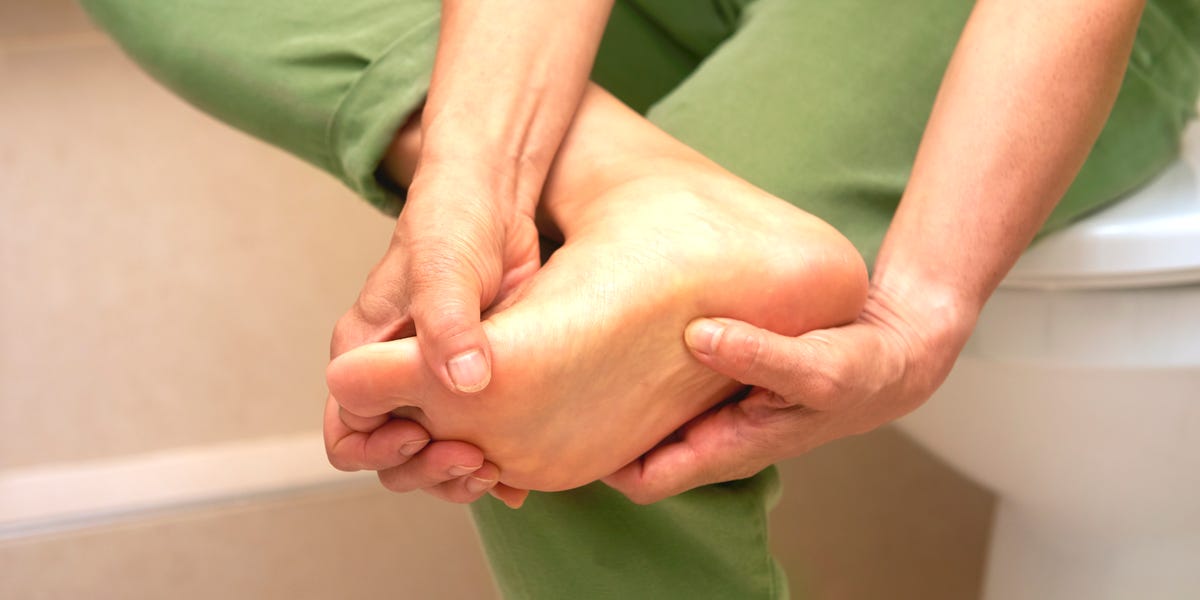
Everyone has a different way to get comfortable for bed. Some people like to pile on the layers and blankets and get extra cozy, while others prefer the constant breeze of a fan on their skin. But if you’ve ever stopped to wonder why your body feels a certain way at bedtime, you’re not alone. Why do your feet feel hot at night, for instance? It may be totally normal and natural, or there may be something else causing these feelings.
Meet the experts: David Cutler, M.D., a family medicine physician at Providence Saint John’s Health Center in Santa Monica, CA; Oluwatosin Ajao, M.D., an internal medicine physician and founder of Hydration Bar MD.
“Having your feet feel hot at night is a fairly common complaint,” says David Cutler, M.D., a family medicine physician at Providence Saint John’s Health Center in Santa Monica, CA. “While often there is not significant disease underlying this sensation, there are often clues that something more serious is going on.”
Read on to discover the key sensations that point to a real health issue, plus the possible causes for hot feet and how to make them feel better.
When to worry about hot feet
Preferring to sleep with your feet sticking out of the blankets is nothing to worry about. So what is? “The main sign is a feeling of burning or heat in the feet, even without a fever. This burning feeling is real and can make it hard to do daily activities or get a good night’s sleep,” says Oluwatosin Ajao, M.D., an internal medicine physician and founder of Hydration Bar MD. In addition to a burning sensation, Dr. Ajao notes that tingling, prickling, shooting pain, redness, swelling, or sensitive skin would also warrant taking a closer look at why your feet feel so hot at night. “You may have a strong desire to cool your feet, but then have your feet feel much worse when they get warm,” she adds.
If the hot feet feeling is accompanied by any of these additional symptoms, or if it is frequent, severe, or continues to get worse, Dr. Cutler says you should give your doctor a call—they can run some tests to determine the cause of your hot feet. But in the meantime, here are some of the possible reasons your feet feel hot at night.
Reasons your feet feel extra hot at night
Peripheral neuropathy
“The most common cause of burning sensation in the feet is neuropathy or nerve damage,” says Dr. Cutler. “While burning may be the primary abnormal sensation for this condition, there can also be the feeling of cold, tingling, numbness or ‘pins and needles’ with neuropathy.” There are many different possible causes of neuropathy, though doctors are not always able to pinpoint which one you’re experiencing. “Doctors call this idiopathic neuropathy, which means the exact reason is unknown,” says Dr. Ajao. “But it does not mean the symptoms are not real.”
Diabetes
One cause of neuropathy that is possible to diagnose? Diabetes. “Diabetes is the leading cause of nerve damage,” says Dr. Ajao. “High blood sugar can injure nerves throughout the body over time. Prediabetes and metabolic syndrome can also cause burning feet in some people.”
Vitamin deficiencies
If you’re deficient in certain vitamins, it can contribute to nerve damage. Dr. Ajao notes that vitamin B12 deficiency is the most common culprit, but not getting enough folate or vitamin B6 can also harm the nerves.
Hormonal changes
“Other causes of hot feet, such as hormonal changes with menopause, may not be related to nerve damage at all,” says Dr. Cutler. In this case, the drop in estrogen that leads to hot flashes and night sweats for many women can also contribute to feelings of heat or a burning sensation in the feet.
Erythromelalgia
“This is a rare condition that causes episodes of burning pain, redness, and warmth in the feet,” explains Dr. Ajao. “The symptoms often get worse with heat and improve quickly when the feet are cooled. It can run in families or link to certain blood disorders.” While there is no specific test to confirm an erythromelalgia diagnosis, per the Cleveland Clinic, Dr. Ajao says that your doctor can run special blood tests to look for other blood disorders that can contribute to hot feet.

Add Prevention as a preferred source in your Google search results.
Use your Google account to add this to your settings.


Restless legs syndrome
“People with restless legs syndrome often feel burning, crawling, or uncomfortable sensations in their legs or feet, especially in the evening or when resting,” says Dr. Ajao. “Moving the legs usually relieves the symptoms.”
Poor circulation
Decreased blood flow to the feet, which occurs in people with peripheral artery disease, can cause feelings of heat and pain in the feet at night, says Dr. Ajao. “Unlike nerve pain, discomfort often improves when the person hangs their legs over the side of the bed to increase blood flow,” she adds.
Other diseases and infections
There are a handful of other diseases and infections that count hot feet among their possible symptoms. According to Dr. Ajao, these include thyroid, kidney, and liver diseases, Sjögren’s disease, sarcoidosis, amyloidosis, vasculitis, and infections like HIV.
Warm environment
“Sometimes there is no disease condition whatsoever” that’s making your feet feel hot, says Dr. Cutler. Sleeping with too many blankets or too-thick socks or simply keeping your bedroom too warm can make your feet hot enough that it disrupts your sleep.
How to alleviate symptoms
If you visit your healthcare provider and they are able to diagnose a medical reason why your feet feel hot at night, treating that underlying cause is the best way to ease symptoms and improve your sleep. That said, “if testing is normal and no treatable cause is found there are still things you can do,” says Dr. Cutler. He and Dr. Ajao recommend the following strategies:
- Keep the bedroom cool
- Wear lightweight socks or use a bed cradle to remove abnormal sensations or keep the sheets from touching your feet
- Moisturize and protect your feet so that dryness, cracking, or injuries don’t make symptoms worse
- Soak your feet in cool (not cold) water and avoid hot baths or showers before bed
- Ask your doctor about pain-relieving creams, patches, or TENS therapy for nerve pain
If these strategies don’t work, only work for a short time, or your symptoms get worse, don’t hesitate to make another appointment with your doctor. “Even if an initial evaluation fails to reveal a treatable cause, ongoing follow-up with your treating physician should be pursued, as the underlying cause may eventually be revealed,” says Dr. Cutler. Then you can get the relief that you need.
Read the full article here


