







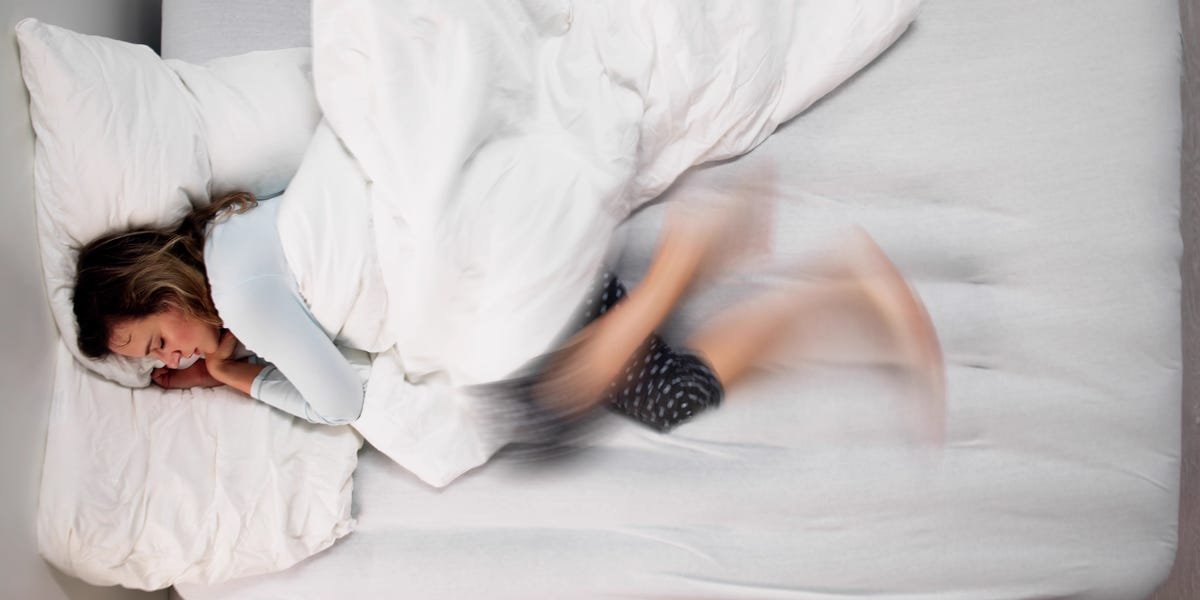
Restless Leg Syndrome (RLS) may seem like a minor medical issue, but people who have experienced it understand how distressing it can be. This neurological condition causes a strong urge to move your legs or arms, often when your body is at rest. It can also cause sensations of itching, aching, or throbbing, according to the Cleveland Clinic. These uncomfortable feelings can make it hard to sleep, which can seriously impact your health over time. Sleep deprivation can weaken your immune system and increase your risk of certain diseases, so it’s not something to ignore.
Meet the Experts: Raj Dasgupta, M.D., pulmonary, critical care, and sleep specialist and member of Prevention’s Medical Review Board; Joanna Fong-Isariyawongse, M.D. board-certified neurologist, sleep specialist, and associate professor of neurology at the University of Pittsburgh; Matthew Daniel Epstein, M.D., associate medical director of the Atlantic Health Sleep Centers in Morristown, Atlantic Health System; Jacob Teitelbaum, M.D., board-certified integrative physician and chronic pain expert.
RLS may also indicate that there’s something else happening in your body that you need to pay attention to. “RLS is frequently a secondary manifestation of other health conditions,” says Joanna Fong-Isariyawongse, M.D., board-certified neurologist, sleep specialist, and associate professor of neurology at the University of Pittsburgh. “For example, iron deficiency, pregnancy (especially third trimester), peripheral neuropathy, end-stage kidney disease, multiple sclerosis, Parkinson’s disease, opioid withdrawal, diabetes mellitus, and obstructive sleep apnea.”
Below, experts explain more about restless leg syndrome, home remedies that can provide relief, and when you should speak to a healthcare provider about your symptoms.
What is restless leg syndrome?
Restless leg syndrome (RLS) is a neurological disorder where you have an uncontrollable urge to move your legs and occasionally your arms, often due to uncomfortable sensations, says Raj Dasgupta, M.D., pulmonary, critical care, and sleep specialist and member of Prevention’s Medical Review Board. “It usually happens when you’re resting, especially at night, and can interfere with your sleep.”
An estimated 5-15% of adults may be affected by RLS, says Matthew Daniel Epstein, M.D., associate medical director of the Atlantic Health Sleep Centers in Morristown, Atlantic Health System.
Symptoms of restless leg syndrome
Symptoms of RLS include a strong need to move your legs, often with sensations like tingling, itching, aching, or a crawling feeling, says Dr. Dasgupta. “These symptoms tend to get worse while you’re sedentary or resting, feels better when you move, and are typically more noticeable in the evening or at night,” he explains.
Symptoms usually occur later in the day or evening, as well as overnight, and can interfere with the ability to fall asleep or stay asleep, adds Dr. Epstein.
“A person with RLS will often extend the big toe while flexing the ankle, the knee, and sometimes the hip. This sensation occurs in the arms as well, and sometimes the whole body,” says Jacob Teitelbaum, M.D., board-certified integrative physician and chronic pain expert. Other people with RLS feel the need to stretch when still, and the sensation is often relieved by movement. “You may or may not be aware of your movements, but your bed partner probably is,” he adds. “You’re likely exhausted during the day from not getting a good rest. When you have restless leg syndrome, it’s like you’re running a marathon in your sleep.”
People with RLS often say the sensation is like an electrical current flowing through the legs, a “creepy crawly” feeling, aching or itching bones, a sensation “like Coca-Cola bubbling through the veins,”“crazy legs,” and “the gotta moves.” If this sounds all too familiar to you, chances are you have RLS.
Causes of restless leg syndrome
The exact cause of RLS isn’t fully understood, but it’s thought to involve an imbalance of dopamine, a brain chemical that regulates muscle movement, says Dr. Dasgupta. “Genetics can also play a role, and factors like iron deficiency, pregnancy, certain medications, and chronic health conditions (such as diabetes or kidney disease) can increase the risk,” he adds.
Per Dr. Epstein, additional risk factors include:
- Low iron levels
- Kidney problems
- Nerve problems
- Pregnancy
- Certain medications
Restless leg syndrome diagnosis
RLS is typically diagnosed based on your symptoms, medical history, and a physical exam, says Dr. Dasgupta. There isn’t a specific test for it, but your doctor may order blood tests to rule out other conditions, like iron deficiency, that could be contributing to your symptoms, he notes.
Treatment for restless leg syndrome
RLS is a treatable condition that generally responds well to medical treatment, says Dr. Dasgupta. “The goals of therapy are to reduce or eliminate symptoms of RLS, and improve sleep and daytime function,” he adds.
Treatment for RLS can include changes to your lifestyle, taking medications that help balance dopamine levels, or iron supplements if you have low iron. Non-drug therapies like exercise, leg massage, and applied heat might also be used, Dr. Dasgupta points out. “In most patients with chronic persistent RLS, defined as symptoms more than 2 days per week that significantly impact quality of life, most sleep physicians will initiate therapy with a category of medication called a ‘gabapentinoid’ such as gabapentin or pregabalin rather than a dopamine-modifying medication.”
There are also several home remedies for restless leg syndrome that may be able to provide you with relief. Here are 13 different fixes that our experts recommend:
Home remedies for restless leg syndrome
Pump up your iron levels
“Although the cause of RLS is not clear, experts suspect it comes from a deficiency of the neurotransmitter dopamine,” says Dr. Teitelbaum. Dopamine regulates the smoothness of movement, and your body needs iron to make dopamine. An estimated 25% of people with RLS have low iron levels in their blood. It’s a good idea to have your iron levels checked, Dr. Teitelbaum says. But keep in mind that if your levels fall within the “normal” range, that only means you’re not in the lowest 2 1/2% of the population. (That’s like saying if you have an income of $8,100 a year, your income is “normal.”) Your ferritin level (the best iron test) should be higher than 50 ng/mL, and your iron percent saturation should be more than 22%.
Try taking 20 to 30 milligrams of iron every other day. Be sure to take iron supplements on an empty stomach and with vitamin C to help your body absorb it better. Because iron is a little irritating to your stomach, it is absorbed better if you take it every other day instead of every day, giving your stomach the chance to heal. Iron can be toxic if too much builds up in the bloodstream, so it’s important to follow dosage instructions very carefully. Stay on the iron until your ferritin blood level is greater than 60 ng/mL (even though anything over 12 is considered “normal”).
Incorporate resistance training into your workout
Dr. Fong-Isariyawongse suggests regular exercise three to four times a week for people dealing with RLS. Specifically, she recommends lower-body resistance training as it has the strongest evidence among lifestyle interventions.
Supplement with vitamin E
“Vitamin E can be very helpful,” says Dr. Teitelbaum. But some patience is in order because it takes six to 10 weeks of treatment to help. Take 400 IU of natural mixed tocopherols a day, says Dr. Teitelbaum. Don’t just take alpha tocopherol; you want the whole family of mixed tocopherols.
Avoid late-night meals
According to the Barrow Neurological Institute, large or heavy meals late at night can worsen nighttime symptoms of RLS.
Boost your protein intake
“Because RLS may be associated with hypoglycemia, eating a sugar-free, high-protein diet with a protein snack at night may decrease episodes of RLS, and also cramping, at night,” says Dr. Teitelbaum. “I have a very complex diagnostic test for hypoglycemia,” he adds. If your hunger is like a light switch that goes off and you feel like you have three minutes before you need to eat or else you’re going to kill someone, you’re hypoglycemic. To avoid that, before you turn in for the night, eat a piece of cheese, some peanut butter, or some turkey.
Cut out caffeine
Avoiding caffeine is important, says Dr. Teitelbaum. Some studies have shown an association between relief of RLS and stopping caffeine. Steer clear of anything with a lot of caffeine for a few weeks, including coffee, tea, soda, energy drinks, and some medications such as Extra-Strength Excedrin.
Try a tonic
Drinking a six-ounce glass of tonic water each night before bed might calm your restless legs. Tonic water contains quinine, which stops repeated muscle contractions. Some people say even a sip or two before bed helps. Can’t drink tonic water straight? Try this simple, nonalcoholic recipe: Put 1/2 teaspoon sugar and 2 crushed mint sprigs into a glass. Fill the glass with crushed ice. Add 1/2 teaspoon lemon juice, 2 tablespoons grapefruit juice, and 4 ounces tonic water. Stir, and drink.
Supplement with folic acid
A small set of people with RLS have the disagreeable leg sensations during the day, instead of when they are at rest or asleep, says Dr. Teitelbaum. These folks also sometimes have numbness and lightning stabs of pain, which is relieved by massage or movement. The treatment for this type of RLS is different, he adds. Try supplementing with 800 micrograms of folic acid three times each day. If the problem persists, you may need to see a doctor for a prescription dose of folic acid. It’s important to note that folic acid does not help cases of RLS that lack the stabbing pain.
Try theanine as a sleep aid
Try taking theanine (50 to 200 milligrams) at bedtime, says Dr. Teitelbaum, as this can help aid sleep and may help RLS as well. Theanine raises GABA (gamma amino butyric acid), which has been shown to help settle RLS.
Avoid certain medications
Certain types of medications have been reported to increase the symptoms of RLS. These may include:
- Anti-nausea medications, such as Antivert and Bonine
- Antihistamines, such as Benadryl, Theraflu, and Vicks Cough and Cold products
- Sleep aids, such as Advil PM, Tylenol PM, and Excedrin PM
Reduce your stress levels
Easier said than done, but finding stress relief is certainly worth trying. Being organized, giving yourself quiet time, taking deep breaths, and practicing various relaxation techniques are good ways to reduce stress. Try to relax, especially before going to bed at night. You might try meditation or yoga to help you wind down. Dr. Fong-Isariyawongse suggests a warm bath and gentle stretching before bed.
Take a stroll
Dr. Fong-Isariyawongse says you should avoid prolonged inactivity if you have RLS. “I would recommend breaking up sedentary periods,” she says. Even a quick walk around the block or a 15-minute workout at home can help.
Get more sleep
Symptoms may be more severe if you allow yourself to become overtired. The following are some tips to try.
- Shut off your cell phone. Researchers at Wayne State University discovered that low-level radiation from cell phones may disrupt the production of melatonin, which is a hormone that induces sleep. To make matters worse, cell phones can rev up other areas of your brain. Chatting on your cell for a while before bed can interfere with deep sleep.
- Slip on socks. Who can sleep with freezing cold toes? Plus, when you wear socks, it widens the blood vessels in your feet, allowing your body to transfer heat from its core to its extremities. This cools you slightly, which helps to welcome the sandman.
- Set a sleep schedule. We schedule everything else these days, why not sleep? Scientists at the University of Pittsburgh Medical Center found that people who follow regular daily routines report fewer sleep problems than do people with more unpredictable lives. Doctors think that recurring time cues synchronize body rhythms and sleep-wake cycles.
- Turn down the heat. Set your thermostat to 60° to 65°F. This will help to nudge your internal temperature down, which is a key ingredient to deep and restful sleep. Plus, you’ll save some energy and money.
Get up and move
RLS tends to strike at night, when you’re at rest. When the urge to move hits, the quickest way to satisfy it is to take a stroll around the bedroom.
When to see a doctor for restless leg syndrome
You should see a doctor if your symptoms are frequent, disrupt your sleep or daily life, or are worsening over time, says Dr. Dasgupta.
It’s also important to talk to your doctor if your symptoms start suddenly and don’t stop, as this could indicate another underlying health condition, adds Dr. Dasgupta. Though rare, these symptoms can be warning signs for serious medical problems such as diabetes, Parkinson’s disease, or mineral and electrolyte imbalances. So for safety—not to mention peace of mind—let your doctor know if you have new leg pains or other symptoms.
Read the full article here


