


The journey to menopause can involve some interesting moments, like hot flashes that are so intense you sweat through your shirt and jacket, or having to go to the restroom five times during one dinner date. But we’re willing to bet that you have never had a menopause moment as crazy and inconvenient as the one Gabrielle Union described in a recent conversation with Prevention.
The actress and activist, 53, who has starred in Bring It On, Bad Boys II, and Being Mary Jane, shared: “I’ve been in full menopause for the last two to three years, and it was shocking—you hear about it, and you’re like, that’s not gonna be me! And then it’s happening, and you’re like, Oh, what, wait, whoa, whoa, whoa! This can’t be a hot flash; it lasts a lot longer than just a flash!”
And as Union found, hormonal heat and sweat can overwhelm you at the most, um, inconvenient moment:
“I had one in the middle of filming a sex scene—in a movie where my love interest was 20 years younger!” [While she didn’t mention the name of the movie, we think it’s relevant to point out that in 2023, she starred in the very sexy Netflix comedy The Perfect Find, sharing love scenes with the very hot 30-something actor Keith Powers.]
“I was sweating so much on one film that we were sewing in padding in all kinds of places so I wouldn’t ruin the wardrobe,” she adds. “When the sweating started, it just wouldn’t stop.”
It Takes a Village to Get Through Menopause
Union, who is raising a 7-year-old daughter and three older kids with her husband, NBA champ Dwyane Wade, says she didn’t hear much about menopause when she was growing up. “My mom didn’t talk about it,” says Union. “I don’t think she had any shame about it, but that woman was working overtime, doing all the mom things, and she never complained about any aspect of womanhood. She just barreled through.”

Add Prevention as a preferred source in your Google search results.
Use your Google account to add this to your settings.

But Union is taking a different approach: “I’m not suffering in silence. There are options. Your health matters, and there are solutions … so let’s find those.” She started to write down all her symptoms and brought them to her health care provider, who recommended she start on Lynquet, a nonhormonal medicine taken once a day to reduce the frequency and severity of hot flashes (she is now a spokesperson for the medication). “Everyone’s journey is individual, so you need to find what is best for you, but Lynquet dramatically reduced my moderate to severe hot flashes,” she says.
Union also credits her friends for helping her get through the changes she’s experiencing. “I rely heavily on my community, and finding solutions through the circle of women that I trust, like, How are you doing it? What are some coping mechanisms? Give me some alternatives,” she says. “And of course, just being able to vent when I need to.”
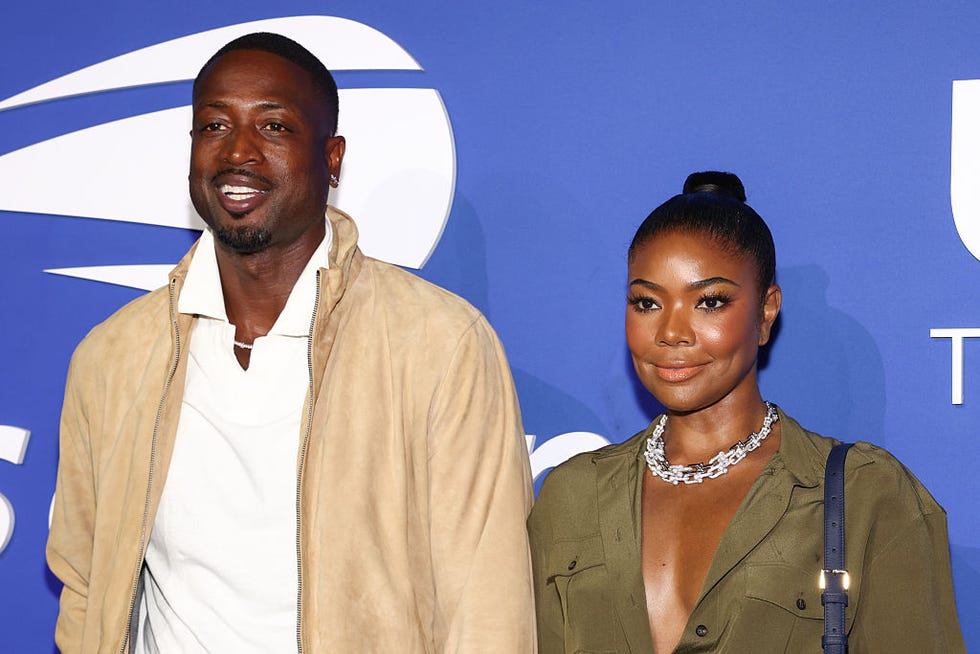
Union’s husband Dwyane Wade is the kind of guy who brings the ice to a hot flash.
It also helps to have a supportive partner: “At first, when I was shocked about the hot flashes, Dwyane was shocked, too. He was like, ‘What do you want me to do? How can I help?’ He was bringing me ice water and towels,” Union recalls.
“But the greatest gift he’s given me is grace. As I figure it out, and enter into different symptoms and how they manifest, sometimes they’re more explosive than others. And he just rolls with it, and he’s educated himself. The best thing your partner can do is educate themselves, so they’re on the journey with you, as opposed to being a roadblock that you have to overcome.”
Read the full article here