






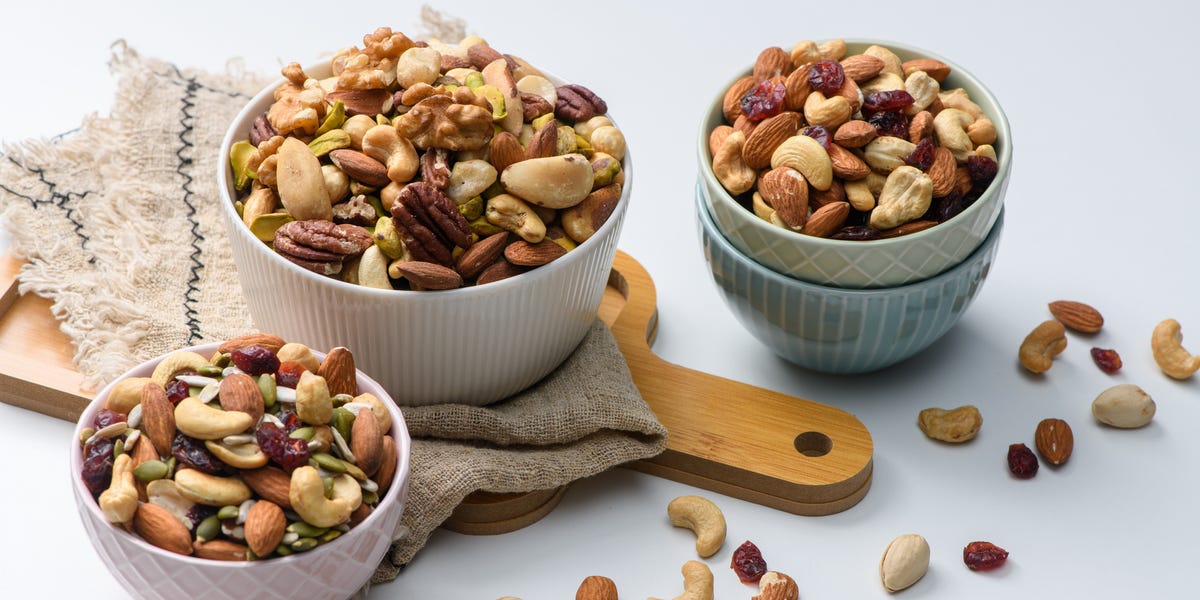
For the millions of people with high blood pressure, a diagnosis of hypertension can feel like an inevitable precursor to heart disease. But even small lifestyle changes, such as incorporating more of the best nuts to eat to lower blood pressure into your daily diet, can make a big difference.
“High blood pressure remains the most prevalent and modifiable risk factor for the development of cardiovascular disease,” says Tracy Paeschke, M.D., a preventive cardiologist at Heart Health Prevention and Wellness. One of the best ways to modify it? Tweaking your diet. “I have seen blood pressure respond very well to personalized, targeted nutrition where we not only focus on reducing sodium, saturated fat, and refined sugars, but also on what we are adding,” says Michelle Routhenstein, M.S., R.D., C.D.C.E.S., a preventive cardiology dietitian at EntirelyNourished.com. That includes foods like fruits, vegetables, whole grains, and yes, nuts.
Meet the experts: Tracy Paeschke, M.D., a preventive cardiologist at Heart Health Prevention and Wellness; Michelle Routhenstein, M.S., R.D., C.D.C.E.S., a preventive cardiology dietitian at EntirelyNourished.com.
Read on for everything you need to know about eating nuts to lower blood pressure, including the best types to choose.
The best nuts to eat to lower blood pressure
“Nuts can be a great addition to your diet when trying to lower blood pressure,” says Routhenstein. “Nuts can contain a variety of nutrients, such as magnesium, vitamin E, copper, selenium, and alpha-linolenic acid, which support blood vessel health.” Here are the types our experts recommend.
Pistachios
Both Dr. Paeschke and Routhenstein recommend snacking on pistachios. “Pistachios are rich in potassium, which can help negate sodium and reduce tension in the arteries,” Routhenstein explains. Older research from the American Heart Association (AHA) has found that a diet containing pistachios improves some cardiovascular risk factors, including blood pressure. And recent research published in the AHA’s journal Hypertension notes that consuming enough potassium is critical to maintaining healthy blood pressure; one ounce of pistachios contains about 315 milligrams of potassium, according to the U.S. Food and Drug Administration.
Walnuts
Along with pistachios, Dr. Paeschke says walnuts are the other top choice for people with high blood pressure. “Walnuts are rich in alpha-linolenic acid, a plant-based omega-3 fatty acid, along with L-arginine,” says Routhenstein. “These support nitric oxide production, help to dilate the arteries, and lower blood pressure, within an overall heart-healthy diet.” One older trial from the AHA found that regular walnut consumption helped reduce blood pressure in older people, particularly those with mild high blood pressure. Meanwhile, separate research in Cureus has shown the L-arginine in particular may help lower blood pressure in people with hypertension.
Almonds
“Almonds are rich in magnesium, which helps blood vessels relax,” Routhenstein explains. Research in Frontiers in Physiology explains that magnesium greatly influences blood pressure, thanks to the way it modulates potassium and calcium, manages key hormones, and reduces inflammation that promotes hypertension. Per the National Institutes of Health (NIH), almonds are a top source of magnesium, delivering nearly 20% of the daily recommended intake per serving.
How to eat nuts for lower blood pressure
If you’re snacking on nuts to support your heart health, there are a few best practices to keep in mind. First, try to enjoy only a small handful at a time. “Because nuts are calorie-dense, sticking to an appropriate portion can help support a healthy weight, which also plays an important role in blood pressure management,” says Routhenstein. Dr. Paeschke recommends buying nuts in the shell when you can, “which makes it harder to eat too many.” Finally, both experts recommend raw, unsalted nuts to get the most health benefits.
Ultimately, if you’re trying to lower blood pressure naturally, nuts are an excellent snack choice—and those above offer the most possible benefits.
Read the full article here


