

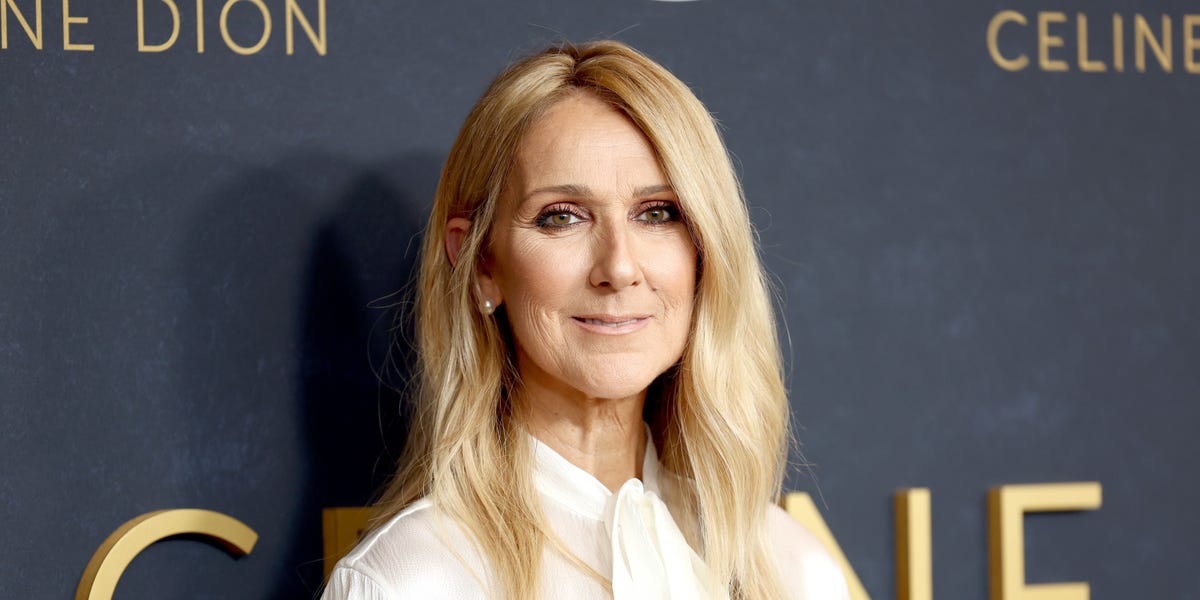
- Céline Dion is working hard to return to the stage in mid-September.
- The singer is doing Pilates and ballet, along with medical treatments and physical therapy.
- These forms of exercise can be particularly helpful for people with neurological conditions, according to doctors.
Nearly four years after sharing her diagnosis with a rare, progressive neurological disorder called stiff person syndrome, Céline Dion is gearing up to return to the stage. The 58-year-old five-time Grammy winner will kick off a limited engagement residency in France starting September 12.
Dion’s condition involves painful spasms that can cause her body to lock into one position, which she detailed in the Prime Video documentary I Am: Céline Dion. But as the singer explained in a new Harper’s Bazaar interview, she’s undergoing an intense regimen to gear up to perform again. The combo includes new medications, physical therapy, vocal therapy, immunotherapy—and regular Pilates.
According to the article, Dion likes to keep moving because stiff person syndrome can freeze her muscles into place. So exercise is crucial: She’s doing 90-minute Pilates sessions three times a week and ballet classes twice a week.
The routine seems to be working for Dion. She shared in a March Instagram post that she’s feeling well. “I’m so happy,” she said in her video. “I’m so ready to do this. I’m feeling good, I’m strong. I’m feeling excited. I can’t wait to see you again.”
Pilates and ballet are known for improving mobility, balance, and strength for exercisers in general, but doctors and physical therapists say these forms of exercise can also be incredibly helpful for people with stiff person syndrome and other neurological disorders. Here’s why.
Meet the experts: Olivia Gruder, M.D., clinical director of the Green Hills Multiple Sclerosis Clinic and assistant clinical professor of neurology at Vanderbilt University Medical Center; Clifford Segil, D.O., a neurologist at Providence Saint John’s Health Center; Jennifer M. Nash, P.T., D.P.T., a physical therapist at University of Nevada, Reno
First, a quick recap on what stiff person syndrome is.
Stiff person syndrome, which is also known as Moersch-Woltman syndrome, is a rare neurological disorder that gets worse over time, according to the National Institute of Neurological Disorders and Stroke (NINDS). It affects the central nervous system and is thought to be an autoimmune condition.
Stiff person syndrome can cause stiff muscles in the torso, arms, and legs, along with a greater sensitivity to noise, touch, and emotional distress—all of which can lead to muscle spasms, per NINDS.
Stiff person syndrome is incredibly rare: Only about one out of every one million people have been diagnosed with the condition, according to the Cleveland Clinic. Women are twice as likely to have stiff person syndrome as men.
Why might Pilates be helpful for people with stiff person syndrome?
Every person’s experience with stiff person syndrome—which is in a category known as stiff person spectrum disorders—is different, says Olivia Gruder, M.D., clinical director of the Green Hills Multiple Sclerosis Clinic and assistant clinical professor of neurology at Vanderbilt University Medical Center. “But the key issue is a problem with continuous or episodic muscle overactivity and painful spasms,” she says. “When the muscles continue this way over time, it can lead to a secondary loss of flexibility, impaired balance, pain, and deconditioning of other muscles.”

Add Prevention as a preferred source in your Google search results.
Use your Google account to add this to your settings.

Low-impact activities like ballet and Pilates can help to address those issues by boosting flexibility, improving balance, and reducing pain, Dr. Gruder says. “Low impact is key, since jarring or unpredictable movements [like in] other activities can be more difficult for someone whose spasms are triggered by sudden stimuli,” she explains.
In general, “prolonged activity is a mainstay of treatment for stiff person syndrome,” says Clifford Segil, D.O., a neurologist at Providence Saint John’s Health Center.
But exercise that focuses on small movements and mind-muscle connection, like in ballet and Pilates, can be particularly helpful for people with stiff person syndrome and similar conditions. These forms of exercise emphasize controlled weight-shifting movements, single-leg control, and planned, coordinated movements, Dr. Gruder says.
Pilates and ballet also focus on core strengthening, which targets the main regions that stiff person syndrome affects most, says Jennifer M. Nash, P.T., D.P.T., a physical therapist at the University of Nevada, Reno. “Both also focus on breathing technique, which is a natural mechanism the body has to feel control and relaxation.”
What’s more, because both ballet and Pilates have predictable patterns of movement, they can help reduce fear in patients who are worried about falling or being injured from moving around. “It may improve their confidence in their body’s ability to move,” Dr. Gruder says.
Finally, proprioception, which is the body’s ability to know where it is in space, is important to work on with many neurological diseases, Dr. Segil says—and Pilates and ballet both tap into this.
What’s the takeaway?
Dr. Gruder says she discusses this at every visit with her patients: “I cannot emphasize enough how important exercise and movement are for nearly all patients with neurologic disease.” The key is to choose a modality that’s safe and practical, but also challenging at times. “A neurologic condition may change how you move, but maintaining movement consistently is one of the most powerful ways to preserve function and independence,” she says.
This takeaway is also crucial for everyone, especially as you get older—and whether or not you have a neurological condition. “If you don’t use it, you will lose it,” Dr. Segil says. “It is important for both healthy people and patients with neurological disorders to continue to be active, mobile, and strong.”
Dr. Gruder also emphasizes how exercise and movement are not one size fits all. “Movement can and should look different for everyone,” she says. “Whether it is running a marathon, daily walks, chair yoga, or assisted movements, all of these activities can help preserve and improve neurological function and increase independence.” So while Dion may find Pilates and ballet to be the best choices for her body, other forms of movement may be better fits for you—and that’s okay.
Read the full article here