







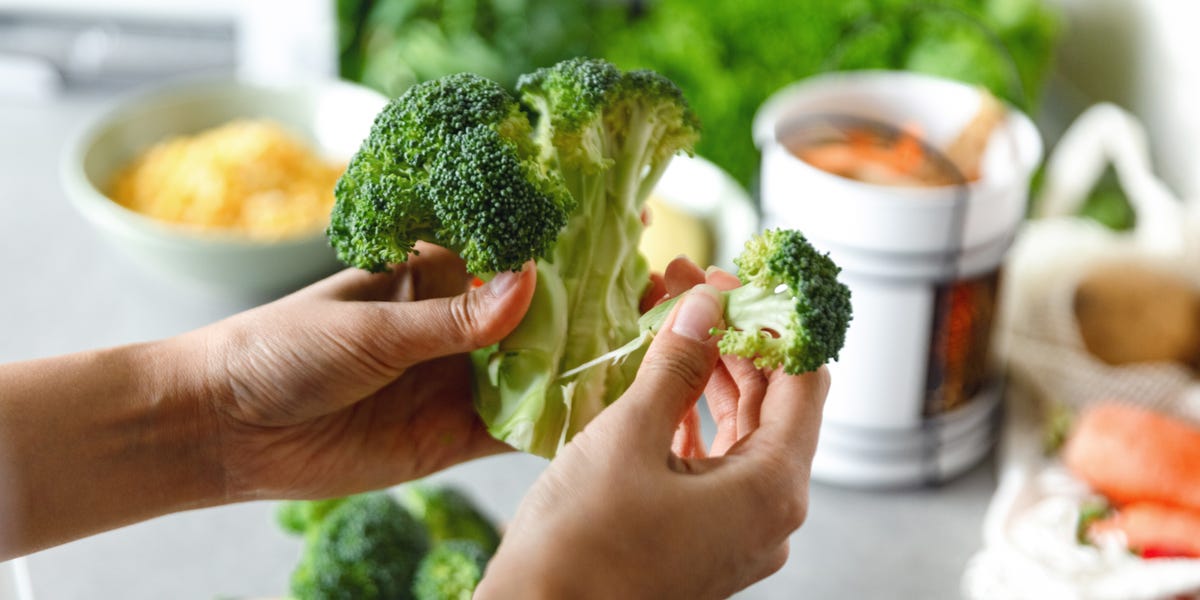
Broccoli is one of those foods that quietly does a lot. In a single serving, you get fiber to support digestion, vitamin C to support immune health, vitamin K to support bone health, plus plant compounds called carotenoids that act as antioxidants in the body, along with a handful of other nutrients to boot. It’s filling, low in calories, and easy to work into almost any meal. As a dietitian, I see broccoli land on plenty of “eat more of this” lists, and for good reason, since it brings real nutritional value without much fuss.
But there’s a bit more to broccoli than most people realize. How you eat it and how you cook it can actually make a meaningful difference in what your body gets out of it. The good news is that once you understand a few simple principles, cooking broccoli to get more nutrients is surprisingly easy.
How to cook broccoli for the most nutrients
Incorporate healthy fats
Some of broccoli’s key nutrients are fat-soluble, meaning your body absorbs them best when you eat them alongside dietary fat. Vitamin K falls into this category, and broccoli is a meaningful source of it. Broccoli also contains carotenoids, which are plant pigments that act as antioxidants in the body. The main ones in broccoli are lutein and zeaxanthin, which are linked to eye health, along with a smaller amount of beta-carotene, which your body can convert into vitamin A.
Like vitamin K, these carotenoids are fat-soluble, so they’re absorbed more readily when fat is part of the meal. Eat broccoli with little or no fat, and your body may not take in as many of these nutrients as it could. Add a source of fat, and your body can absorb more of these nutrients.
The good news? You don’t need much, and you probably already have the right ingredients on hand. Try:
- A drizzle of olive oil before roasting
- A few slices of avocado on the side
- A sprinkle of chopped nuts for crunch
- A spoonful of tahini whisked into a quick dressing
You can also simply serve broccoli as part of a meal that already includes fat: Think salmon, eggs, or a dish made with olive oil. The point isn’t to drown your broccoli in oil. It’s to give those fat-soluble nutrients a ride.
Choose a gentle cooking method
Adding fat is just one piece of the puzzle. How you cook broccoli affects more than just texture. Some nutrients, especially water-soluble ones like vitamin C, are sensitive to heat and water. That means the cooking method matters.
- Steaming is a gentle, reliable option. Because the broccoli isn’t sitting in water, fewer water-soluble nutrients leach out. It also keeps that bright green color and a pleasant bite.
- Roasting is another favorite of mine. A little oil, a hot oven, and you get caramelized edges and big flavor. Plus, the fat from the oil supports the absorption of those fat-soluble nutrients. Just make sure you avoid scorching it, which can make it bitter.
- Microwaving often gets a bad rap, but it can actually be a smart choice. Using a small amount of water and a short cook time helps limit nutrient loss while getting dinner on the table fast.
The method I’d steer you away from is overboiling. When broccoli simmers in a big pot of water for too long, water-soluble vitamins like vitamin C can drain away into the cooking liquid. If you do boil it, keep it brief and use minimal water.
The bottom line
Broccoli brings plenty to the table on its own, and a few simple tweaks can help you make the most of it. The big takeaways are simple: Pair it with a little fat so your body can absorb more of its fat-soluble nutrients, and cook it gently rather than boiling it for ages. A drizzle of olive oil, a quick steam, or a short turn in the microwave may seem like small things, but those simple habits can help you get more nutritional value from this cruciferous vegetable over time.
Read the full article here


