






You might not even know you’re doing it, but if you have a sore neck or jaw or a dull headache or have noticed little divots around the edge of your tongue, you may be a bruxer—someone who regularly clenches their jaw or grinds their teeth, often while sleeping but perhaps when awake as well. If these symptoms seem familiar, it’s important to take steps to address bruxism (the medical name for this common involuntary habit), because otherwise it can eventually damage your chompers and cause other issues.
“At rest, most people maintain a small gap between their upper and lower teeth. Teeth are not meant to be forcefully in contact with each other unless you’re eating or swallowing,” says Sercan Akyalcin, D.D.S., head of orthodontics at Harvard School of Dental Medicine. But that’s exactly what happens in teeth grinding, when you move your jaw backward and forward and from side to side, and with clenching, when you clamp your upper and lower teeth together tightly. These actions can wear down tooth enamel over time, cause cracks or fractures, and trigger tooth sensitivity, which can indirectly increase vulnerability to cavities. Bruxism may also contribute to temporomandibular disorders (TMDs) in some people, which are painful bone and muscle conditions in and around the jaw joint.
Science still hasn’t pinpointed what causes bruxism, but stress and anxiety are known triggers for it—in fact, in 2021, more than 70% of dentists said they’d seen an increase in the issue since the COVID-19 pandemic, according to an American Dental Association survey. Certain medications, including amphetamines and selective serotonin reuptake inhibitors (SSRIs), have bruxism as a possible side effect. Consuming alcohol before bed is another potential cause, as it can disrupt normal sleep cycles and affect motor activity during sleep. Research also suggests a link between sleep disorders like obstructive sleep apnea and the gnashing of teeth.
Most people with bruxism don’t know they have it until one or more of these red flags pop up, or fillings or crowns begin to crack. “Other early indicators are a scalloped tongue with teeth indentations, or raised lines from biting on the insides of cheeks,” says Nojan Bakhtiari, D.D.S., a TMJ and orofacial pain specialist in New York City.
So how can you ease the tension? Try the expert-backed tips below.
Here’s how to tame bruxism
For daytime bruxism
Notice when you are clenching. “Becoming aware of this behavior is the first step toward alleviating it,” says Akyalcin. If you notice a pattern (clenching at work or in the car), put a note on your computer or dashboard to remind you to relax and unclench.
Heads-up
Keep a stress-relief method at the ready. Take a quick walking break, squeeze a stress ball, or try a fidget gadget to redirect your energy, suggests Bakhtiari. Cutting back on caffeine may also help, as this stimulant may make you brux.
If you grind or clench at night
Address your sleep hygiene. Sleep cycle disruption may make bruxism likelier, so doing things to support a healthy slumber can help keep any grinding and clenching under control. Try having a wind-down routine; keeping the bedroom quiet, cool, and dark; and going to bed and waking up at the same time every day.
Heads-up
If you have a foolproof sleep routine but your mouth won’t stop tensing overnight, ask your doctor or dentist whether you should consider taking a muscle relaxer before bed; this may help quiet muscle activity (including in your jaw).
If you can’t stop
To deal with daytime bruxing, put your lips together and hold your teeth apart to keep your jaw relaxed. If you can’t open your mouth wide because of pain or stiffness, ask your doctor or dentist about jaw exercises that may help loosen up those muscles.
Heads-up
For day or night bruxing, if nothing else helps, your doctor may recommend Botox injections in the masseter muscles at the jaw. “This can decrease clenching for up to four months,” says Bakhtiari. However, it could weaken jaw muscles and joints over time.

Should you get a mouth guard?
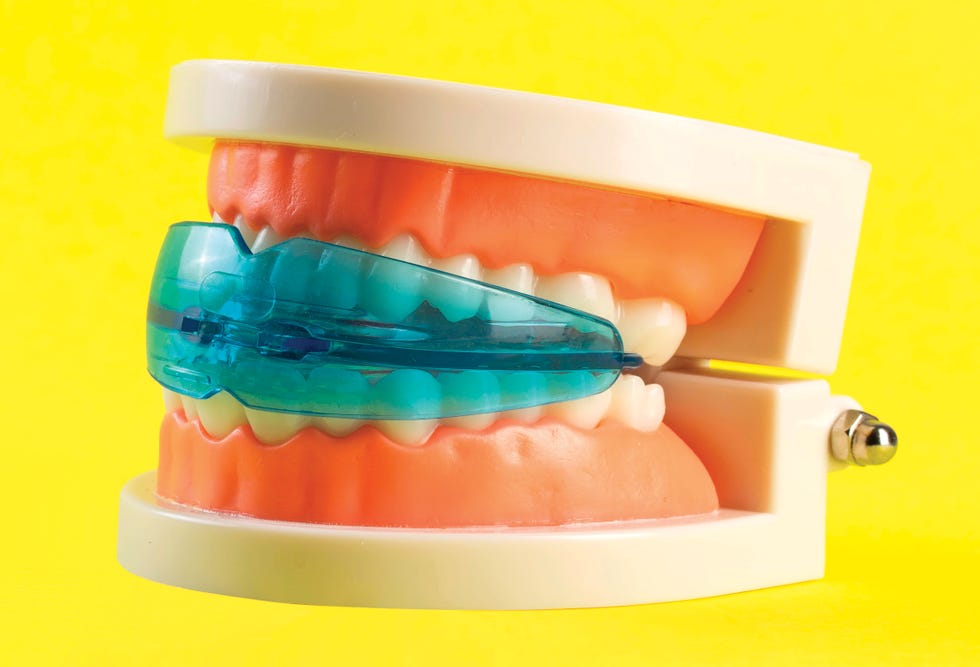
Wearing a mouth guard is one of the best ways to protect teeth when you brux in your sleep. But steer clear of OTC ones, which, while affordable, can “move your teeth and mess up your bite and could ultimately cause issues such as jaw locking,” says Bakhtiari. It’s better to invest in a custom mouth guard made of durable plastic or acrylic molded to fit your teeth. What to know:
➔ Custom guards can be pricey; dentist-made ones range from $300 to $1,200, but some dental insurance may cover a percentage of the cost.
➔ A mouth guard that fits over your upper teeth won’t stop grinding but acts as a protective barrier to help prevent damage and discomfort; it also creates a slight separation between the jaw and socket that prevents a full biting movement, says Bakhtiari.
➔ With proper care, a custom mouth guard should last between two and five years on average. Clean yours gently with a soft toothbrush, unscented soap, and cool water after each wearing (avoid abrasive toothpastes, which could potentially damage it). And always store a mouth guard in its protective case.
Read the full article here


